
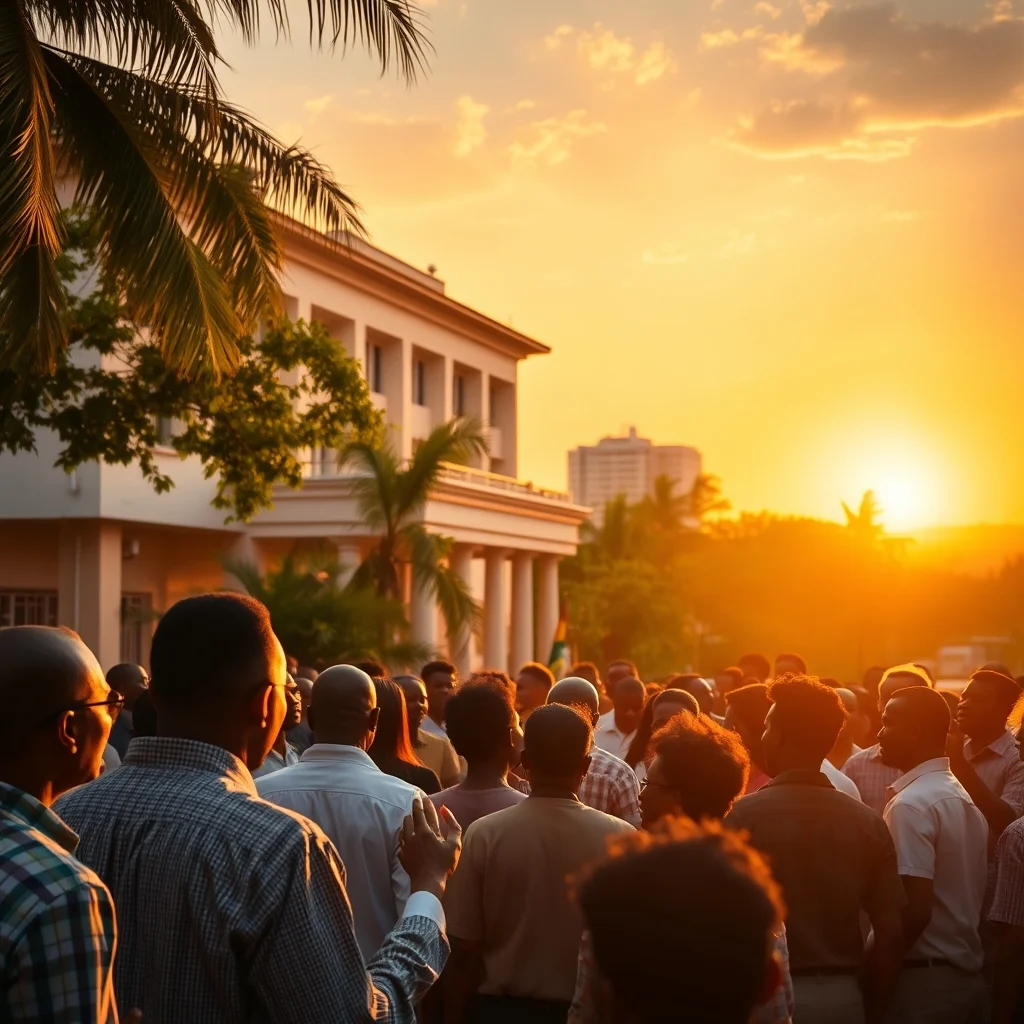
Accra, Ghana – In the six months since President John Dramani Mahama began his second term following the December 7, 2024, general elections, Ghana has witnessed significant economic turnaround and notable achievements in public life. However, these hard-won gains are imperiled by a brewing internal party dispute over succession for the 2028 presidential elections, which risks weakening the government and undermining the president’s effectiveness as a “lame duck” far before his tenure concludes.
Economic and International Strides
The Mahama administration has achieved remarkable economic stability, described by observers as meteoric and unparalleled in Ghana’s history. This performance surpasses even the economic stability of the 1980s, which was largely sustained by external donor support. The current stability, according to analysts, is a direct result of robust domestic policies and financial initiatives, including the Ghana Gold Board project.
On the international stage, Ghana has reasserted its global presence. A United Nations resolution, spearheaded by Ghana, recognized transatlantic slavery as the “gravest crime against humanity” and called for reparations, reminiscent of the era of Kwame Nkrumah. Furthermore, the government demonstrated courage and patriotism by rejecting a $109 million U.S. bilateral health aid package. This aid was contingent on Ghana providing sensitive health data to American pharmaceutical companies, a move the government deemed exploitative, citing historical instances of Western firms using Africans as research subjects.
Improvements in Governance and Media Freedom
Ghana has also seen considerable progress in media freedom. The country ranked 39th out of 180 nations in the 2026 Reporters Without Borders World Press Freedom Index, a significant improvement from its 52nd position in 2025 and 62nd in 2023. While Transparency International’s Corruption Perception Index shows only a marginal improvement, moving from 42 in 2024 to 43 in 2025, there is a perceived reduction in the impunity surrounding corruption cases.
The Looming Threat of Internal Competition
Despite these successes, the National Democratic Congress (NDC) faces a critical challenge: managing the succession for the 2028 presidential elections. Reports indicate that as many as 30 individuals are nursing presidential ambitions within the party, representing a spectrum of leadership generations from its inception to the current era. This crowded field, with potential aspirants ranging from veteran party figures to younger leaders like Foreign Minister Samuel Okudzeto Ablakwa, presents a significant risk.
The danger lies in the potential for a divisive and acrimonious internal struggle. Such contests can weaken the sitting government, distract appointees from their duties, and shift loyalties away from the president. History offers cautionary tales: internal strife within the NDC contributed to its defeat in the 2000 general elections, and similar dynamics impacted the New Patriotic Party’s (NPP) electoral fortunes in 2008 and 2016.
The recent NDC parliamentary primary in the Ayawaso East Constituency, marred by allegations of bribery and vote-buying, serves as a stark warning. If not carefully managed, the presidential primaries could further damage the government’s image and the party’s goodwill, particularly in the sensitive area of corruption and its perception.
Expert Analysis and Implications
Dr. Abdul Hakim Ahmed, a Senior Lecturer at the University of Education, Winneba’s Department of Political Science, warns that an uncontrolled internal competition could prove costly. “An acrimonious challenge to replace Mahama could prove costly not just to the president’s legacy, but to the progress of the nation in the last two years of his tenure,” he stated. He added that such a scenario could lead to appointees focusing on internal political maneuvering rather than national development, with defeated aspirants potentially becoming disengaged or even acting as spoilers.
Dr. Ahmed advocates for a return to the party’s roots, suggesting that the NDC leadership, including President Mahama, should prioritize selecting a presidential candidate through consensus. This approach, he argues, would prevent a financially expensive and divisive competition that could erode the party’s standing with the electorate.
Looking Ahead
The coming months will be crucial for the NDC. The party’s ability to navigate its internal succession dynamics will directly impact President Mahama’s ability to govern effectively during the remainder of his term. Observers will be watching closely to see if the party can foster a process that prioritizes national stability and continued progress over divisive internal politicking, especially as the potential for further economic development and infrastructure projects looms.










Leave a Reply