
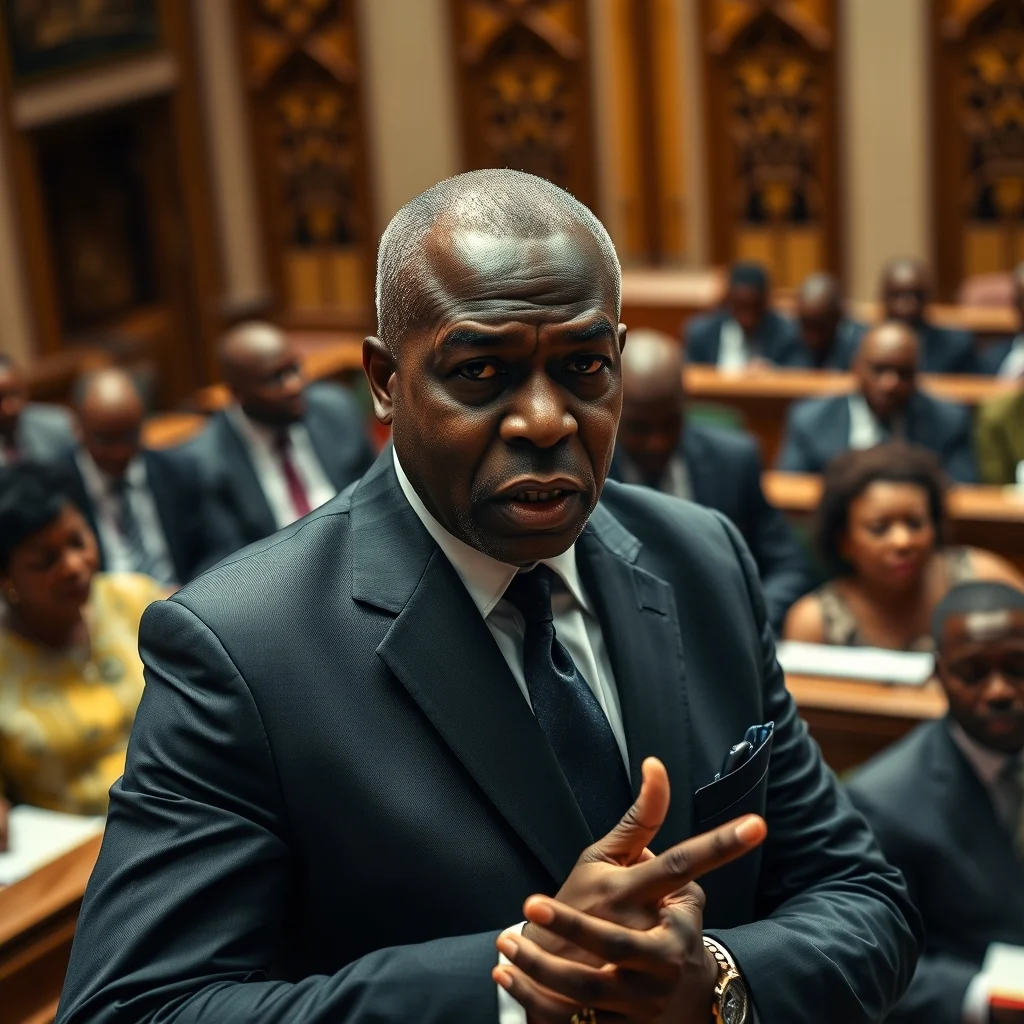
Accra, Ghana – Majority Chief Whip Rockson Nelson Dafeamekpor has staunchly defended President John Mahama and the National Democratic Congress (NDC) government against recent criticisms concerning the controversial anti-LGBTQ+ bill. Dafeamekpor asserted that the NDC has demonstrated courage in advancing the legislation, a stance he believes has been met with misplaced criticism from those expecting a more immediate presidential commitment to signing it into law.
Context of the Bill’s Passage
The controversy reignited following President Mahama’s remarks at Chatham House in London. During the interview, the President indicated that Parliament still had legislative work to complete on the bill before it could be presented for his assent. He emphasized that constitutional and administrative processes would be meticulously followed.
These comments drew sharp criticism from proponents of the bill who had anticipated a public reaffirmation of the President’s commitment to signing it into law. They expressed concern that Mahama’s statement suggested potential delays or a wavering commitment.
Defending the Legislative Process
Speaking on JoyNews’ PM Express, Dafeamekpor dismissed the criticisms as an “empty storm,” arguing that the challenges raised about the bill’s passage, including claims of constitutional breaches related to quorum, lack factual basis.
He explained that the President’s reference to the bill’s status was in the context of standard parliamentary procedure. “The quorum reference by the President was as a result of the empty storm that the minority are generating,” Dafeamekpor stated.
The Majority Chief Whip contended that no objections were raised regarding the numbers present during the bill’s crucial voting stages in Parliament. He further argued that contesting these past proceedings now is a “journey to nowhere” as such procedural challenges cannot be revisited after a bill has been passed.
Post-Passage Scrutiny and Drafting
Dafeamekpor elaborated on the “post passage scrutiny and drafting” phase that all bills undergo. This process involves meticulously arranging and incorporating any amendments approved during parliamentary deliberations into the final text before it is transmitted to the President.
“The President’s reference to the fact that Parliament will still clean up the bill before it gets to him is in order,” he affirmed, clarifying the administrative steps involved in legislative transmission.
Presidential Commitment Affirmed
Addressing concerns about President Mahama’s reluctance to explicitly state he would sign the bill during the Chatham House interview, Dafeamekpor defended the President’s prerogative.
“Those are proceedings under the constitution available to him,” he noted, explaining that the President has the right to consult relevant institutions once the bill reaches his desk.
When pressed on whether Mahama’s comments provided confidence in the bill’s eventual signing, Dafeamekpor was unequivocal. He revealed extensive private and group engagements with the President, parliamentary leadership, and the NDC caucus, all of which reaffirmed the President’s commitment.
“He will sign it, and I’m telling you, the president won’t shy away from it,” Dafeamekpor declared, linking the bill to the NDC’s campaign promises. He suggested that critics were surprised by the NDC’s determined push for the bill’s passage.
Looking Ahead
Dafeamekpor anticipates that the post-passage review process will be brief due to the bill’s concise nature. He expects the legislation to be returned to the President’s office within one to two weeks, after which it will be signed into law.
The ongoing debate highlights the complex interplay between legislative procedure, public expectation, and political commitment in Ghana. Observers will be watching closely to see if the bill is indeed transmitted to the President within the projected timeframe and if his subsequent assent aligns with the Majority Chief Whip’s confident predictions.










Leave a Reply