
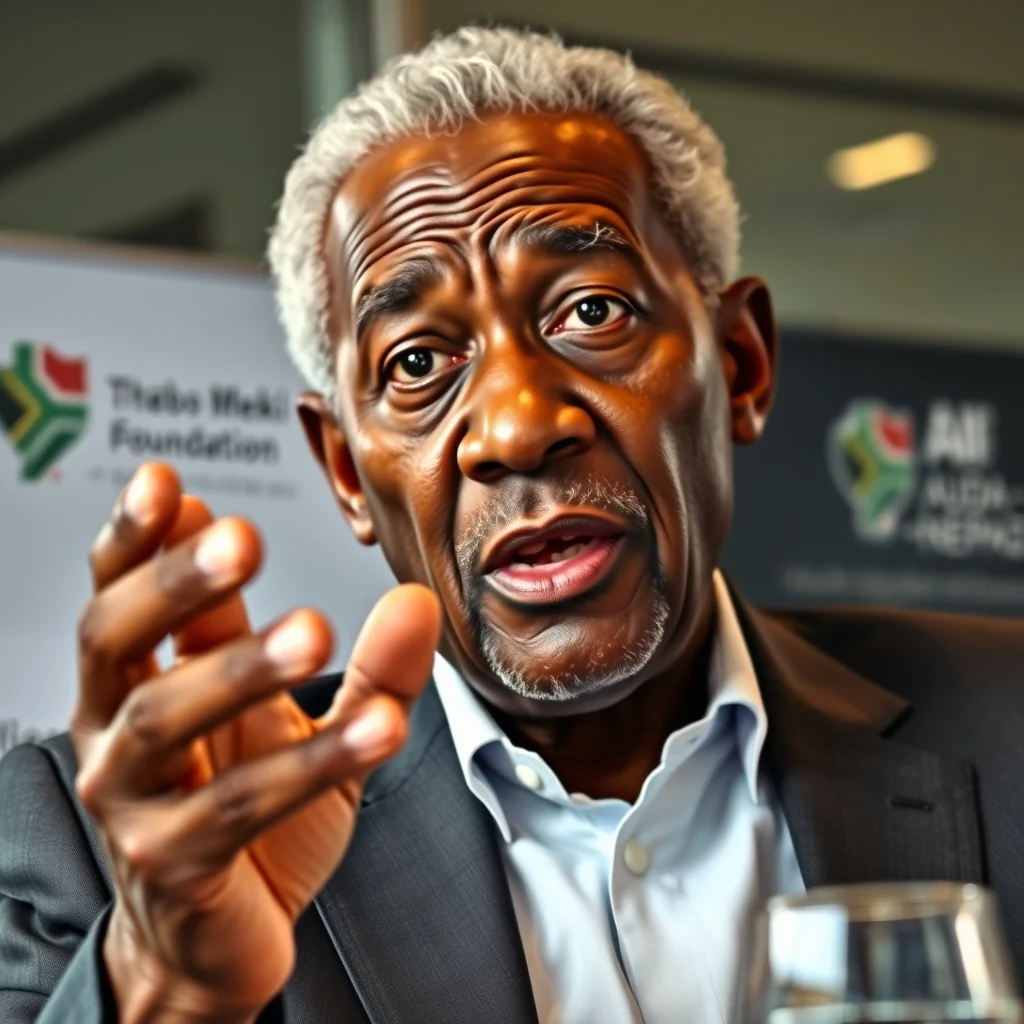
Former South African President Thabo Mbeki has sharply criticized the escalating anti-immigrant sentiment within the country, asserting that foreign Africans are being scapegoated for systemic issues they did not create. Mbeki made these remarks at a Thabo Mbeki Foundation and AUDA-NEPAD Business Breakfast, directly addressing the nation’s struggles with unemployment and crime.
Context of Rising Tensions
Mbeki’s intervention comes amid a period of significant anxiety for foreign nationals residing in South Africa. This week alone, nearly 300 Ghanaian citizens voluntarily returned to their home country following a wave of anti-immigrant protests that heightened safety concerns. These repatriations highlight the growing tensions and the perceived threat faced by African migrants.
Mbeki’s Critique of Scapegoating
The former president argued that many South Africans are misdirecting their anger and frustration. “We’ve got many problems here. The problem legitimately led to high levels of unemployment; that’s correct. High levels of crime, that’s correct. But the finger is being pointed at the wrong people,” Mbeki stated.
He emphatically rejected the notion that undocumented African migrants are responsible for the nation’s high unemployment rates. “The levels of high unemployment in this country are not due. They are not due to undocumented Africans. They are not,” he insisted.
Historical Economic Trends
Mbeki pointed to historical economic data, arguing that South Africa’s economic decline predates the current migration debates. “We know the history in detail of how South Africa, from 1994 to 2008, achieved growth rates reach 6%. From 2009, it goes the opposite direction. It wasn’t caused by undocumented immigrants,” he explained.
He suggested that the true architects of the country’s economic difficulties have avoided public accountability. “The people who caused that decline, they are laughing in a corner there, because we’re pointing not at them, but we’re pointing somewhere else. It’s wrong,” Mbeki observed.
Unavoidable Migration and Historical Bonds
Looking ahead, Mbeki predicted that migration from other African nations to South Africa would persist. “One prediction I will make, the Africans will continue to come to South Africa. It doesn’t matter what you do,” he said.
He linked this continued migration to the historical solidarity shown by African nations during South Africa’s struggle against apartheid. “It’s a particular frame of mind with regard to South Africa, which they helped to liberate,” Mbeki noted, emphasizing the deep, shared history.
Addressing Root Causes
Mbeki stressed that expelling or targeting migrants will not resolve the unemployment crisis. “You are not going to solve the problem of unemployment here by shouting against undocumented Africans, and leaving the culprit.” He urged South Africans to confront the underlying structural issues plaguing the economy.
He called for a rejection of narratives that blame fellow Africans for national problems. “Here is the truth: you are busy chasing after ghosts, and you are leaving this devil,” Mbeki stated, urging a focus on the real drivers of economic hardship.
A Call for Continental Unity
Concluding his remarks, Mbeki reiterated the importance of continental unity and historical interconnectedness. “People are beating drums about the wrong people and failing to understand an organic connection between these Africans on the continent and these Africans here, because we’re together in the same struggle. You can’t certainly turn against them,” he urged.
Looking Ahead
The debate Mbeki has ignited calls for a national introspection into the root causes of South Africa’s economic challenges, moving beyond xenophobic rhetoric. The coming months will reveal whether the country shifts its focus from scapegoating migrants to addressing the complex structural issues that Mbeki highlighted, and how this impacts regional relations and internal social cohesion.










Leave a Reply