
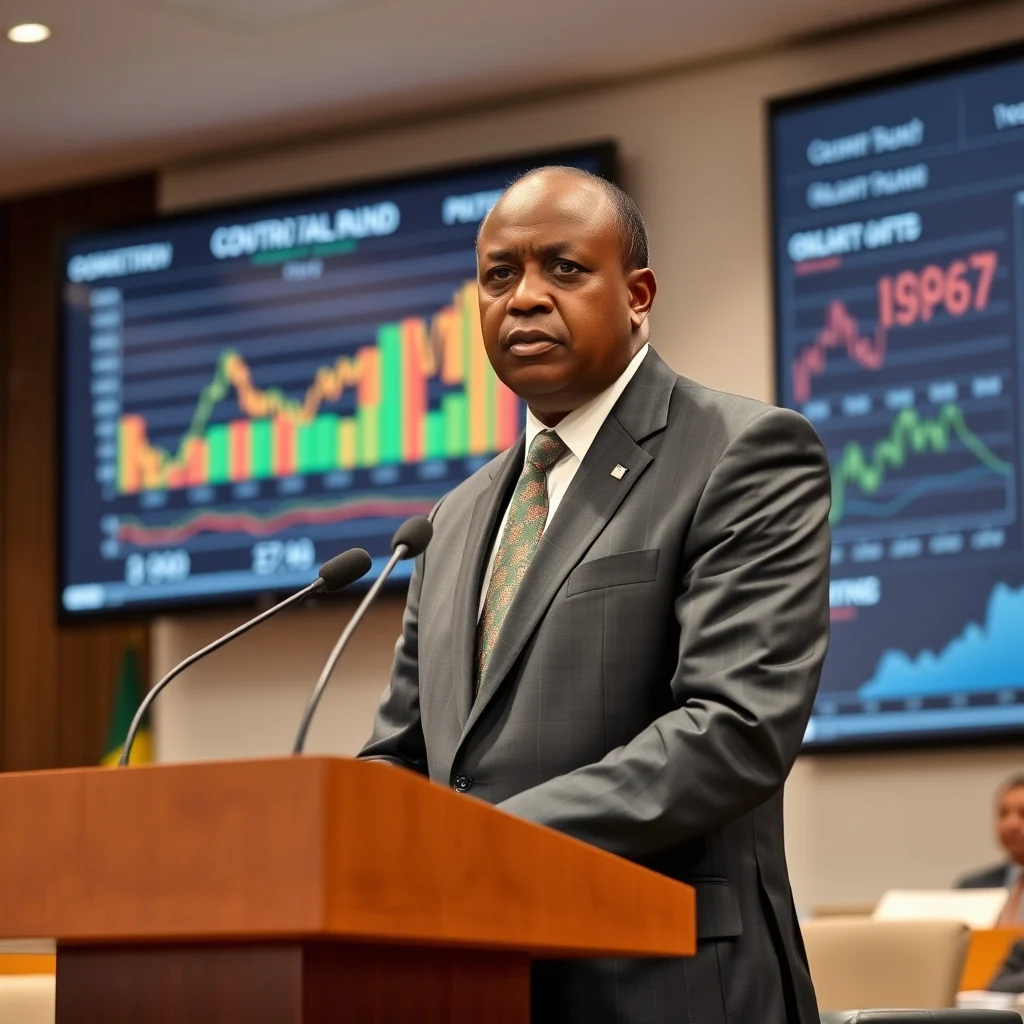
Accra, Ghana – The Bank of Ghana (BoG) maintained its benchmark policy rate at 14% yesterday, citing persistent geopolitical instability in the Middle East as a significant threat to Ghana’s inflation outlook and overall economic stability. Governor Johnson Pandit Asiamah revealed this decision at the 130th Monetary Policy Committee (MPC) press briefing, highlighting the unresolved Middle East crisis as the primary “elephant in the room” influencing the central bank’s cautious monetary policy.
Despite domestic economic indicators suggesting a potential for interest rate reduction, the MPC opted for a pause to closely monitor global developments. The Governor explained that the committee evaluated various risks, but the Middle East crisis presented a unique uncertainty regarding its duration and potential impact on inflation expectations and subsequent price increases.
Navigating Domestic Improvements Amidst Global Uncertainty
Dr. Asiamah elaborated that while trends in real interest rates indicated room for further easing, the MPC’s decision was a careful balance between acknowledging domestic economic improvements and accounting for external shocks. The committee decided to pause and analyze incoming data, intending to make a more informed decision at the next meeting.
The press briefing also addressed concerns regarding the slow transmission of falling benchmark interest rates to commercial bank lending rates. The Governor attributed this lag to the relatively new low-interest-rate environment for banks, requiring a gradual adjustment of portfolios and lending strategies.
He emphasized that banks are proceeding cautiously, ensuring adequate bankable projects and maintaining credit appraisal standards. This measured approach, he explained, is necessary to avoid excessive credit risks, and lending rates are expected to adjust downwards as the low-interest-rate regime stabilizes.
Policy Adjustments and Financial Sector Developments
Further justifying the MPC’s actions, Dr. Asiamah detailed a revision to the dynamic cash reserve ratio, standardizing it to a uniform 20% reserve requirement for domestic currency, effective June 4, 2026. This measure is intended to complement existing open market operations for liquidity management.
The central bank plans to engage with Chief Executive Officers of commercial banks next week to clarify the implications of these new policy measures. Regarding the oversubscription of Treasury bill auctions, Dr. Asiamah deferred comment on government borrowing strategies, directing inquiries to the Ministry of Finance, stating that such decisions are market-driven.
Addressing the depreciation of the Ghanaian cedi, the Governor reiterated that Ghana operates a managed floating exchange rate system, where some movement is expected. The central bank’s focus remains on preventing excessive volatility.
Recent depreciation pressures were attributed to increased foreign exchange demand driven by higher crude oil prices and dividend repatriations by multinational corporations. Despite these pressures, Dr. Asiamah assured the public that the Bank of Ghana holds adequate foreign exchange reserves to ensure market stability, noting an increase in Net International Reserves from $10.9 billion to $12.43 billion.
Innovations in Credit Access and Banking Services
On credit distribution, commerce continues to be the primary recipient of bank loans. However, sustained growth in private sector lending is expected to benefit all economic sectors.
The BoG is also advancing plans for a digital credit framework, which will enable individuals and businesses to access small loans via mobile phones under a regulated system. This initiative aims to broaden access to finance across various economic sectors.
Furthermore, Ghana anticipates the launch of its first non-interest banking institution before the end of the year, following the careful development of a regulatory framework aligned with international best practices.
Regarding non-performing loans (NPLs), commercial banks have been directed to reduce bad loans by the end of 2026. While the gross NPL ratio stands at 18%, the net ratio after provisions is approximately 8%. The central bank encourages continued efforts to recover outstanding debts from defaulters.
Finally, disruptions to gold exports, particularly to the United Arab Emirates due to the Middle East crisis, have reportedly been resolved through alternative export arrangements, with shipments now ongoing.
Future Outlook and Key Watchpoints
The central bank’s cautious stance, driven by global geopolitical risks, suggests that interest rate decisions will remain closely tied to international developments. The effectiveness of the new cash reserve ratio and the gradual adjustment of lending rates by commercial banks will be critical indicators of monetary policy transmission. The planned digital credit framework and the introduction of non-interest banking could significantly reshape financial access and services in Ghana. Observers will also be monitoring the stability of the cedi against continued global economic pressures and the sustained efforts to reduce non-performing loans in the banking sector.










Leave a Reply