
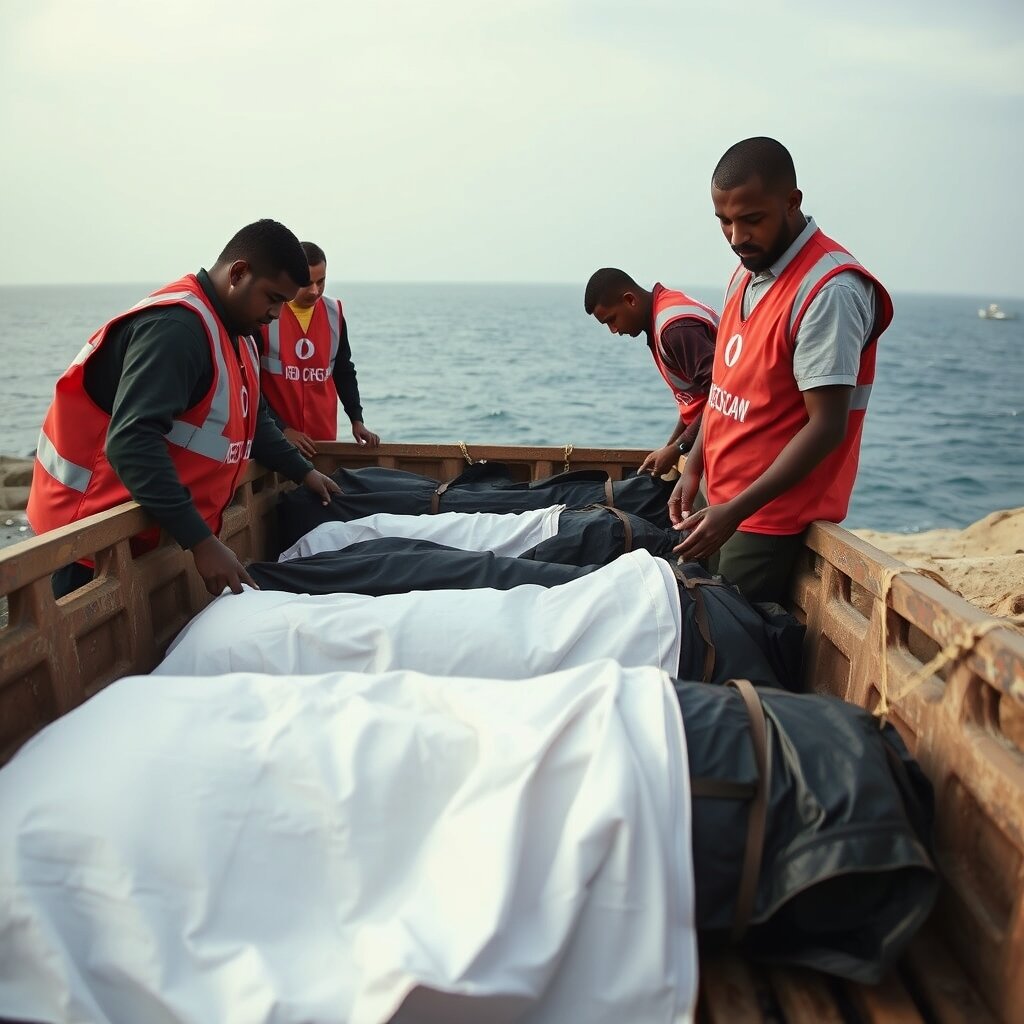
At least 17 migrants have died and nine are feared missing after their boat broke down and drifted for eight days in the Mediterranean Sea off the coast of eastern Libya, as confirmed by the country’s Red Crescent and security sources on Wednesday. Recovery operations near Tobruk have rescued seven survivors.
Context: Libya’s Role as a Migration Route
Libya serves as a critical transit point for thousands of migrants, predominantly from sub-Saharan Africa. These individuals undertake perilous journeys across deserts and seas, driven by the hope of escaping conflict, poverty, and persecution in their home countries and reaching Europe.
The treacherous Mediterranean crossing is fraught with danger. Migrants often board overcrowded and unseaworthy vessels, with smugglers prioritizing profit over safety. The vast expanse of the sea, coupled with harsh weather conditions, contributes to a high mortality rate among those attempting the journey.
Rescue and Recovery Operations
Libyan Red Crescent volunteers, in cooperation with the naval forces and coast guards of the Libyan National Army, conducted recovery operations off Tobruk. These efforts led to the rescue of seven individuals who had survived the ordeal.
Tragically, the bodies of 17 migrants were recovered. Security sources anticipate that the remains of the nine missing migrants may wash ashore in the coming days, underscoring the scale of the disaster.
Images released by the Red Crescent depicted volunteers carefully placing the recovered bodies into black plastic bags and loading them onto pickup trucks, a somber testament to the human cost of this migration route.
Crackdown on Human Trafficking Networks
In parallel with the recovery efforts, Libyan authorities have been intensifying their crackdown on human trafficking networks. On Tuesday, the country’s attorney general announced that four individuals were sentenced by the Tripoli Criminal Court to up to 22 years in jail.
These individuals were convicted of serious crimes including human trafficking, abductions for ransom, and torture, highlighting the brutal nature of the criminal enterprises operating in the region.
Just prior to this, on Monday, the Public Prosecutor’s Office ordered the arrest of another gang. This group is allegedly responsible for sending migrants from Tobruk on a dilapidated boat that capsized, leading to the deaths of 38 Sudanese, Egyptian, and Ethiopian nationals, according to the attorney general’s office.
Broader Implications for Migration Policy
The recurrent tragedies underscore the urgent need for effective international cooperation to address the root causes of migration and to dismantle human trafficking networks. The perilous journeys undertaken by migrants highlight the desperation of those fleeing unstable regions.
For Europe, these events bring renewed focus on border control policies and the ethical considerations of managing migration flows. The role of Libya as a departure point remains a significant challenge, requiring comprehensive strategies that involve both security measures and humanitarian aid.
The effectiveness of legal pathways for migration and the provision of safe and legal alternatives are critical factors in reducing the reliance on dangerous sea crossings. The ongoing efforts to prosecute smugglers and traffickers represent a step towards accountability, but the scale of the problem demands sustained and collaborative action from multiple nations.
What to Watch Next
Moving forward, attention will be on the effectiveness of Libya’s efforts to combat smuggling rings and the international community’s response to support these initiatives. Observers will also be monitoring whether the increased enforcement leads to a decrease in perilous crossings or simply shifts the routes and methods employed by traffickers. The long-term impact on migration policies in Europe and the potential for increased safe and legal migration channels will be key areas to watch.










Leave a Reply