
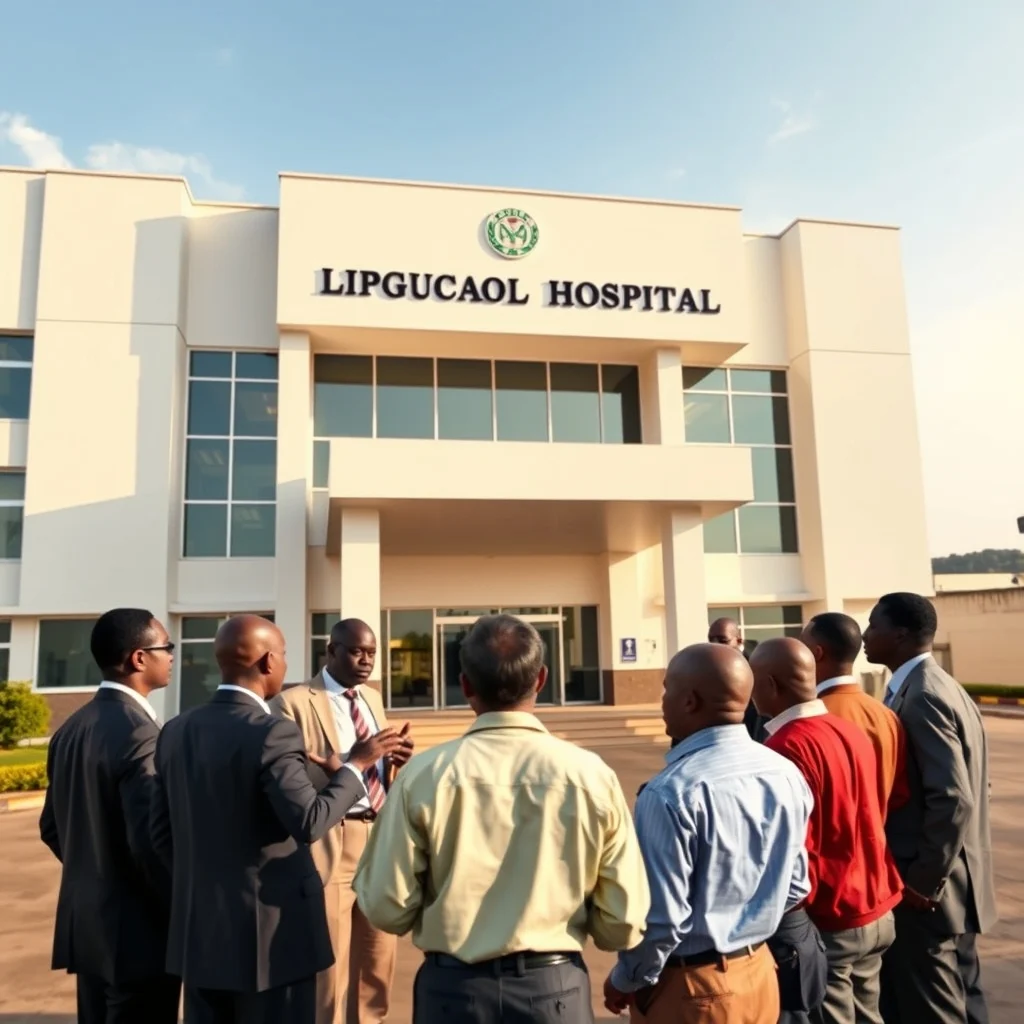
Accra, Ghana – The Minority in Parliament has strongly urged the Ministry of Health to immediately operationalize the 120-bed Weija Paediatric Hospital, dismissing claims of over-priced or mis-procured equipment as a “flimsy excuse” for the prolonged closure. The hospital, funded by a $10.15 million World Bank loan, remains inaccessible despite the contractor reportedly completing all necessary procurement and installation processes.
The delay in opening the state-of-the-art facility has become a significant point of contention, with the Minority arguing that the reasons cited by the Ministry of Health are unsubstantiated and detrimental to public health. They assert that the procurement processes were transparent and had the backing of the World Bank, the project’s financier.
Procurement Process Vindicated
Dr. Nana Ayew Afriyie, Ranking Member on the Health Committee of Parliament, stated at a press conference that the procurement for the hospital’s equipment, including a CT scan, went through the Public Procurement Authority (PPA). He emphasized that if the PPA approved these processes, then any claims of mis-procurement are essentially an indictment of the PPA itself.
He further challenged the Ministry of Health to provide concrete evidence, such as alternative invoices or quotations, to substantiate claims of overpricing. “Overpriced is not supposed to be verbal and so bring evidence to back it,” Dr. Afriyie asserted, adding that the government should bear the cost if discrepancies are found.
The Minority contends that the Ministry of Health failed to conduct adequate due diligence before raising concerns about the procurement. They highlighted that the World Bank itself has issued a statement calling for the hospital’s opening, suggesting that the procurement issue is no longer a primary concern for the project’s sponsors.
A Legacy Project Under Scrutiny
Dr. Afriyie explained that the Weija Children’s Hospital originated as a New Patriotic Party (NPP) government initiative, conceived as a legacy project from the post-COVID-19 allocations provided by the World Bank. The initial 40-bed facility was upgraded to a 120-bed capacity, with enhancements and additional equipment added throughout the construction phase.
He clarified that the World Bank was kept informed at every stage of the project’s development, including the decision to enhance its capacity and procure necessary equipment. This continuous communication, he argued, negates the possibility of unforeseen procurement breaches now being used as a reason for delay.
The upgrade involved procuring essential medical equipment, such as a CT scan, which, according to Dr. Afriyie, was acquired through approved channels. He stated that the cost of the CT scan was part of a $3.8 million allocation for equipment, and any claims of overpricing require verifiable evidence.
Urgent Need for Healthcare Services
The Minority stressed the critical need to open the hospital, especially considering the current strain on existing healthcare facilities and the high number of unemployed healthcare professionals. “The Minority considers it the considerate position that the Weija Children’s Hospital must be opened now as there is no further reason for delays,” Dr. Afriyie stated.
He pointed out the dire need for employment opportunities for nurses, laboratory physicians, and other healthcare workers who are currently seeking positions in a system that could benefit from the new facility’s operational capacity.
Implications for Healthcare and Governance
The continued closure of the Weija Children’s Hospital raises questions about the efficiency and transparency of government project management and procurement processes. For citizens, it means a delay in accessing specialized paediatric care, potentially impacting health outcomes for children in the southern sector.
The situation also highlights the political undertones often associated with major public projects, particularly when transitions in government occur. The debate underscores the importance of robust oversight mechanisms and clear communication between government ministries, contractors, and international funding bodies.
Looking Ahead
The focus now shifts to the Ministry of Health’s response to the Minority’s demands and the World Bank’s continued involvement. Observers will be watching to see if the Ministry provides the requested evidence of overpricing or mis-procurement, or if it will proceed with opening the hospital to address the pressing healthcare needs. The resolution of this standoff could set a precedent for how future infrastructure projects are managed and commissioned in Ghana.










Leave a Reply