
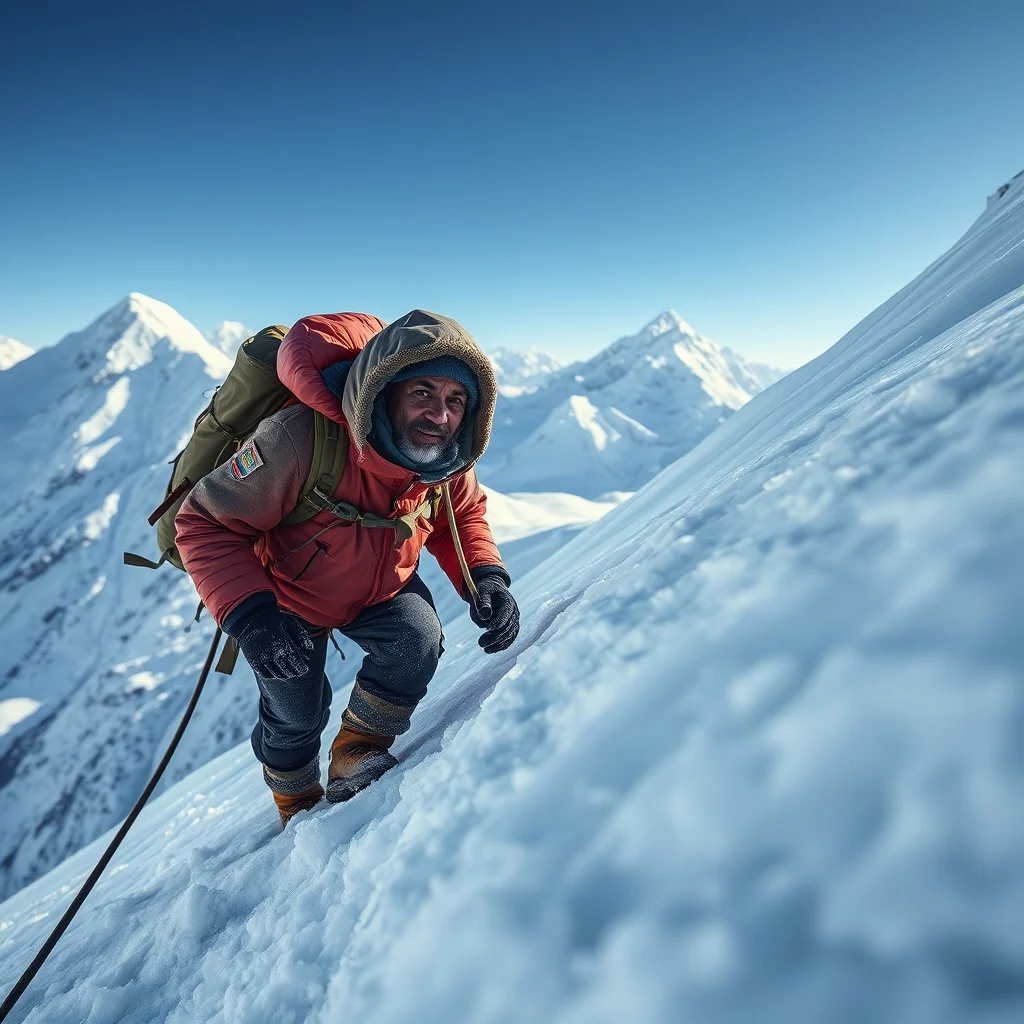
A Nepali climbing guide, Dawa Sherpa, has been found alive on Mount Everest after disappearing for six days at an altitude of approximately 7,500 meters (24,600 feet) above Camp 3. He was discovered crawling towards Base Camp on Thursday by a cleaning crew, a feat described as a “miracle” given the extreme conditions and critically low oxygen levels at such heights. His survival is being hailed as an extraordinary act of self-rescue against overwhelming odds.
Context of High-Altitude Survival
Mount Everest, the world’s highest peak, presents immense challenges to climbers. Altitudes above 7,000 meters are considered the “death zone,” where the human body cannot acclimatize and oxygen is scarce. Survival for extended periods in this zone without supplementary oxygen is exceptionally rare.
Dawa Sherpa, an experienced guide also known as Hillary Dawa Sherpa, was assisting a Polish climber when he went missing on May 29. Search efforts were launched by his expedition company, 8K Expeditions, but were hampered by the treacherous terrain and the slim chances of survival at such an altitude. Sadly, five people have already died on Everest this season, including three Nepali individuals involved in expedition support, according to AFP News Agency.
The Ordeal and Discovery
Pemba Sherpa, executive director of 8K Expeditions, confirmed Dawa Sherpa was found “slowly sliding through” the Khumbu Icefall towards Base Camp. Despite his ordeal, he was reported to be in “overall good health.” “As far as I know, no one has survived alone at that altitude on Everest so far,” Pemba Sherpa stated. “This is a miracle to have survived for six days alone and descended safe.”
Speculation suggests Dawa Sherpa may have utilized tents to shelter himself from the harsh elements during his six-day survival. Before his discovery, his wife had already performed last rites prayers, reflecting the grim expectations held for his survival. A British climber, Chris Thrall, had also posted a tribute on Instagram, recalling Sherpa sitting down for a rest during their descent from Camp 4.
A Record-Breaking Season
This year’s Everest climbing season has been the busiest on record, with over 1,000 individuals successfully reaching the summit. This surge in climbers, while boosting tourism, also increases the potential for accidents and rescue challenges. The successful self-rescue of Dawa Sherpa stands in stark contrast to the fatalities reported this season.
Implications and Future Watch
Dawa Sherpa’s survival underscores the resilience of the human spirit and the vast capabilities of experienced mountaineers. It also highlights the critical importance of preparedness, resourcefulness, and potentially luck in extreme environments. For the climbing community, this event serves as a powerful reminder of the inherent dangers on Everest, even for seasoned professionals.
As the climbing season winds down, attention will turn to the safety protocols and the lessons learned from incidents like Dawa Sherpa’s ordeal. The record number of climbers this year also raises questions about environmental impact and the management of traffic on the mountain. Observers will be watching to see if expedition companies and governing bodies implement any changes to enhance safety measures following this extraordinary survival story.







Leave a Reply