
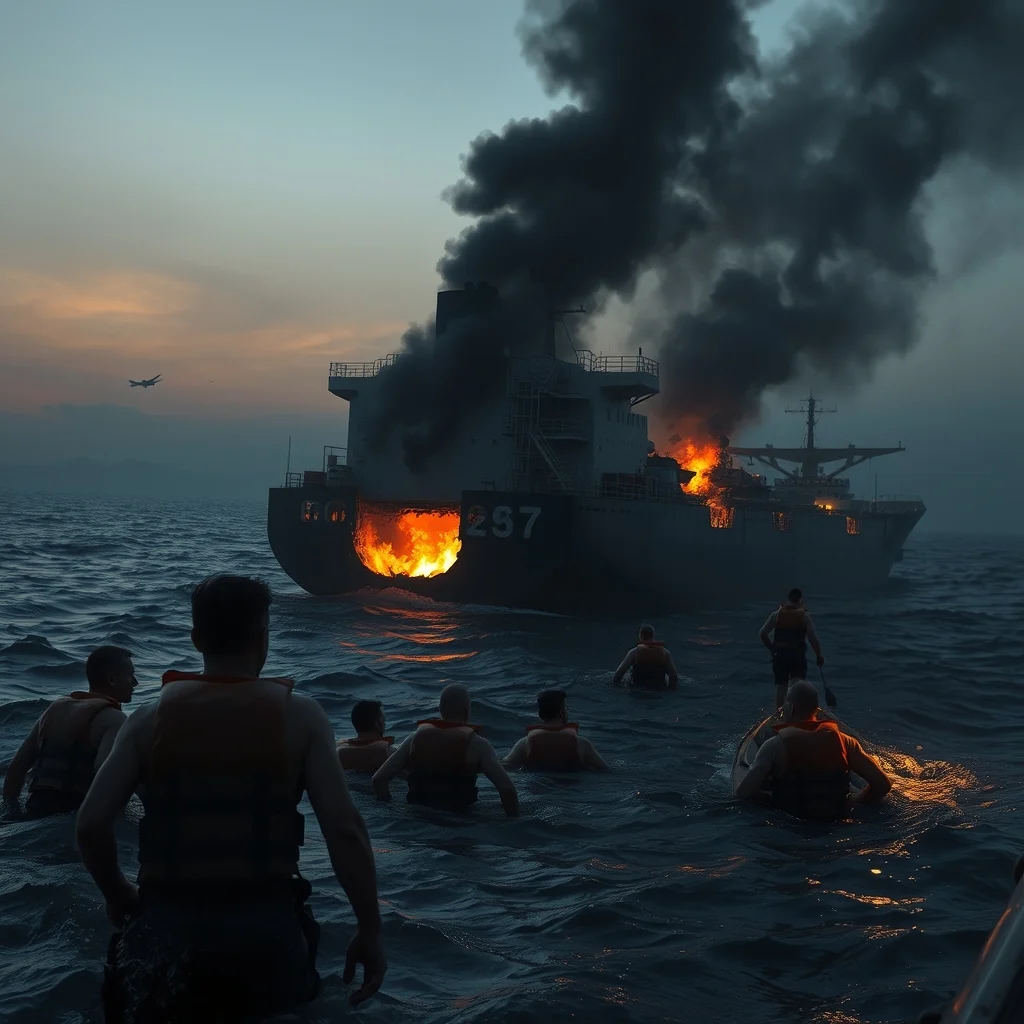
On March 1, a missile struck the oil tanker Skylight near the Strait of Hormuz, a critical global shipping route, resulting in the death of the captain and the disappearance of a young seafarer, Sunil Puniya, who survived the attack. The incident occurred as the vessel, previously sanctioned by the US, neared the vital waterway, amplifying fears for the safety of commercial shipping amid escalating regional tensions.
The attack on the Skylight, which had departed from Dubai, occurred in the early hours of the morning. Sunil Puniya, a 26-year-old on his inaugural voyage at sea, was asleep in his cabin when the missile hit the engine room. The impact triggered a fire that quickly engulfed the ship, plunging it into darkness and filling cabins with smoke.
Puniya described a scene of chaos and panic, with many crew members struggling to breathe. He recounted helping fellow sailors, some from South India, who were distressed and attempting to contact their families amidst the unfolding disaster. As the fire spread rapidly, fueled by oil, the survivors were forced to jump into the sea to escape the flames.
A rescue operation, launched by the Oman Navy within an hour, managed to save several seafarers. However, the fate of 25-year-old Dalip Rathore remained unknown. Puniya expressed profound distress upon realizing his friend, Dalip, was missing, grappling with the thought of informing Dalip’s family.
Dalip Rathore, who had joined the Skylight just a day before Sunil, hailed from a neighboring village in Rajasthan, India. The two seafarers, like many Indians in the global maritime industry, formed a close bond, especially given the limited communication options at sea. Dalip was reportedly in the engine room, the target of the missile strike, covering Sunil’s watch at the time of the attack. Both Dalip and Captain Ashish Kumar were casualties of the strike; while the captain’s remains were recovered, Dalip’s body has not been found.
The incident involving the Skylight is not an isolated event but part of a broader crisis impacting maritime traffic and seafarer welfare in the Strait of Hormuz region. Following the eruption of war between Iran and Israel, Iran reportedly blocked the strait, a chokepoint through which approximately 20% of the world’s oil and liquefied natural gas passes. Maritime intelligence firm Kpler reported that 38 commercial vessels have been hit in or near the Strait since the conflict began, with 24 attributed to Iran and four to the US, while others remain unconfirmed. This has led to hundreds of ships being rerouted or stranded, with over 20,000 seafarers currently stuck in the Gulf, according to the International Maritime Organization (IMO).
Under international maritime law, shipowners bear the responsibility for the welfare and repatriation of their crews. However, the ongoing conflict has exacerbated challenges for seafarers, leading to instances of abandonment and distress. The International Transport Workers’ Federation (ITF) has received over 2,000 calls for assistance from ships trapped in or near the Strait, reporting issues such as unpaid wages, contract disputes, difficulties returning home, and shortages of essential supplies. Mohamed Arrachedi of the ITF described some crews as effectively stranded, sharing voice notes from seafarers running low on provisions and having no contact with their shipowners for months. The ITF defines abandonment as a situation where shipowners desert their crews, leaving them unpaid and without necessities.
Last year, the ITF recorded 6,223 seafarers abandoned across 409 ships globally. While this represents a small fraction of the world’s merchant fleet, the union views it as a concerning trend, particularly amplified by geopolitical conflicts. David Loosley from Bimco, a major international shipping association, acknowledged that while international regulations exist,










Leave a Reply