
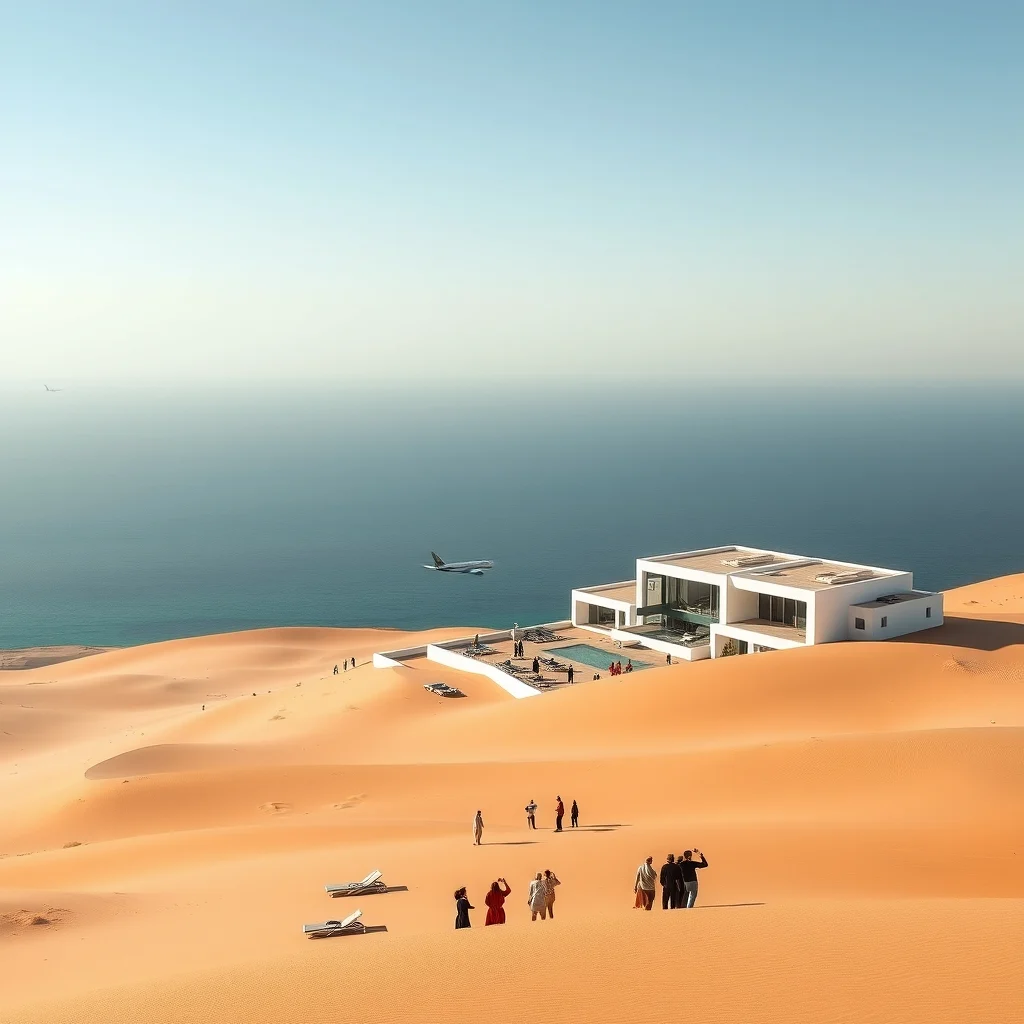
Morocco is actively promoting tourism in the disputed territory of Western Sahara, a move that rights groups and legal experts argue raises significant international law concerns and potentially legitimizes its occupation. The campaign, involving airlines and major booking platforms, targets destinations like Dakhla, presenting them as Moroccan holiday spots despite the territory’s classification by the UN as “non-self-governing.” Visitor numbers to the Morocco-administered areas of Western Sahara have seen a substantial increase, rising over 50% in the past seven years.
Context of the Dispute
Western Sahara has been the subject of a protracted territorial dispute for over 50 years. Following Spain’s withdrawal in 1976, Morocco claimed sovereignty over the region, leading to conflict with the indigenous Sahrawi people, represented by the Polisario Front, who seek independence. The United Nations classifies Western Sahara as a non-self-governing territory, with a long-standing plan for a self-determination referendum that has never materialized. Currently, Morocco administers approximately 80% of the territory.
Morocco’s Tourism Development Strategy
The Moroccan government has significantly invested in developing tourism infrastructure in Western Sahara, rebranding it as a desirable destination. This strategy has successfully attracted international airlines, including Ryanair, Transavia France, and Binter Canarias, which now operate direct flights from Europe to cities like Dakhla and Laayoune. Moroccan Ministry of Tourism data indicates a rise in visitor numbers, from 490,297 in 2019 to 743,133 in 2025, highlighting the effectiveness of these promotional efforts.
Airlines like Ryanair and Transavia France market these destinations as part of Morocco. Transavia France stated they operate flights in accordance with authorizations received from authorities. Ryanair has not yet commented on the specific marketing practices for these routes.
International Law and Ethical Considerations
Rights groups and legal experts voice serious concerns regarding the marketing of Western Sahara as Moroccan territory. Erik Hagen of Western Sahara Resource Watch stated that such practices risk distorting international law and public understanding, raising questions about corporate responsibility in politically sensitive and occupied territories. Dr. Andrea Maria Pelliconi, an international human rights law expert, suggests that companies failing to distinguish Western Sahara’s status could face litigation for violating international law and the Sahrawi people’s right to self-determination.
Major online booking platforms, including Expedia, Booking.com, and Trivago, also list accommodations in Western Sahara under Morocco. Booking.com indicated they add information to their platform for disputed regions to help travelers make informed choices and advise consulting government travel advisories. Expedia declined to comment, and Trivago has been approached for a statement.
Pressure from advocacy groups has led to some shifts. Airbnb, for instance, ceased referring to listings in Western Sahara as being in Morocco last year, demonstrating a potential for change in industry practices.
Polisario Front’s Response
The Polisario Front views Morocco’s tourism initiatives as an attempt to establish a “fait accompli” regarding its territorial claims. Sidi Breika, the Polisario Front’s representative to the UK and Ireland, stated that most tourists are unaware of the situation and that all projects in the occupied territory violate the Sahrawi people’s right to self-determination. The movement is closely monitoring airlines like Ryanair and considering legal action.
Geopolitical Developments
In October, the UN Security Council prioritized Morocco’s proposal for Western Sahara to become an autonomous region within Morocco. This move, supported by the US under the Trump administration’s 2020 recognition of Moroccan sovereignty, also extended the UN peacekeeping mission. However, the UN’s overarching position still emphasizes a mutually agreed political solution supervised by the UN, a proposal the Polisario Front has consistently rejected.
Future Implications
The ongoing promotion of tourism in Western Sahara by Morocco, facilitated by international travel companies, continues to highlight the complexities of the territorial dispute. The stance of airlines and booking platforms remains a critical point of contention, with potential legal challenges looming. As the international community seeks a resolution, the economic development and tourism narrative promoted by Morocco are likely to remain central to the ongoing geopolitical discussions surrounding Western Sahara’s future.










Leave a Reply