
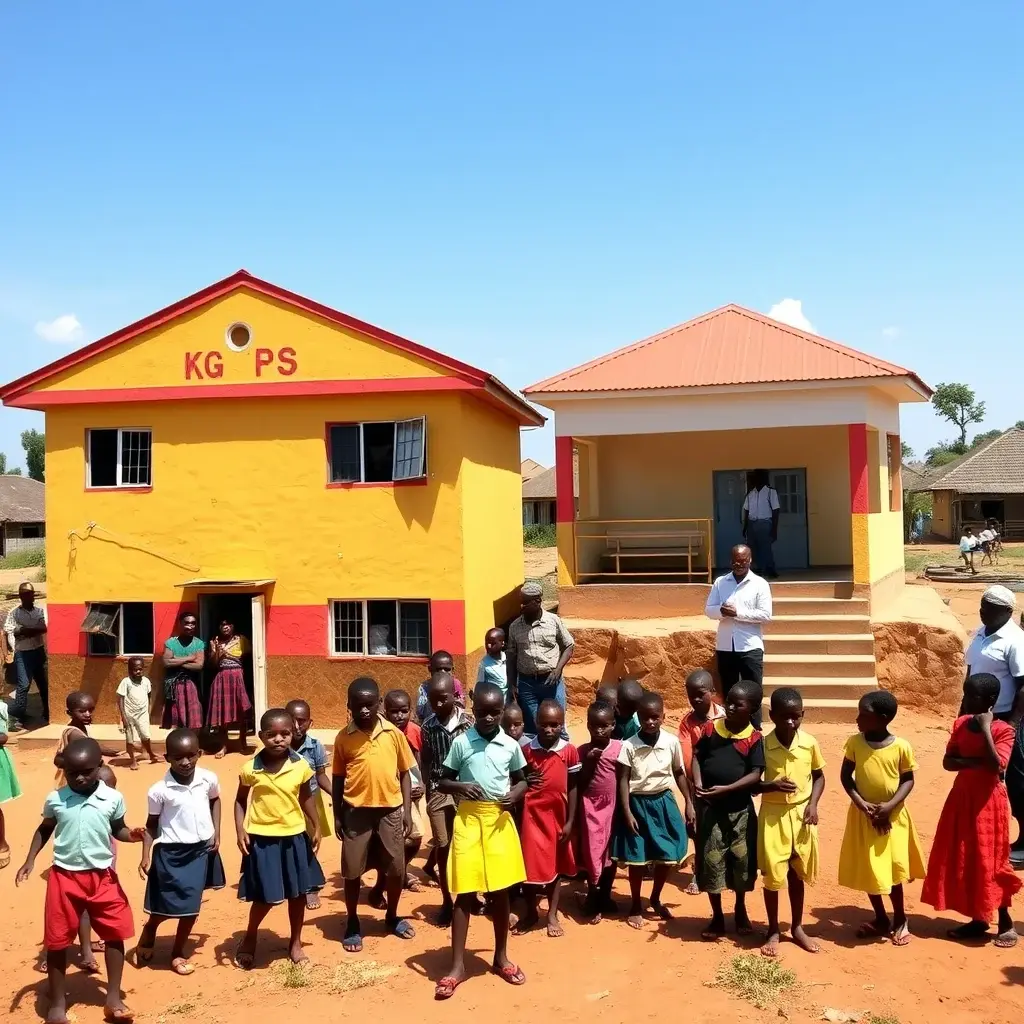
Residents of Nadowli and Chaang in Ghana’s Upper West Region are celebrating the commissioning of vital new infrastructure, including a fully furnished model Kindergarten (KG) block, a modern Community-based Health Planning and Services (CHPS) compound, and a three-unit classroom block. The projects, officially handed over by the Nadowli-Kaleo District Assembly, aim to significantly enhance access to early childhood education and primary healthcare services in these communities. The District Chief Executive (DCE), Madam Merry Haruna, led the commissioning ceremonies, underscoring the government’s commitment to bolstering essential services across the district.
Government Commitment and District-Wide Initiatives
Madam Haruna emphasized the government’s dedication to improving educational and healthcare delivery, noting that over 80 percent of the necessary funding has been released to District Assemblies to facilitate the completion of such infrastructure projects. She announced that the development momentum would continue, with plans to move to Vogoni next and further extend CHPS compound projects to communities like Papu, Ombo, and Somatigu. The newly completed classroom block in Nadowli was lauded as a “legacy project,” with assurances that the Assembly remains focused on finishing all ongoing development initiatives.
Addressing Educational Gaps and Past Challenges
The commissioning of the Nadowli KG block and the Chaang classroom block marks a significant step forward in addressing educational deficits. Mr. Francis Cudjoe, representing the District Education Directorate, expressed relief that the Nadowli facility would alleviate the strain on pupils who previously had to attend classes in other, more distant schools. He highlighted that the Chaang classroom project, which had been stalled since 2015, was successfully revived and completed under the current administration. While acknowledging the new facilities, Mr. Cudjoe also pointed out the persistent challenges in other deprived areas, such as Manwari Bamara, where children still face long journeys to access early childhood education, appealing for continued interventions.
Transforming Healthcare Delivery
The new CHPS compound in Chaang represents a substantial upgrade in healthcare services. Senior Midwife Suwie Faustina shared the previous difficulties, where healthcare workers operated out of a resident’s compound house. The modern facility, which includes essential staff accommodation, is expected to enable 24-hour care and attract more healthcare professionals to the area. Mr. David Mwileo, representing the District Director of Health Services, urged community members to take ownership of the CHPS compound, stressing its communal value. He noted that some minor finishing works are still pending before full medical operations can commence.
Community Engagement and Future Outlook
During the ceremonies, residents were urged to take responsibility for the maintenance and upkeep of the new facilities. Headteacher of the Nadowli Kindergarten, Madam Faustina Bodib, shared poignant details of the previous challenging conditions, where rainfall frequently disrupted lessons and required teachers to improvise significantly to protect the children. She expressed optimism for improved learning environments. Representing the Upper West Regional Minister, Chief Planning Officer Mr. Richard Nii-Adjaye Laryea commended the Nadowli-Kaleo District Assembly for its efforts. He advised residents to safeguard the land around the CHPS compound to allow for future expansion, such as the potential addition of a lying-in ward or an upgrade to a health centre. Students were also encouraged to treat the new educational facilities with care.
Implications and Future Watch
The successful commissioning of these projects signifies a positive trajectory for Nadowli-Kaleo, directly impacting the quality of life for residents by improving access to fundamental services. The government’s stated commitment to funding and completing infrastructure projects, coupled with the revival of stalled initiatives, suggests a renewed focus on development in underserved areas. However, the acknowledged ongoing challenges in other communities, such as long distances to educational facilities and the need for further healthcare infrastructure, highlight the persistent disparities that require continued attention and investment. The success of these new facilities will depend on sustained community engagement, effective management by local authorities, and continued government support to address the remaining developmental gaps across the district. Observers will be watching to see if the momentum continues and if similar projects are rolled out effectively in the announced future locations.










Leave a Reply