
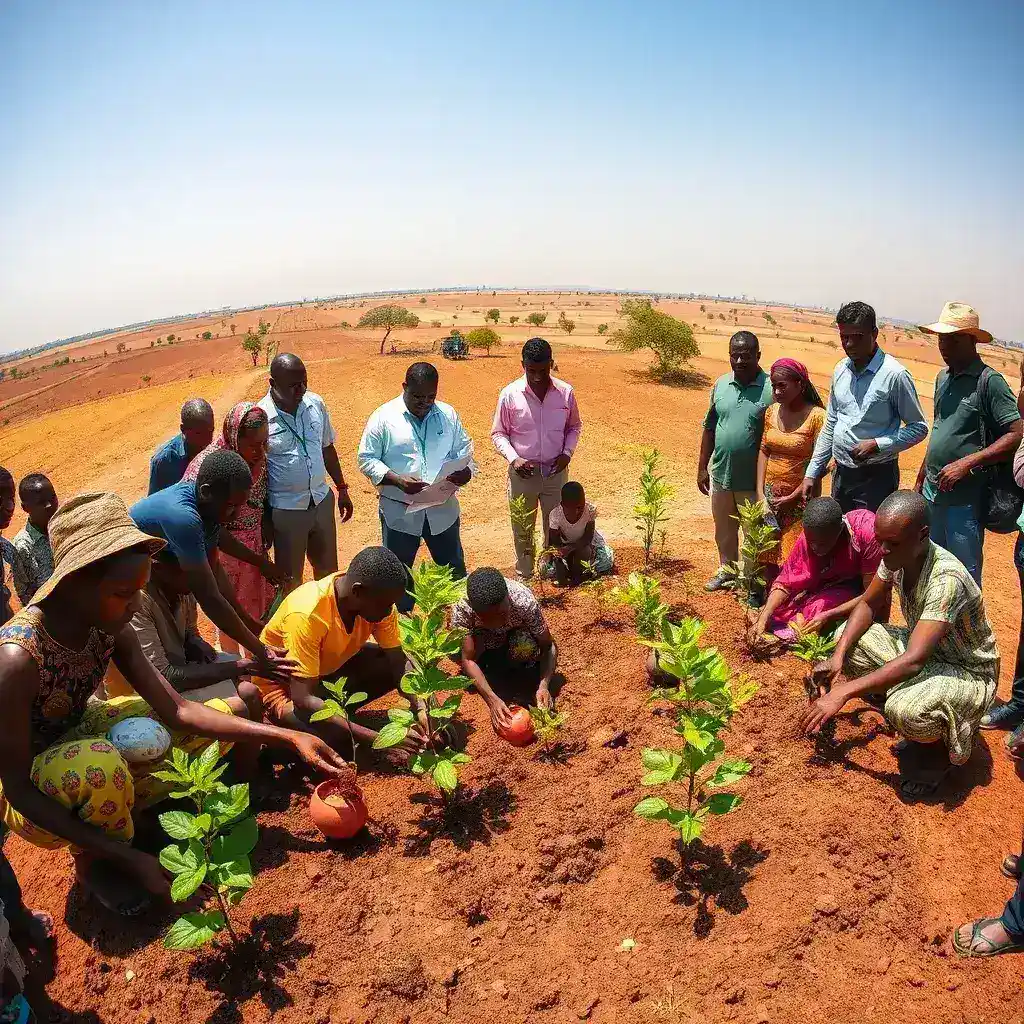
Yendi, Northern Region – A significant environmental and socio-economic initiative, the Integrated Forest Governance, Restoration, and Livelihoods project, was officially launched in Yendi this week. Spearheaded by TreeAid Ghana in partnership with Nviron Hive, the three-year project aims to plant and regenerate 200,000 trees, restore 1,000 hectares of degraded land through improved local forest governance, and enhance livelihoods across northern Ghana, marking a crucial step in addressing climate change and rural poverty.
This ambitious project builds upon years of successful interventions by TreeAid Ghana in the Daka River landscape, including areas like Yendi, Gusheigu, Mion, and Nanumba North. The organization has a proven track record of supporting farmers in land restoration and adopting sustainable land management practices.
Robert Tumyagewor Atawura, Country Programme Manager for Tree Aid Ghana, described the launch as a landmark moment. He emphasized Tree Aid’s core mission: “to fight poverty and the effects of climate change by growing trees, improving lives, and helping communities thrive.” The new project represents a scaling up of these efforts, targeting a wider geographical area with a more profound impact.
At the heart of the initiative is a holistic strategy that intertwines environmental restoration with strengthened governance and livelihood development. The project will focus on restoring degraded lands using methods such as Assisted Natural Regeneration, enrichment planting, and agroforestry systems, ensuring that farmers and local communities are central to all activities.
Strengthening local forest governance is a key component. Community Resource Champions, traditional leaders, and district-level institutions will receive training and tools to manage natural resources sustainably and equitably, fostering long-term environmental stewardship.
Beyond ecological restoration, the project seeks to unlock economic opportunities by developing value chains for non-timber forest products. This includes products like shea, dawadawa, baobab, moringa, tamarind, and honey. The goal is to enable communities, particularly women and youth, to generate income while actively participating in environmental preservation.
Jonathan Anecham Naaba, Country Director of Tree Aid Ghana, highlighted ongoing restoration efforts along the Daka River, a vital source of drinking water. He noted that unsustainable farming and other human activities have severely degraded the riverine ecosystem, leading to erratic water flow patterns affecting local communities. Tree Aid Ghana, with support from partners like Ecosia, has been implementing measures such as buffer zone protection and tree planting to rehabilitate the river’s catchment area.
The new partnership with Nviron Hive will significantly expand these restoration efforts. “Although some intervention areas fall outside the immediate Daka River basin, they contribute to the wider watershed management, making the approach both strategic and impactful,” Naaba stated, underscoring the interconnectedness of the landscape.
Community ownership is paramount, with local people actively involved in decision-making and implementation through existing structures like chiefs, farmer groups, and community champions. This ensures that interventions are relevant and sustainable.
Otema Yirenkyi, Director of Nviron Hive, expressed strong optimism about the project’s potential, commending the enthusiasm of beneficiary communities. “We see that when programmes are well coordinated and structured, they allow communities to thrive,” she remarked, stressing the importance of well-designed initiatives for sustainable environmental outcomes.
The active involvement of traditional authorities, such as the Overlord of Dagbon, Ndan Yaa-Naa Abubakari II, is crucial. As a climate change advocate and commercial farmer, he has pledged support and urged all stakeholders to protect the landscape. “We are all still alive because the trees are alive but our landscape is gradually dying off and we know that when the last tree goes, we are finished,” he stated through a sub-chief, Bin-dana AA. Ziblim.
The Overlord also called for an immediate halt to human activities around the Daka River, describing them as “deliberate and dangerous to the survival of the river.” He insisted on collective action to protect the river and all natural resources in the region.
This initiative aligns closely with Ghana’s national development and climate goals, including its Paris Agreement commitments to restore degraded lands and support national policies like the Forest and Wildlife Policy and afforestation programs. By collaborating with District Assemblies, the Forestry Commission, and local stakeholders, the project aims to institutionalize community-led restoration, ensuring its benefits extend beyond the project’s duration.
As northern Ghana continues to face the compounding challenges of climate change, land degradation, and rural poverty, the launch of this integrated project offers renewed hope. It highlights the growing understanding that environmental sustainability and economic resilience are intrinsically linked. With strong partnerships, community engagement, and a clear vision, stakeholders anticipate that this initiative will not only restore landscapes but also transform lives, fostering a greener, more resilient, and prosperous future for northern Ghana.










Leave a Reply