
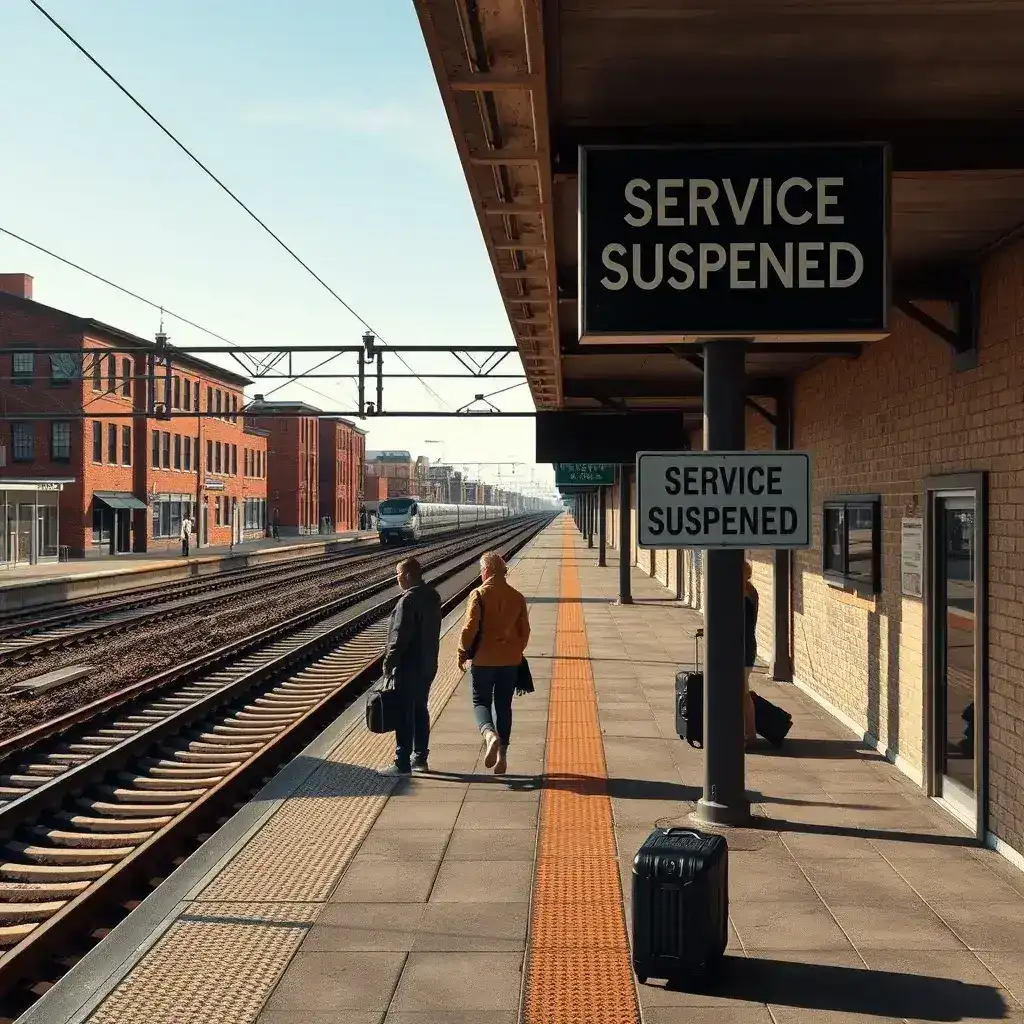
Hundreds of thousands of New York City region commuters faced mounting disruption Sunday as workers on the Long Island Rail Road (LIRR), North America’s busiest commuter rail line, continued their strike. The walkout, which began Saturday after contract negotiations stalled over pay and work rules, threatened to spill into the crucial Monday morning rush hour, marking the first LIRR strike in nearly three decades.
Disruption Mounts Ahead of Weekday Commute
The Metropolitan Transportation Authority (MTA), which manages the LIRR, issued stark warnings to passengers, stating there is “no substitute” for the rail service. They urged commuters to explore remote work options if possible, anticipating severe congestion and delays on alternative transportation methods.
As of Sunday, no formal talks were scheduled between union leaders and MTA management, increasing the likelihood that the strike would extend into the busy workweek. Limited shuttle services are operational, but they are insufficient to meet the demand, leaving many passengers stranded or facing significantly longer travel times.
Queens Borough President Donovan Richards Jr. expressed concerns that the city might not be fully prepared for the scale of the disruption. “For working-class people, you can’t just say stay home,” Richards stated, highlighting that not all residents have the flexibility to work remotely.
Roots of the Strike: Pay and Conditions
The strike involves approximately 3,500 union workers who have been without wage increases for three years. Union representatives cited these stagnant wages and unsatisfactory working conditions as the primary reasons for the work stoppage.
Gil Lang, General Chairman of the LIRR General Committee at the Brotherhood of Locomotive Engineers and Trainmen (BLET), one of the involved unions, asserted that the MTA left the workers with no alternative. “After three years without raises, we cannot make any more compromises to cover for the MTA’s mismanagement,” Lang said.
MTA’s Financial Concerns
Conversely, MTA Chair and CEO Janno Lieber defended the agency’s stance, emphasizing the need to maintain fiscal responsibility. Lieber stated that the MTA could not “responsibly make a deal that implodes MTA’s budget.”
He further argued against granting wage increases that far exceed those for other MTA employees, particularly given that LIRR workers are already among the highest-paid railroad workers nationally. The MTA is concerned that agreeing to the union’s demands could set a precedent that strains its already tight budget and burdens taxpayers.
Impact on Daily Life and Events
The LIRR shutdown has already begun to impact travel plans and local events. The New York Mets baseball team issued advisories to fans attending weekend games at Citi Field, warning of potential transportation difficulties.
Online forums, such as a dedicated Reddit thread for LIRR commuters, have been inundated with anxious questions and comments from passengers trying to navigate the disruption. Personal accounts from commuters illustrate the immediate challenges, with some discovering the strike only after beginning their journeys, while others faced significantly extended commutes involving multiple bus transfers.
Governor’s Call for Resolution
New York Governor Kathy Hochul has publicly urged both the unions and the MTA to reach an agreement swiftly. She warned that a prolonged strike would lead to widespread economic and social disruption across the region.
Looking Ahead: Potential for Extended Disruption
With no immediate prospect of renewed negotiations, the focus shifts to whether a resolution can be found before the critical Monday morning commute. The MTA’s limited shuttle services and the potential for severe traffic congestion underscore the critical dependence of a vast number of New Yorkers on the LIRR. The coming days will be crucial in determining the duration of this strike and its broader impact on the region’s transportation infrastructure and economy.










Leave a Reply