
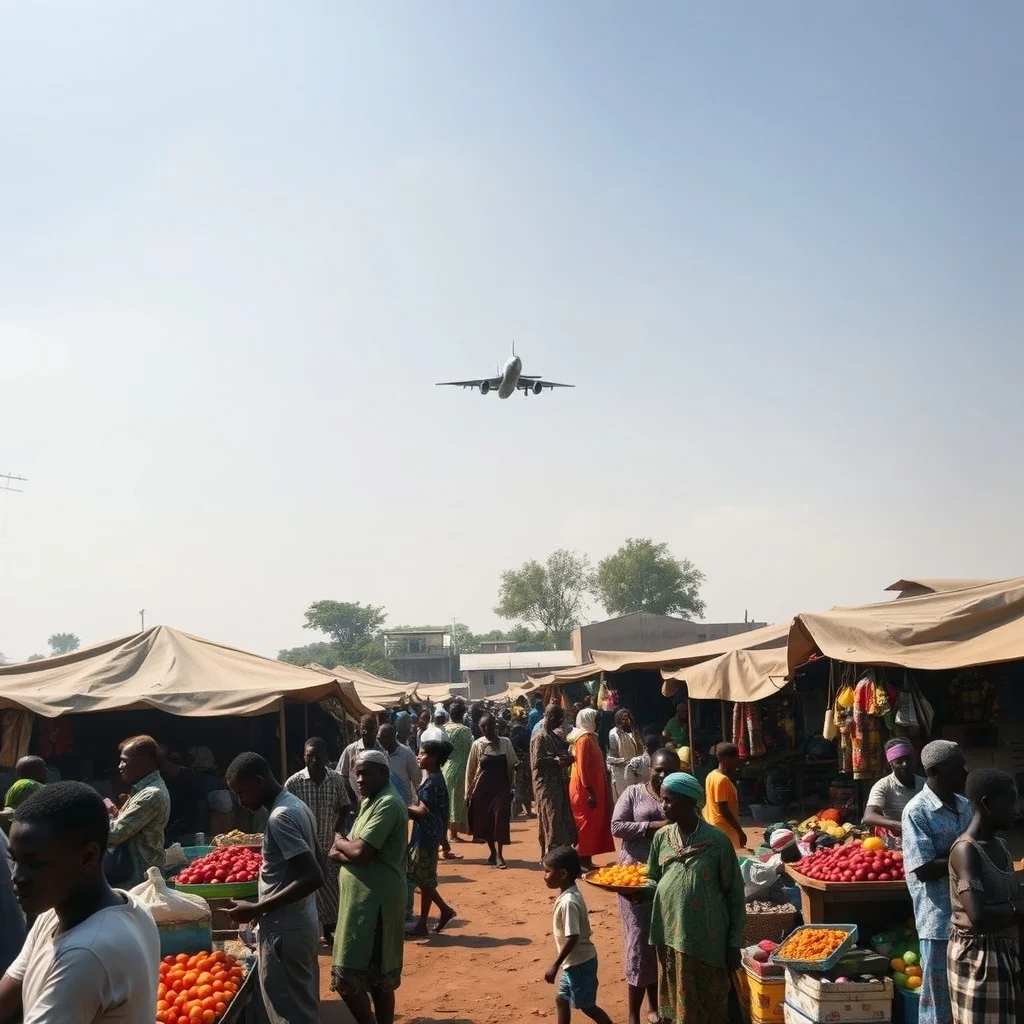
Nigeria’s military stated Wednesday that no evidence supports claims of civilian casualties from a May 10 airstrike targeting militants in Zamfara state’s Tumfa village. Defence Headquarters spokesperson Major-General Michael Onoja described reports of a high death toll as unverified and misleading, asserting that the strike adhered to international humanitarian law.
Conflicting Reports Emerge
The military’s statement directly contradicts findings by Amnesty International, which reported that at least 100 civilians, including women and children, perished in the airstrike on a crowded market. Local media outlets have also published similar casualty figures, citing witness accounts.
Amnesty International urged Nigerian authorities to launch an immediate investigation into the incident. The human rights organization’s report highlighted the devastating impact on the local population, adding urgency to calls for accountability.
Military’s Justification for the Strike
Major-General Onoja maintained that the airstrike was based on multi-sourced intelligence confirming a “high-level gathering” of militant leaders in the village. He emphasized that no credible or substantiated evidence of civilian deaths has been established through official assessments or independent verification.
The military acknowledged that the nature of the strike made immediate casualty verification challenging. However, a post-strike assessment indicated that “several terrorists were neutralized.” This suggests that the operation achieved its primary military objective.
Broader Security Context in Nigeria
The incident occurs within the context of Nigeria’s ongoing struggle against various forms of violent extremism. The military has been actively engaged in combating banditry in the northwest region, often categorizing these groups as terrorists. Simultaneously, a long-standing Islamist insurgency continues in the northeast.
These security challenges have placed immense pressure on the Nigerian military and have led to complex operational environments where distinguishing between combatants and civilians can be difficult. The use of airstrikes in populated areas, even when targeting militants, carries inherent risks.
Implications and Future Watch
The divergent accounts from the military and Amnesty International highlight a critical information gap and underscore the challenges of verifying events in conflict zones. The differing narratives raise questions about transparency and the thoroughness of military investigations into potential collateral damage.
For the residents of Zamfara and surrounding areas, the incident intensifies fears about civilian safety during counter-terrorism operations. The lack of consensus on casualties could also impact international perceptions of Nigeria’s efforts to combat insecurity and uphold human rights standards.
Moving forward, it will be crucial to observe whether independent investigations are permitted and what further evidence, if any, emerges to corroborate either the military’s claims or the reports of significant civilian loss. The outcome of these developments could influence future military tactics and international scrutiny of Nigeria’s internal security operations.










Leave a Reply