
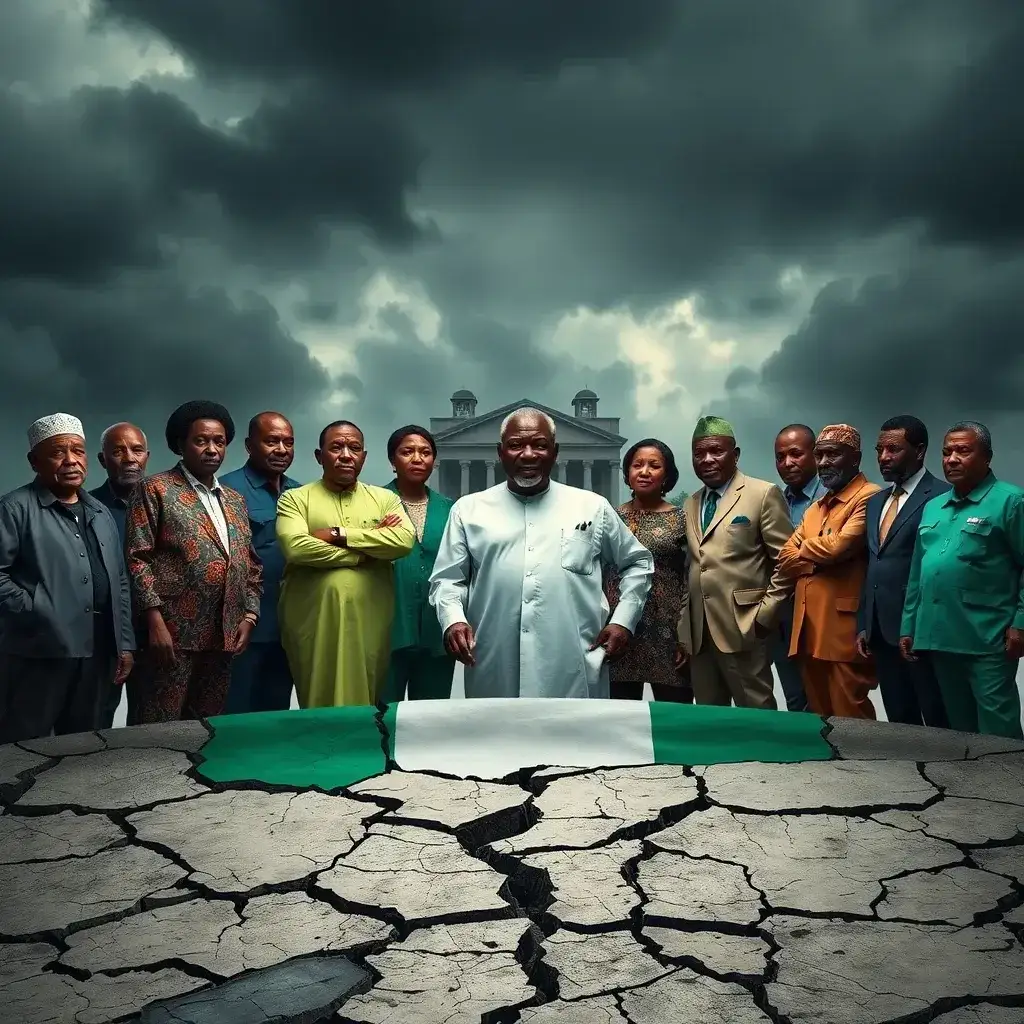
Nigeria’s opposition alliance, formed to challenge President Bola Tinubu in the upcoming 2027 elections, has suffered a significant blow with the departure of two key figures, Peter Obi and Rabiu Kwankwaso. The alliance, which aimed to present a united front, is now facing internal divisions and legal disputes, casting doubt on its ability to field a single presidential candidate.
Context of Opposition Realignment
Hopes were high for the African Democratic Congress (ADC)-led alliance, which brought together former Vice President Atiku Abubakar, Peter Obi (who placed third in 2023), Rabiu Kwankwaso (fourth in 2023), and other influential politicians. This grouping represented the most ambitious opposition realignment in Nigeria in over a decade.
The alliance had agreed on April 25 to back a single presidential candidate. The primary goal was to prevent a repeat of the 2023 election scenario, where a divided opposition allowed President Tinubu to secure victory with approximately 35% of the vote, while opposition candidates collectively garnered around 60%.
Key Figures Depart, Undermining Unity
Peter Obi, a prominent southern politician who energized young voters in the 2023 election, announced his withdrawal, citing “endless court cases, internal battles, suspicion, and division” within the ADC. Similarly, Rabiu Kwankwaso, an influential northern politician, also exited the coalition.
Both Obi and Kwankwaso have since joined another opposition grouping, the Nigeria Democratic Congress. Their departures significantly weaken the ADC-led alliance’s strategy of presenting a unified front.
Internal Divisions and External Reactions
An ADC spokesperson, Bolaji Abdullahi, acknowledged the impact of these departures. “Under the present circumstances that we find ourselves in, the Ibadan Declaration, which canvassed a single presidential candidate from these willing participating parties, will have to be reviewed,” he stated.
Cheta Nwanze, a partner at SBM Intelligence, described the situation as the opposition’s agreement being “on life support.” He further warned of a “fractured opposition that will cannibalise its own votes,” a scenario the alliance was formed to prevent.
Even before the split, analysts noted that competing ambitions among key figures like Abubakar and Obi posed a threat to the coalition’s cohesion. Both leaders command loyal but distinct voter bases that have historically been difficult to reconcile on a single ticket.
Presidency’s Scathing Response
The Presidency, through spokesperson Bayo Onanuga, reacted sharply to Peter Obi’s departure. Onanuga characterized Obi as a “political nomad” and an “opportunistic fellow,” dismissing his stated reasons for leaving as “puerile” and “illogical musings.” He suggested Obi’s move was driven by an inability to contend for the ADC ticket against other strong contenders like Atiku Abubakar and Rotimi Amaechi, opting instead for an “easy road” that he predicted would lead to “doom.”
Implications for the 2027 Election
The fragmentation of the opposition provides a significant advantage to the incumbent President Bola Tinubu. He benefits from the powers of incumbency and a well-established party structure.
Historically, Nigerian incumbents have rarely lost re-election, with the notable exception of Goodluck Jonathan in 2015, who conceded defeat following a successful opposition merger. The current disarray within the opposition ranks suggests that such a scenario may be difficult to replicate in 2027.
Looking Ahead
The coming months will be critical for the Nigerian opposition. The ability of Peter Obi and Rabiu Kwankwaso to build a viable alternative platform within the Nigeria Democratic Congress, and the capacity of the remaining ADC alliance members to salvage their unity or forge new partnerships, will determine the political landscape leading up to the 2027 polls. Observers will be watching closely to see if any form of unified opposition can emerge to effectively challenge the ruling party.










Leave a Reply