
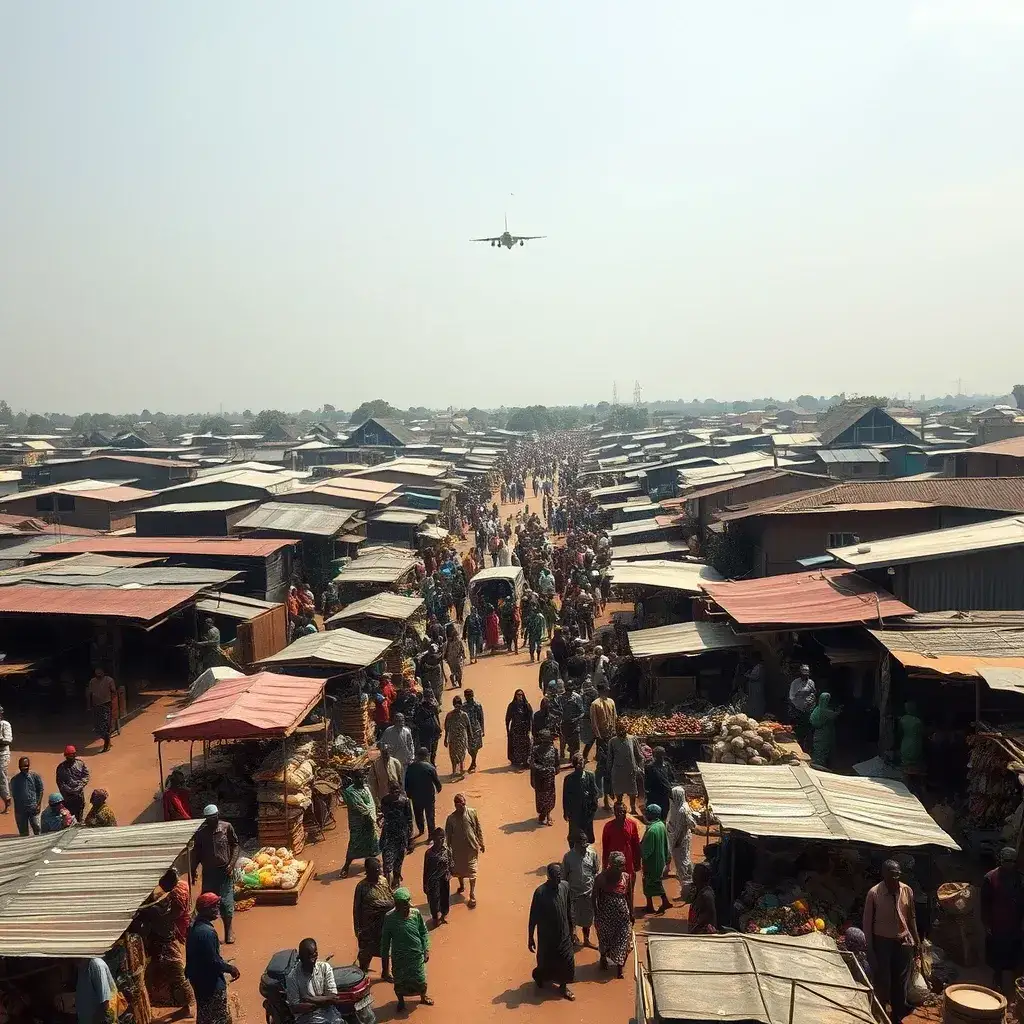
Nigeria’s National Human Rights Commission (NHRC) on Thursday urged the military to conduct a swift and comprehensive investigation into recurrent civilian casualties resulting from airstrikes, following reports of significant loss of life in the northwest region. The call comes after Amnesty International cited witnesses detailing at least 100 civilian deaths in a recent military airstrike on a market in Zamfara state, marking the third such incident reported since April.
Context of Escalating Air Power and Civilian Concerns
Nigeria has increasingly turned to air power as a key strategy in combating multifaceted security challenges across the country. In the northeast, the military is engaged in a protracted battle against a persistent insurgency. Simultaneously, the northwest faces a surge in activity from armed kidnapping gangs, locally known as bandits, and Islamist militants.
This reliance on airstrikes, while intended to neutralize threats, has raised grave concerns regarding adherence to international humanitarian and human rights law. The NHRC, a state-established body responsible for investigating alleged rights violations, stated that the repeated reports of civilian deaths and injuries necessitate urgent scrutiny.
Recurrent Incidents and Military Response
The most recent incident highlighted by Amnesty International occurred last weekend in a crowded market in Zamfara state. This event followed a similar airstrike in April on a weekly market in Jilli, northeastern Nigeria, which reportedly killed an unspecified number of civilians. The military has acknowledged an investigation into the Jilli incident.
However, in response to the Zamfara market incident, the military has stated that there is no evidence of civilian casualties. This assertion contrasts sharply with accounts from witnesses and human rights organizations, underscoring a significant information gap and a divergence in findings.
Official Calls for Accountability and Investigation
The NHRC’s executive secretary, Tony Ojukwu, voiced the commission’s deep concern, questioning the recurring nature of these civilian losses. “Nigerians deserve to know why this has become a recurring decimal. For how long will this continue?” Ojukwu stated, emphasizing the need for transparency and accountability.
Adding international weight to the calls for investigation, UN Human Rights chief Volker Turk issued a statement on May 13 expressing shock over the reported civilian deaths in Zamfara. He urged Nigerian authorities to undertake a “thorough, independent and impartial” investigation into the incident.
Legal Framework and Commission’s Powers
Under Nigerian law, the National Human Rights Commission possesses the authority to investigate alleged human rights abuses. The commission can subsequently refer such matters to the country’s attorney general for potential prosecution, providing a legal avenue for addressing violations.
Implications and Future Outlook
The escalating civilian casualties from military operations pose a significant challenge to Nigeria’s efforts to restore peace and security. The NHRC’s demand for a probe signals a growing pressure on the military to enhance operational safeguards and ensure accountability when civilian lives are lost. The discrepancy between military statements and witness accounts highlights the critical need for independent verification mechanisms.
For the civilian population in conflict zones, these recurrent incidents heighten fear and distrust, potentially undermining public support for counter-insurgency efforts. The international community’s engagement, as seen with the UN Human Rights chief’s statement, indicates that Nigeria’s handling of these allegations will be closely monitored. The effectiveness and impartiality of the military’s internal investigations, and any subsequent actions taken by the attorney general, will be crucial in determining the future trajectory of Nigeria’s internal security operations and its adherence to international human rights standards.










Leave a Reply