
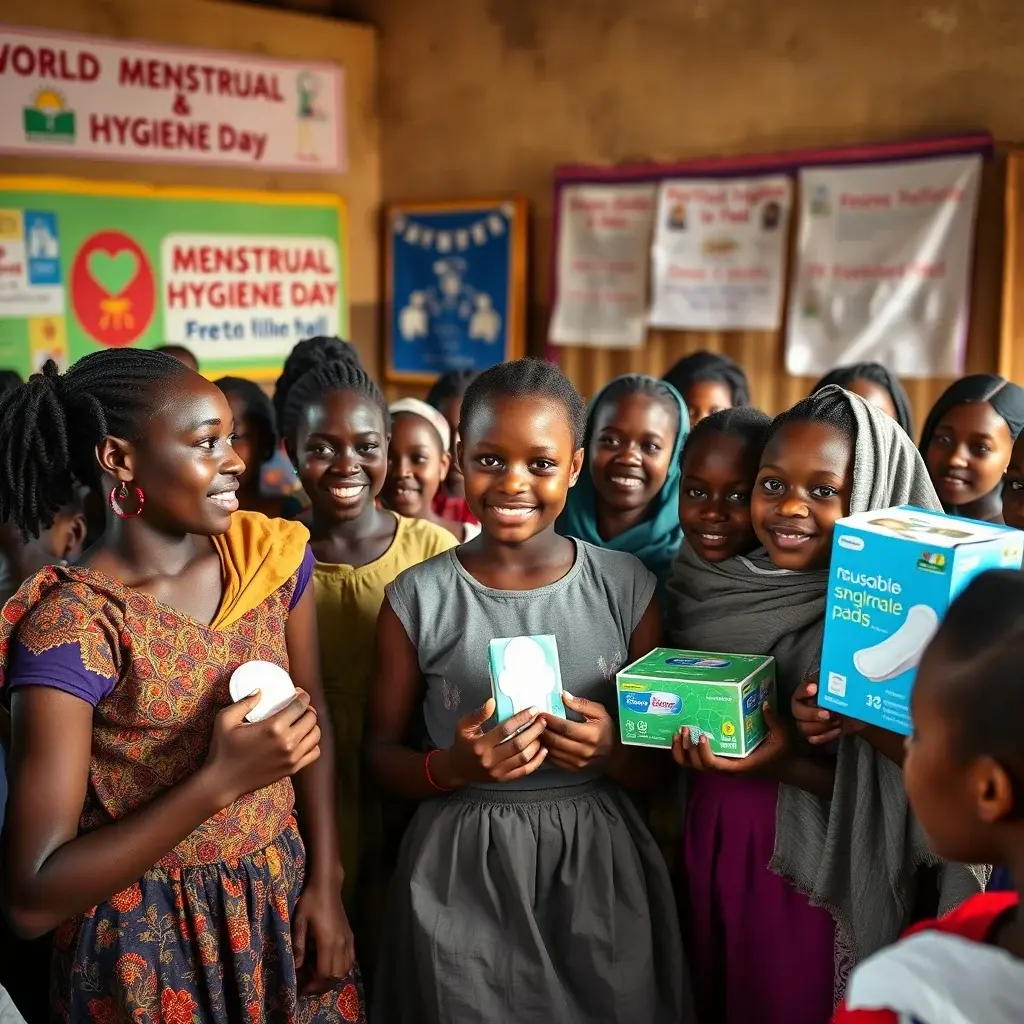
The Bosomtwe District in Ghana’s Ashanti Region has witnessed a notable decrease in teenage pregnancies, attributed to the implementation of “Pad Bank” initiatives and the government’s free sanitary pad distribution program in schools. This success, announced by the District School Girl Child Coordinator, Rita Laar, during World Menstrual Hygiene Day celebrations, highlights the critical link between menstrual hygiene access and adolescent reproductive health.
Context: A Persistent Challenge
Teenage pregnancy remains a significant public health and socioeconomic challenge in Ghana, with the Ashanti Region frequently recording some of the highest absolute numbers of cases annually. Data from the Ghana Health Service indicated that the Bosomtwe District, particularly rural and semi-urban communities like Pipie, Nkowi, Obbo, Abono, Tetrefu, and Sewua, had historically high rates of adolescent pregnancy and school dropout among girls.
These communities often face financial constraints, making essential menstrual hygiene products inaccessible for many young girls. This lack of access has been linked to detrimental consequences, including school absenteeism, early sexual activity, and ultimately, teenage pregnancy.
The Pad Bank Initiative Takes Root
In response to the alarming surge in teenage pregnancies, district authorities and local stakeholders launched targeted interventions. The “Pad Bank” initiative, supported by the district assembly, the chief of Sewua, NGOs, and philanthropists, aims to provide free sanitary pads to vulnerable schoolgirls who cannot afford them.
Rita Laar revealed a stark reality: “When I became the school Girl Child Coordinator, investigations by the district education directorate and other stakeholders found that some teenage girls were trading sexual favours with boys in their communities for sanitary pads.” This practice directly exposed many girls to the risks of teenage pregnancy and school dropout.
The Pad Bank initiative, along with the government’s free sanitary pad distribution, has eased a significant burden for these girls. It allows them to attend school confidently during their menstrual periods and reduces their dependence on unreliable sources for sanitary products.
World Menstrual Hygiene Day Highlights Progress
The Bosomtwe district marked World Menstrual Hygiene Day on May 22, focusing on their efforts against teenage pregnancy and promoting menstrual hygiene, especially in identified hotspot communities. While observed globally on May 28, the local event served as a platform to showcase successful interventions.
During the celebration, Rita Laar shared that the 2026 teenage pregnancy figures show a considerable decline compared to previous years. She credited these improvements directly to the Pad Bank and the free sanitary pad program.
The event also provided an opportunity to educate young girls on menstrual hygiene management, build their self-confidence, and emphasize the importance of education. Nana Akosua Abrafi Afisa, Queen Mother of Sewua, cautioned the girls against early sexual activity and urged them to prioritize their studies for a better future.
Government Commitment and Broader Strategies
The District Chief Executive for Bosomtwe, Abdellah Hamid, reiterated the government’s commitment to the welfare and education of the girl child. He affirmed continued efforts to distribute free sanitary pads across the district to promote menstrual hygiene, protect girls’ dignity, and combat teenage pregnancy.
Beyond sanitary pad provision, the Bosomtwe District Assembly, in collaboration with the Ghana Health Service and DOVVSU, conducts regular community and school durbars. These sessions educate students on child rights, sexual health, and pregnancy prevention. Furthermore, empowerment and vocational training programs are offered to Junior High School graduates to foster economic independence and reduce vulnerability.
Implications and Future Outlook
The success in the Bosomtwe District offers a compelling model for other regions grappling with similar challenges. It underscores that addressing the fundamental need for menstrual hygiene products can have a profound impact on girls’ education and reproductive health outcomes.
The focus on breaking the silence around menstruation, improving access to sanitary products, and comprehensive education aligns with the global #PeriodFriendlyWorld movement. As the Ashanti Region continues to face high numbers of teenage pregnancies, the strategies implemented in Bosomtwe will be crucial to watch for potential replication and scaling up.










Leave a Reply