
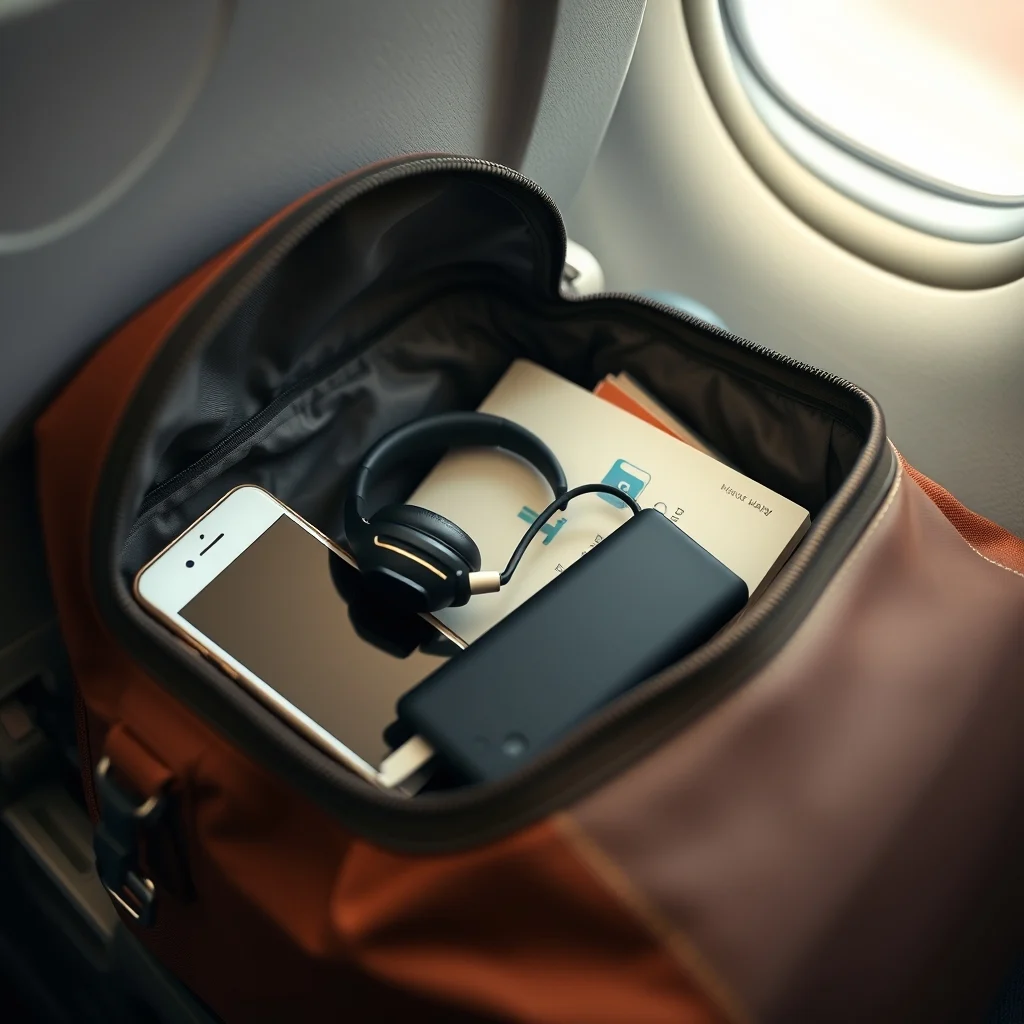
The UK’s Civil Aviation Authority (CAA) has issued a stark warning about the increasing number of serious incidents involving portable chargers on flights globally. The regulator is urging passengers to become more aware of the rules, as these devices pose significant risks of overheating and catching fire if mishandled.
Growing Concerns Over Power Bank Safety
Jonathan Nicholson from the CAA emphasized that the regulations surrounding portable chargers are not arbitrary. He stated that restrictions, such as prohibiting them from checked luggage, are crucial for passenger and crew safety. The CAA is preparing to launch a public awareness campaign this summer in collaboration with UK airlines to educate travelers about these essential rules.
This alert follows a recent incident where an EasyJet flight from Hurghada, Egypt, to London Luton was diverted to Rome last week. The diversion occurred because a passenger had placed a portable charger in the aircraft’s hold luggage. The flight’s diversion caused significant disruption, forcing passengers to stay overnight in Rome before a rescheduled flight to London the following day.
Key Rules for Air Travel with Power Banks
The CAA has outlined a clear set of international rules for carrying power banks on aircraft:
- Portable chargers must be carried in carry-on luggage, not in checked baggage.
- Passengers are limited to carrying a maximum of two power banks.
- While on board, passengers should not use their power banks.
- Crucially, passengers must not charge their power banks during the flight, as this is when they are most likely to overheat and cause issues.
Nicholson highlighted the potential consequences of non-compliance, noting, “I wouldn’t want to be the passenger who packed it in the wrong place and ended up with all the other passengers in the wrong city because the flight was diverted.”
Data Reveals Rising Incident Rates
Incidents involving power banks are “certainly on the rise,” according to Nicholson, correlating with their increasing popularity. This trend mirrors concerns about other lithium-ion battery-powered devices like vapes, which are also banned from checked luggage.
Data released by UL Standards & Engagement, a non-profit safety organization, supports these concerns. The organization reported an average of two flights per week in 2024 experiencing a “thermal runaway incident.” This phenomenon, where lithium-ion batteries overheat, poses a serious fire risk. The data, gathered from voluntary reports by 37 airlines, covers all rechargeable devices with lithium-ion batteries, including phones, tablets, and laptops.
Between 2019 and 2024, UL Standards & Engagement observed a 15% increase in such incidents. A November 2025 survey conducted by the CAA among 1,000 UK passengers indicated that while over a third were aware of lithium battery rules, many were unsure of the specific requirements. The survey also suggested that individuals over 55 generally had a better understanding of these regulations.
Why Power Banks Pose a Unique Risk
Nicholson explained that power banks present a greater risk compared to devices like digital cameras or laptops due to their larger and more powerful batteries, which can generate significant heat. “These things, when they catch fire, they go – they really go – they are big, big issues and big fires,” he stated, though he reassured that cabin crews are trained to manage such emergencies.
The widespread use of portable chargers is partly due to the lack of power outlets on many short-haul flights. Passengers often rely on these devices to keep their electronics charged during travel.
Broader Safety Considerations
Beyond air travel, the CAA also advises caution with power banks in everyday use. Nicholson noted that people often treat power banks more roughly than their mobile phones, subjecting them to damage by tossing them into bags. Such physical stress can increase the risk of malfunction.
He also recommended investing in higher-quality power banks. “There are a lot of not so good products around,” he warned, indicating that cheaply made devices with replacement batteries can carry higher risks.
Looking Ahead: Increased Scrutiny and Passenger Education
Airlines typically have slightly varied rules, but generally advise keeping portable chargers in a bag under the seat rather than in overhead compartments. With incidents on the rise and a growing reliance on portable electronics, passengers can expect increased scrutiny and a greater emphasis on education regarding the safe carriage of power banks and other lithium-ion battery-powered devices. The upcoming CAA campaign aims to bridge the knowledge gap and ensure travelers understand the critical importance of adhering to these safety protocols to prevent dangerous situations in the air.










Leave a Reply