
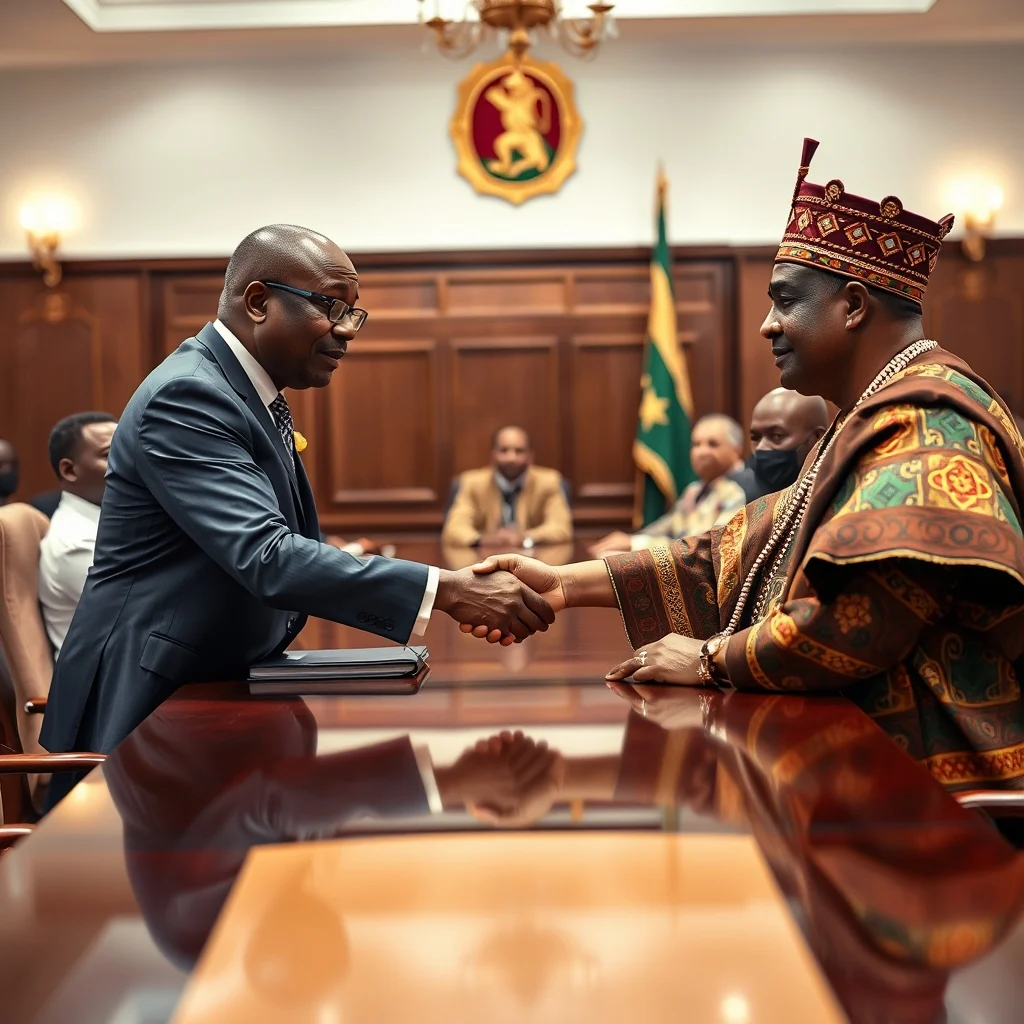
President John Mahama is urging for a more profound and structured collaboration between the government and traditional authorities, identifying chiefs as crucial partners in Ghana’s ongoing development efforts. This call was made during a meeting at the Jubilee House on Friday, May 15, with the Northern Regional House of Chiefs, where he emphasized the need for traditional leaders to transition from consultative roles to active participation in governance and development initiatives.
Shifting from Consultation to Collaboration
President Mahama lauded the chiefs for their proactive approach during the meeting, characterizing their engagement as a demonstration of “statesmanship, foresight, and an uncommon commitment to partnership in national development.” He noted that their presence signified a desire not merely to present requests, but to actively contribute to the administration of the country and the enhancement of prosperity for its citizens.
The President articulated that traditional authorities hold a pivotal position in governance due to their deep community roots, inherent cultural legitimacy, and established systems for conflict resolution. He observed that many African governments have historically underutilized traditional leadership, a potent institution for maintaining social cohesion at the grassroots level.
“No development agenda can succeed without the cooperation of traditional rulers,” President Mahama stated, underscoring that the move towards a more formalized partnership is both “timely and necessary.” This perspective highlights a recognition of the invaluable role traditional leaders play in ensuring the successful implementation and sustainability of national development projects.
The Indispensable Role of Traditional Leaders
Traditional leaders, often referred to as chiefs, have historically served as custodians of culture, tradition, and community well-being in many African societies. Their influence extends beyond ceremonial duties, encompassing dispute resolution, land management, and the promotion of social order within their jurisdictions.
The government’s recognition of this potential signifies a potential shift in policy, moving towards a more inclusive governance model. This approach acknowledges that top-down development strategies may fall short without the buy-in and active participation of local leadership who possess intimate knowledge of community needs and dynamics.
By formalizing this partnership, the government aims to leverage the unique strengths of traditional authorities. These include their ability to mobilize communities, ensure equitable resource distribution, and foster a sense of ownership over development projects.
Data and Expert Support
While specific data points were not detailed in the initial announcement, the sentiment echoes broader discussions within development circles. Scholars and practitioners have often pointed to the critical role of local institutions in achieving sustainable development goals. For instance, a 2020 report by the United Nations Development Programme (UNDP) on local governance in Africa highlighted that “community engagement, often facilitated by traditional structures, is a key determinant of project success and long-term impact.”
This perspective suggests that integrating traditional leaders into formal development planning and execution can enhance transparency, accountability, and responsiveness to local needs, thereby increasing the likelihood of successful outcomes.
Implications for National Development and Governance
The call for a stronger partnership implies a potential recalibration of how Ghana approaches national development. It suggests that future government policies and projects will likely seek more direct input and collaboration from traditional councils.
For citizens, this could translate into development initiatives that are more aligned with local customs and priorities, potentially leading to greater acceptance and effectiveness. It also opens avenues for traditional leaders to play a more significant role in advocating for their communities’ needs within the national framework.
This evolving relationship could strengthen the fabric of Ghanaian governance, making it more decentralized and responsive to the diverse needs across the nation. The emphasis on structured collaboration signals a move towards a more holistic and inclusive approach to nation-building, where established community leadership is recognized as a vital asset.
What to Watch Next
The key question moving forward will be the concrete mechanisms and policies that will be put in place to operationalize this enhanced partnership. Observers will be watching for specific legislative changes, funding allocations, and joint project initiatives that demonstrate this commitment. The success of this initiative will depend on the willingness of both government and traditional leaders to foster mutual respect, clear communication, and shared accountability in their collaborative endeavors. The focus will be on how this partnership translates into tangible improvements in the lives of Ghanaians across various regions.










Leave a Reply