
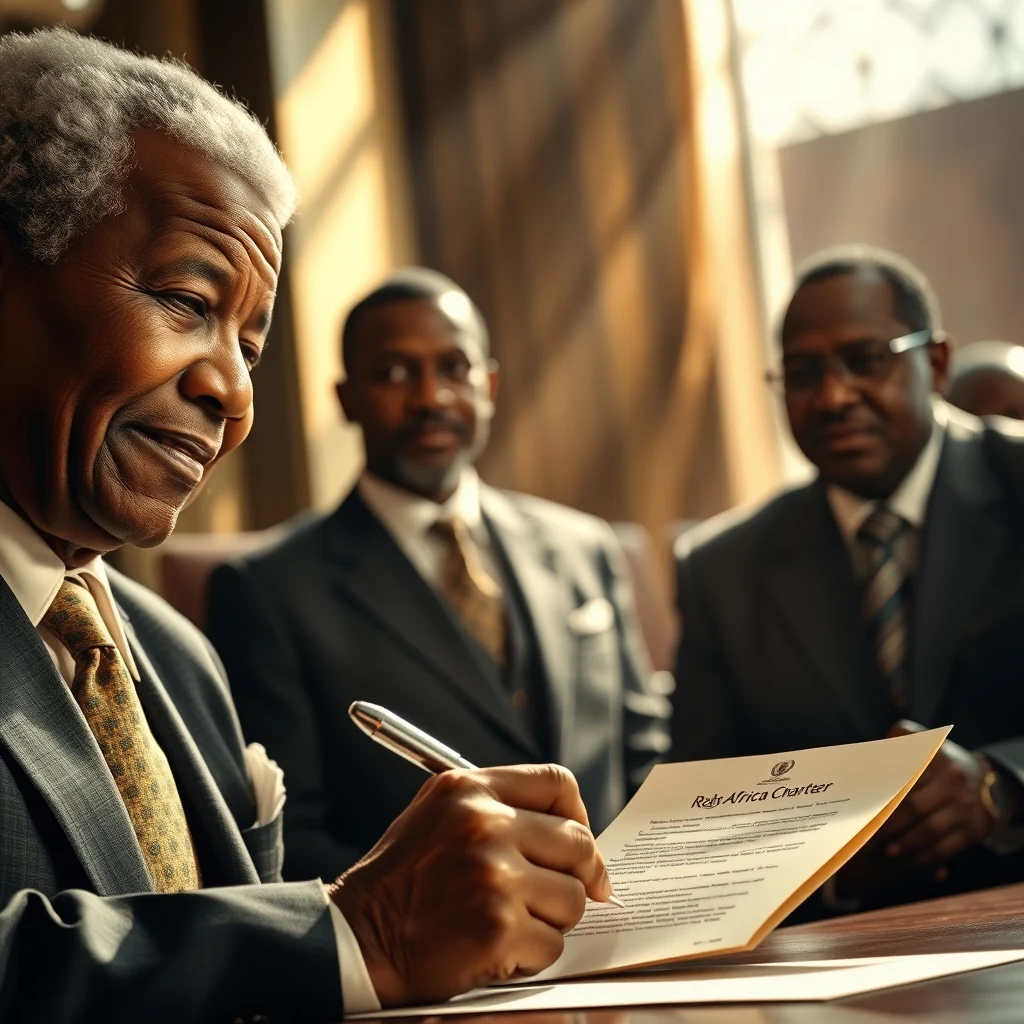
Johannesburg, South Africa – On July 23, 2005, Nelson Mandela, the revered former President of South Africa and a staunch advocate for equality and development in sport, stood alongside prominent figures to sign the Rugby Africa Charter. This pivotal moment, occurring in Johannesburg, marked a renewed commitment to fostering rugby’s growth and accessibility across the African continent, a vision that continues to resonate two decades later as Rugby Africa celebrates its 40th anniversary and African rugby experiences a significant surge in participation.
A Charter for Change
The Rugby Africa Charter, signed 20 years ago, articulated a clear mission: to realize the full potential of rugby in Africa. Its signatories pledged to establish the African Leopards Rugby Union, cultivate African rugby heroes, provide essential resources to developing nations, and ensure that every African child has the opportunity to play rugby football.
The charter’s enduring relevance is highlighted by the current state of the sport. Rugby is now one of Africa’s fastest-growing team sports, with participation rates climbing steadily over the past two decades, mirroring the aspirations laid out in the 2005 document.
Mandela and Rugby’s Unifying Power
Nelson Mandela’s association with the Rugby Africa Charter underscores his lifelong dedication to using sport as a force for unity and social change. His most iconic sporting moment came in 1995 when he presented the Rugby World Cup trophy to the victorious South African Springboks captain, François Pienaar, in Johannesburg. This act symbolized a nation healing and uniting through the previously racially divided sport.
South Africa’s success on the rugby field has continued to be a source of national pride. The Springboks have since secured three additional Rugby World Cup titles in 2007, 2019, and 2023, solidifying their status as the most successful team in the tournament’s history, surpassing New Zealand.
Pioneering Figures in African Rugby
Among the signatories of the 2005 Charter was the late Makhenkesi Stofile, South Africa’s former Minister of Sport and a passionate anti-apartheid activist. Stofile was also a distinguished rugby player, having captained the Fort Hare First XV and the Border provincial side.
The legacy of black African rugby pioneers is further illuminated by the Tsimba brothers, Richard and Kennedy. Richard Tsimba, the first black player to represent Zimbabwe internationally, was inducted into the World Rugby Hall of Fame in 2012. His younger brother, Kennedy, a celebrated player in South Africa, became the first black captain of Zimbabwe’s rugby team in 1998.
In 2015, Nelson Mandela himself was inducted into the World Rugby Hall of Fame, becoming the first black South African and the third black African to receive this honor. Reflecting on Mandela’s induction, Kennedy Tsimba stated, “At least a brother has come; we were feeling lonely.” He considered the induction a pinnacle achievement, even surpassing winning the World Cup.
Implications and Future Outlook
The Rugby Africa Charter, nearly two decades old, continues to serve as a guiding document for the sport’s development on the continent. The charter’s principles of inclusivity, resource development, and grassroots participation are directly contributing to rugby’s growing popularity.
As Rugby Africa marks its 40th anniversary, the progress witnessed is a testament to the visionaries like Nelson Mandela and Makhenkesi Stofile, whose commitment laid the groundwork for a more equitable and accessible sporting future. The ongoing surge in participation suggests that the promise of rugby for every African child is steadily becoming a reality, with potential for further growth and global impact.










Leave a Reply