
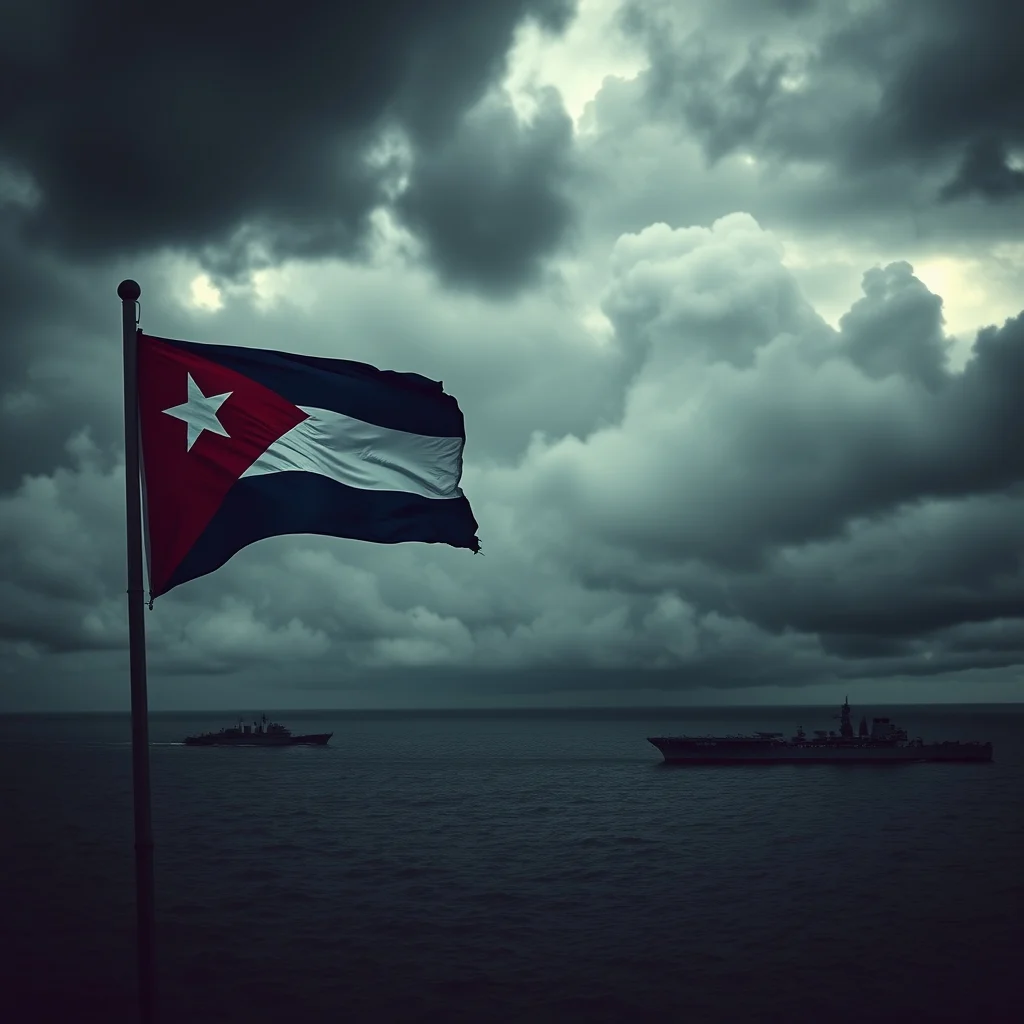
Russia and China have jointly condemned the United States for its decision to indict former Cuban leader Raúl Castro on murder charges related to the 1996 downing of two planes. The indictment, announced this week, accuses Castro and five others of involvement in an incident that killed four people and significantly heightened U.S.-Cuba tensions. This move by the U.S. has drawn sharp criticism from Moscow and Beijing, who view it as an aggressive tactic against a key ally.
Escalating Tensions and Diplomatic Fallout
The charges against Raúl Castro, who led Cuba’s armed forces at the time of the incident and later served as president, stem from the shooting down of two civilian aircraft. These planes, operated by the Cuban-American exile group Brothers to the Rescue, were en route between Cuba and Florida when they were targeted. Three U.S. citizens were among the four fatalities.
The indictment carries penalties of life imprisonment or the death penalty, marking a significant escalation in the long-standing diplomatic friction between the U.S. and Cuba. U.S. officials, including Secretary of State Marco Rubio, have stated that Castro has previously admitted to ordering the shootdown, framing the indictment as a response to a threat to U.S. national security.
International Condemnation of U.S. Tactics
Both Russia and China have voiced strong opposition to the U.S. action. The Chinese foreign ministry urged the U.S. to cease employing “coercion” and “threats” against Cuba, emphasizing Beijing’s firm support for its ally. Chinese foreign ministry spokesman Guo Jiakun stated that the U.S. should “stop threatening force at every turn” and refrain from using sanctions and judicial processes as tools of pressure.
Similarly, the Kremlin described the U.S. pressure campaign against Cuba, including the indictment, as “unacceptable.” Kremlin spokesman Dmitry Peskov told Russian state media that such methods “border on violence” and should not be used against current or former heads of state. Russia views Cuba as a long-time ally and has previously provided crucial support, including oil shipments.
U.S. Pressure Campaign on Cuba
The indictment of Raúl Castro is part of a broader strategy by the Trump administration to exert significant pressure on Cuba’s government. President Trump has openly discussed toppling Cuba’s communist regime and has implemented stringent sanctions. These measures have included an effective blockade on oil shipments, exacerbating a severe fuel crisis on the island, leading to widespread blackouts and food shortages.
Earlier this month, President Trump signed an executive order targeting officials in Cuba’s energy, defense, financial, and security sectors, as well as individuals accused of human rights abuses or corruption. U.S. surveillance flights near Cuba have reportedly increased, with the CIA director publicly stating that Cuba should no longer serve as a “safe haven for adversaries.”
Cuba’s Response and Regional Dynamics
Cuban officials have denounced the charges, with President Miguel Díaz-Canel labeling the indictment a “political manoeuvre, devoid of any legal foundation.” This legal action comes at a time when Cuba has been engaged in discussions with the U.S. regarding bilateral differences, though progress appears limited amidst the escalating U.S. pressure.
Cuba has historically relied on regional allies, such as Venezuela under Nicolás Maduro, for economic and energy support. However, the U.S. has also targeted Maduro, indicting him on drug trafficking charges and attempting to remove him from power, which has disrupted vital aid to Havana. U.S. Secretary of State Marco Rubio has framed the administration’s actions as offering the Cuban people “a new path” towards freedom.
Future Implications and Watchpoints
The indictment of Raúl Castro and the strong condemnation from Russia and China signal a deepening geopolitical divide. The U.S. strategy appears aimed at isolating Cuba and forcing regime change, while its adversaries are solidifying their opposition to what they perceive as American overreach. The effectiveness of these U.S. sanctions and legal actions, coupled with the reactions of international powers and the resilience of the Cuban people, will be critical factors to watch in the coming months.










Leave a Reply