
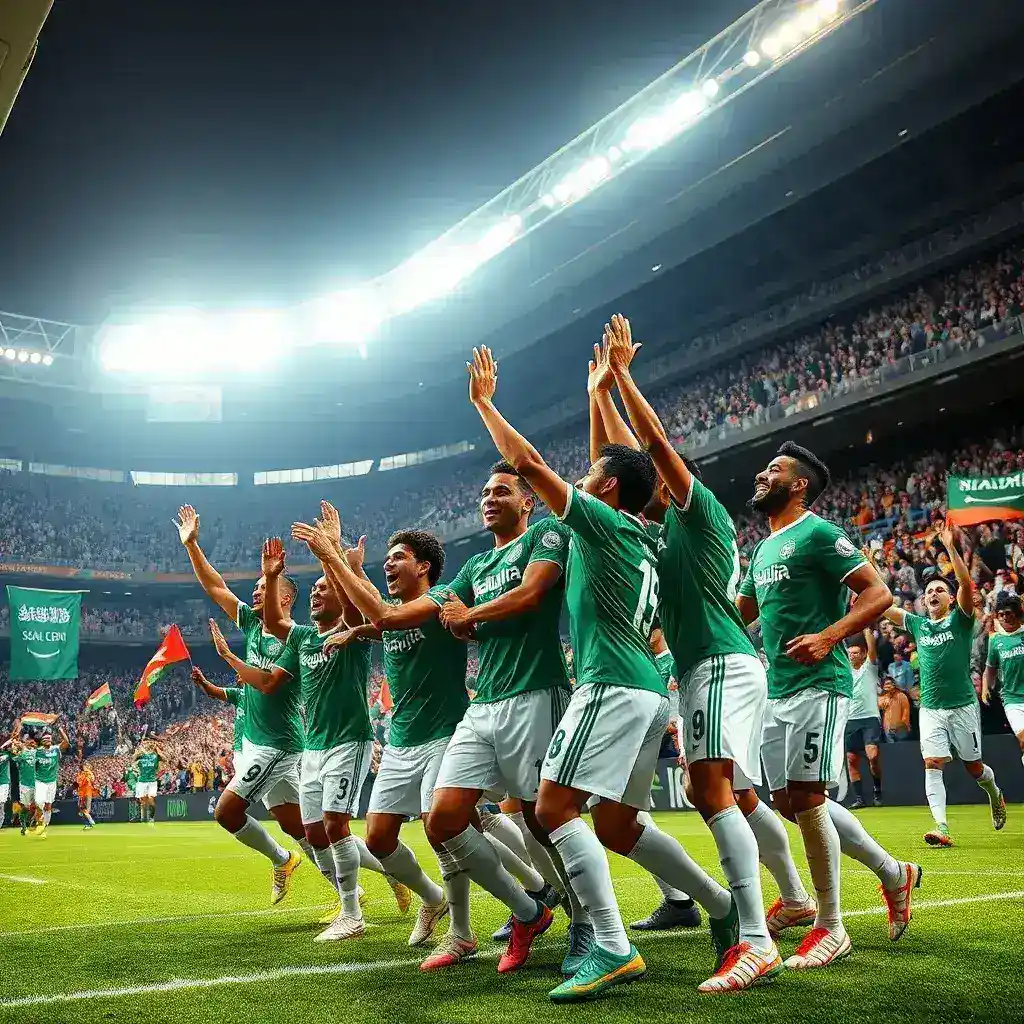
Saudi Arabia’s national football team is in a state of transition, having recently appointed Greek coach Georgios Donis in late April to lead the squad for the 2026 World Cup, despite him not having overseen a single match prior to selection. This coaching change follows the dismissal of Hervé Renard, who had a notable tenure from 2019 to 2023, including a historic win against Argentina in the Qatar World Cup. Renard’s brief return was marked by underwhelming performances, and the team only narrowly secured qualification for the expanded 2026 tournament.
Coaching Carousel and Underwhelming Performances
Hervé Renard’s second stint as head coach, which began in October 2024, replacing Roberto Mancini, proved to be short-lived and unsatisfactory. The team suffered a significant 4-0 home defeat to Egypt in March, a result that drew sharp criticism from former player Saeed Al-Owairan, who felt the scoreline could have been worse. Reports of Renard’s interest in the vacant Ghana coaching position intensified speculation, leading to his eventual dismissal. The timing of his sacking, rather than the decision itself, has been a point of contention within Saudi football circles.
Renard, reflecting on his departure, highlighted his successful qualification campaigns. “That’s football … Saudi Arabia have qualified for the World Cup seven times, including twice with me,” he stated. “And there’s only one coach who has led them through both the qualifiers and the World Cup; that’s me, in 2022. At least there will be that sense of pride.” However, this pride had been diminished by recent results.
Donis Takes the Helm Amidst Strategic Challenges
Georgios Donis, a former Blackburn Rovers winger, now faces the immediate challenge of preparing the team for major tournaments without the benefit of prior match experience with the squad. His familiarity with the Saudi Pro League, having coached multiple clubs including Al-Khaleej where he achieved a respectable mid-table finish this season, was a key factor in his appointment. Donis is expected to favour a 4-2-3-1 formation.
A significant concern for the new coach is the team’s defensive fragility and goal-scoring drought. Saudi Arabia failed to keep a clean sheet in Renard’s final eight matches. Furthermore, they scored a mere seven goals in ten games during the main World Cup qualification round, with none attributed to recognized strikers. Addressing these offensive and defensive issues will be paramount for Donis.
Key Players and Emerging Talents
The national team will continue to rely on the experience of Salem Al-Dawsari, who at nearly 35 years old, remains a pivotal figure. Al-Dawsari, the reigning Asian Player of the Year, famously scored the winning goal against Argentina in the 2022 World Cup. While his recent form for the national team has been inconsistent, and he has missed crucial penalties, his ability to influence games, particularly on big occasions, is undeniable. His continued importance, however, also signals a potential lack of younger, high-impact replacements.
Among the emerging talents, 22-year-old Musab Al-Juwayr is generating considerable excitement. Already a seasoned international with over 30 caps, Al-Juwayr earned the Saudi Pro League’s Most Promising Player award last season for his vision and passing. Increased playing time at Al-Qadsiah under Brendan Rodgers has seen him flourish, contributing to the club’s top-four finish. His development is seen as crucial for the team’s future creative output.
Firas Al-Buraikan, a 25-year-old forward, is another player expected to step up. Despite feeling like a veteran, he has yet to fully establish himself as the undisputed number nine for his country. Known for his relentless work rate, Al-Buraikan recently boosted his confidence by scoring the winning goal in the Asian Champions League final in April. His consistent effort and recent success could provide the needed spark in attack.
Fan Support and Future Prospects
Saudi football fans are known for their passion and vibrant support, often creating impressive tifos. While ticket sales for the 2026 World Cup matches are reported as steady, a significant contingent of fans is expected from within Saudi Arabia and the diaspora in the United States. The enthusiastic and vocal nature of Saudi fans, particularly evident in the Saudi Pro League, suggests they will create a lively atmosphere in Miami, Atlanta, and Houston.
The immediate future also includes hosting the Asian Cup for the first time in January, where the team aims for their first continental title since 1996. This tournament is viewed as a critical stepping stone and a true starting point for preparations for the 2034 World Cup, which Saudi Arabia is set to host. The focus will be on building a cohesive and competitive unit under Donis, leveraging both experienced stars and emerging talent, while addressing the team’s tactical and technical shortcomings.
Looking Ahead
The coming months will be crucial for Georgios Donis to implement his vision and tactical approach. The performance in the upcoming Asian Cup will be a significant indicator of the team’s progress. Fans and pundits will be watching closely to see if the Green Falcons can overcome their recent struggles, particularly in defense and goal-scoring, and build momentum towards not only the 2026 World Cup but also the long-term goal of establishing themselves as a major force in international football, especially with the 2034 World Cup on home soil.










Leave a Reply