
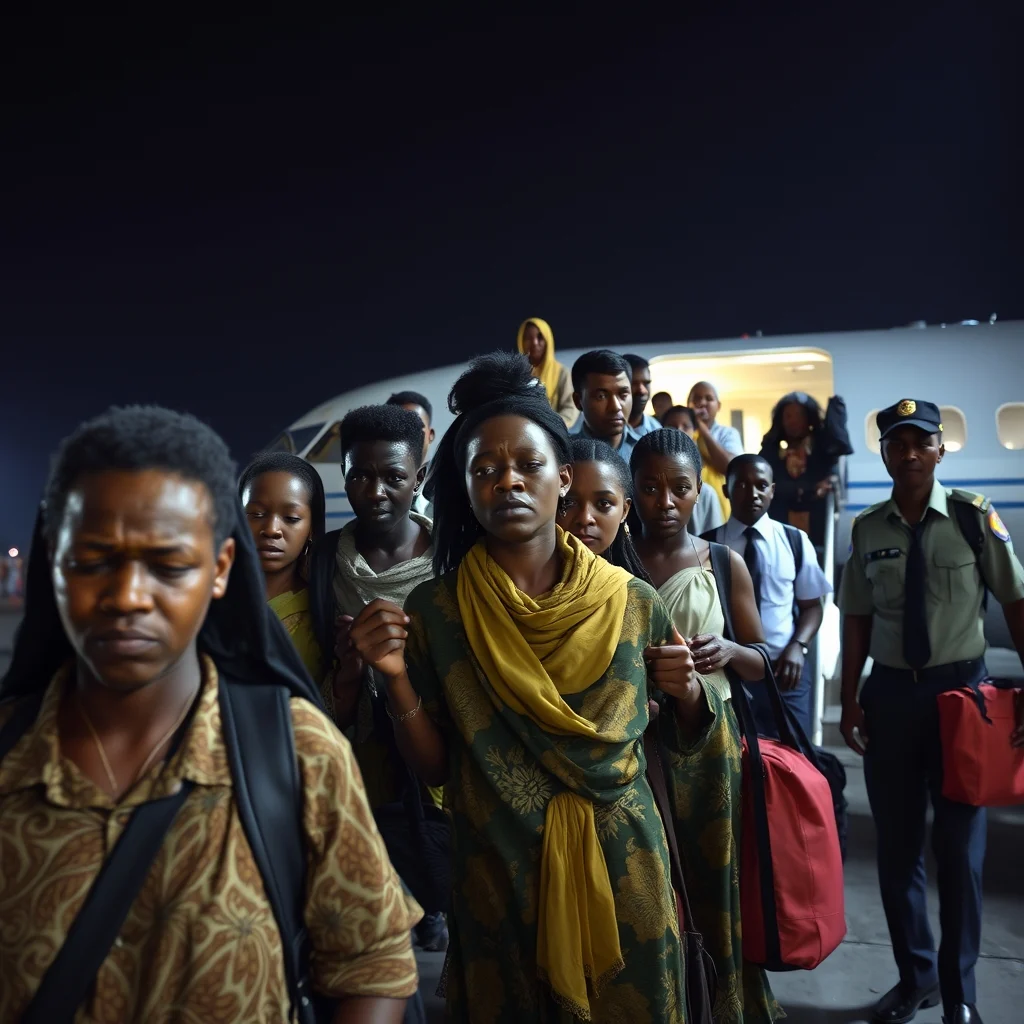
A second group of 345 Ghanaian nationals evacuated from South Africa arrived safely at the Accra International Airport (KIA) on Saturday night, marking the continuation of government efforts to protect citizens caught in escalating xenophobic violence.
The returnees, many appearing visibly exhausted and emotionally distressed, were met by officials from the Ministry of Foreign Affairs, the National Disaster Management Organisation (NADMO), the Ministry of Health (MoH), and immigration authorities.
Context of Escalating Violence
Their arrival is part of an emergency evacuation program initiated by the Ghanaian government following widespread reports of renewed attacks targeting foreign nationals in various parts of South Africa. These incidents have been fueled by growing anti-immigrant sentiment.
The violence has compelled hundreds of migrants, including numerous Ghanaians, to abandon their residences, businesses, and workplaces in a desperate search for safety. This situation mirrors past outbreaks of xenophobic violence in the country, which have periodically displaced and endangered foreign communities.
Government’s Response and Evacuation Efforts
This second evacuation flight follows the successful repatriation of an initial group of Ghanaians. Government agencies are reportedly working around the clock to facilitate the safe return of all citizens who have expressed a desire to leave the affected areas.
The Ministry of Foreign Affairs and Regional Integration has been a key facilitator, coordinating with South African authorities and airlines to secure passage for the evacuees. The process involves identifying distressed Ghanaian nationals, registering their intent to return, and arranging for their transport.
NADMO plays a crucial role in receiving and processing the returnees upon arrival in Accra, providing immediate humanitarian assistance and support. The Ministry of Health ensures that necessary medical screenings and care are available to those who may require it after their ordeal.
Experiences of Returnees
Many of the individuals arriving spoke of harrowing experiences, including threats to their lives and property. They described a climate of fear that made it impossible to continue living or working in their communities.
Stories shared by some returnees indicate that the attacks were often sudden and unprovoked, leaving little time for them to gather their belongings or secure their assets. The emotional toll on these individuals is significant, with many expressing shock and trauma.
The Ghanaian High Commission in South Africa has been actively engaged in assisting citizens, providing safe havens and guidance during the crisis. Their on-the-ground efforts are critical in gathering information and supporting those most affected.
Broader Implications and Data
The recurring nature of xenophobic violence in South Africa poses a significant challenge to regional relations and the safety of foreign nationals. Data from previous incidents suggests that economic hardship and social grievances are often cited as underlying causes, though these do not justify the violence.
This situation impacts the economies of both South Africa and the home countries of the affected migrants. The loss of skilled and unskilled labor, as well as the disruption of small businesses run by migrants, can have lasting economic consequences.
For Ghana, the repeated need for evacuations highlights the vulnerability of its citizens abroad and underscores the importance of robust consular services and diplomatic engagement to prevent such crises.
Looking Ahead
Authorities will continue to monitor the situation in South Africa closely. The government will likely assess the scale of the problem and determine if further evacuation flights are necessary. International bodies and human rights organizations are expected to increase scrutiny of the situation and advocate for stronger protective measures for migrants in South Africa.
The focus will also be on the long-term integration and support for the returnees, as well as diplomatic efforts to address the root causes of xenophobic violence and ensure the safety of all foreign nationals in South Africa.










Leave a Reply