
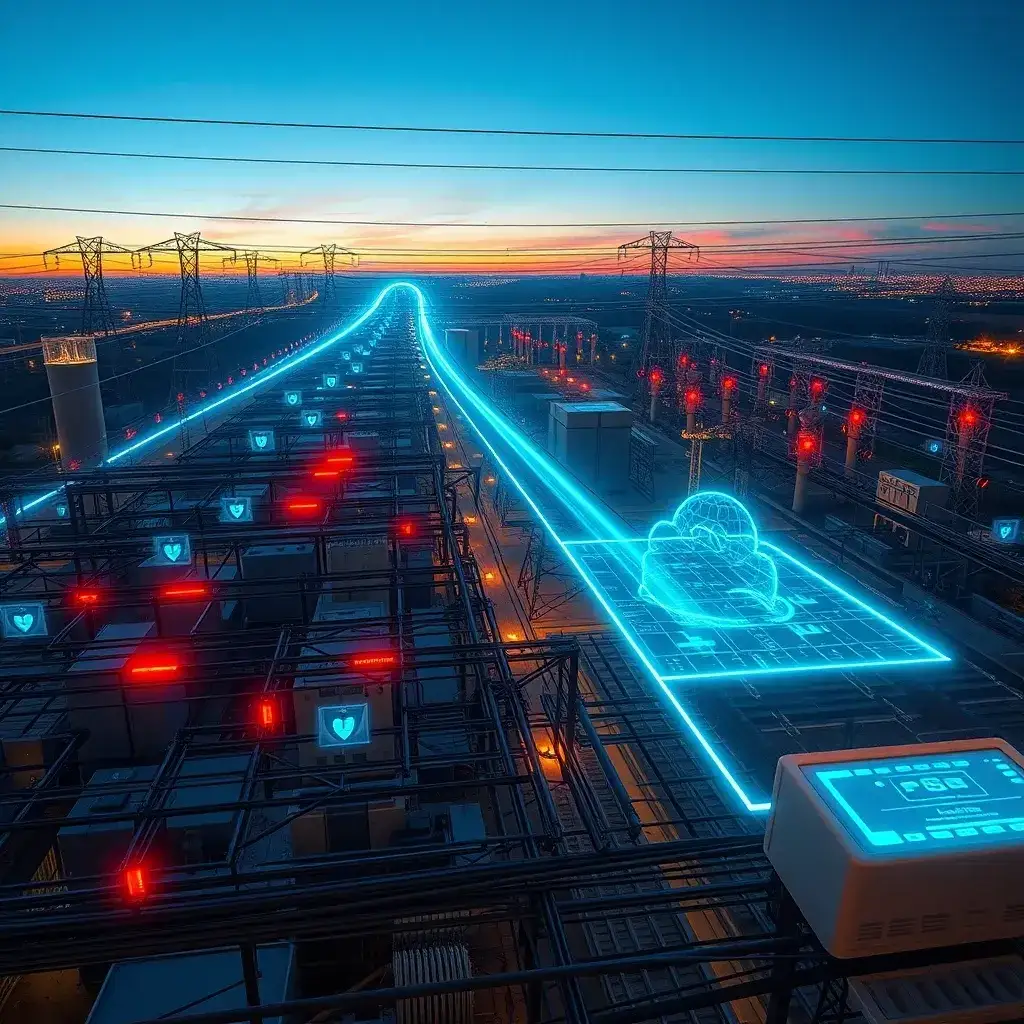
Power outages are no longer solely attributed to severe weather, fuel shortages, or aging infrastructure, as weaknesses in the digital systems monitoring and managing the grid can now initiate disruptions. As utilities increasingly deploy smart meters, sensors, automation, and remote monitoring, electricity security is becoming inextricably linked with cybersecurity, making secure cloud integration a critical prerequisite for the resilience of data-dependent power systems.
Power Grids Evolve into Cyber-Physical Systems
The modern electricity grid functions as a cyber-physical system, relying on software, communication networks, remote access, and data-driven insights as much as its physical components like wires and transformers.
Utilities now gather extensive operational data from smart meters, substations, grid sensors, and customer platforms. This data supports crucial functions such as predictive maintenance, demand forecasting, rapid outage detection, efficient load management, and the integration of renewable energy sources.
To manage this vast scale of data and operations, utilities are increasingly turning to centralized data platforms, including cloud-based systems. These platforms process information, identify critical patterns, and coordinate decisions across geographically dispersed assets.
While this shift enhances efficiency and resilience, it simultaneously broadens the potential attack surface for critical infrastructure.
The Growing Threat Landscape
Cyber threats targeting the energy sector are escalating in frequency, sophistication, and potential impact.
Utilities now contend with a range of threats, including ransomware attacks, state-sponsored actors, insider threats, vulnerabilities within the supply chain, and improperly configured remote access systems.
A significant danger arises from the convergence of Information Technology (IT) and Operational Technology (OT). IT systems manage enterprise data and communications, while OT systems directly control the generation, transmission, and distribution of electricity.
When the security boundary between IT and OT is compromised, a cyber incident can quickly escalate into a severe disruption of electricity services.
These risks are demonstrably real, not theoretical.
A 2015 review by CISA of a cyberattack in Ukraine revealed that attackers caused unscheduled power outages at multiple electricity companies, proving that digital intrusions can directly impact real-world power delivery.
Furthermore, the development of specialized malware like Industroyer in 2016, designed specifically to target electrical substations according to MITRE ATT&CK, highlights the evolution of grid-focused cyber threats beyond general IT compromises.
The consequences of a major grid cyberattack would extend far beyond the energy sector, impacting essential services and the broader economy.
Hospitals, telecommunication networks, water treatment facilities, financial institutions, educational systems, and digital payment platforms all depend on a stable electricity supply.
A significant power disruption could therefore trigger a rapid cascade of failures across multiple critical sectors.
Cloud Support Enhances Modern Grid Security
Historically, many grid monitoring and control systems operated in isolated, air-gapped environments with minimal external connectivity.
While this isolation reduced certain risks, it also severely limited system visibility, scalability, and the ability to respond rapidly to issues.
Modern power systems necessitate near real-time situational awareness across millions of connected devices.
Cloud platforms offer the necessary computing power and scale to correlate anomalies, support centralized monitoring, and accelerate incident response across widely dispersed infrastructure.
When implemented effectively, cloud-enabled systems can empower utilities to detect abnormal voltage, frequency, and load patterns.
They can also identify suspicious device activity, correlate events across both IT and OT environments, strengthen remote access controls, and improve overall incident response through centralized oversight and automated alerts.
Secure Cloud Integration Requires Strategic Architecture
Successful cloud integration hinges on careful architectural design.
Inadequate connections between cloud platforms, enterprise IT systems, and OT environments can inadvertently create new entry points for attackers.
Risks include poor network segmentation, excessive user privileges, insecure remote access protocols, shared credentials, and misconfigured systems.
The solution is not to abandon the cloud but to adopt secure-by-design architectures.
These architectures prioritize the separation of business systems from operational controls and consistently apply zero-trust principles.
Key implementation practices include robust identity and access management, multi-factor authentication for privileged users, secure gateways between cloud and OT environments, continuous monitoring for cyber and operational anomalies, well-tested incident response plans, and stringent vendor and supply-chain controls.
When deployed correctly, cloud platforms significantly bolster grid security by enhancing visibility, expediting investigations, and enabling a more coordinated response across distributed infrastructure.
Balancing Cloud, Edge, and Regulatory Demands
Secure cloud integration does not imply that all grid functions should reside in the cloud.
Power systems have stringent requirements for safety, minimal latency, reliability, and continuous availability, meaning certain operational decisions must remain physically close to the equipment they control.
Consequently, many utilities are adopting hybrid models.
The cloud is leveraged for analytics, monitoring, data storage, forecasting, and cybersecurity operations, while edge systems located in substations and control centers manage time-sensitive control functions.
Regulatory frameworks are evolving to address these challenges.
Standards such as NERC CIP in North America, the EU’s NIS2 Directive, and the IEC 62443 standard increasingly mandate asset visibility, secure remote access, network segmentation, robust identity management, incident reporting, and continuous monitoring.
The overarching lesson is clear and globally applicable: grid modernization efforts must embed cybersecurity from the outset.
As utilities accelerate their digitization, governments, regulators, and industry leaders must integrate security requirements into procurement processes, system design, operational procedures, and vendor oversight, rather than treating cyber risk as an afterthought.
The Path Forward for Grid Security
The future security of the power grid will be determined by the effectiveness with which utilities integrate cloud computing, edge technologies, advanced analytics, and disciplined cybersecurity practices into their daily operations.
Globally, this necessitates treating cyber resilience as a fundamental component of power sector modernization, on par with investments in generation, transmission, distribution, and digital infrastructure.
The cloud is not a panacea; it introduces significant risks if deployed without caution.
However, when governed effectively and integrated securely, it provides utilities with the essential visibility and scale required to defend modern power systems against escalating threats.
Nations that prioritize and implement these modernization strategies early will be better positioned to withstand cyber threats.
Conversely, those that delay risk embedding deep-seated vulnerabilities into their critical national infrastructure.










Leave a Reply