
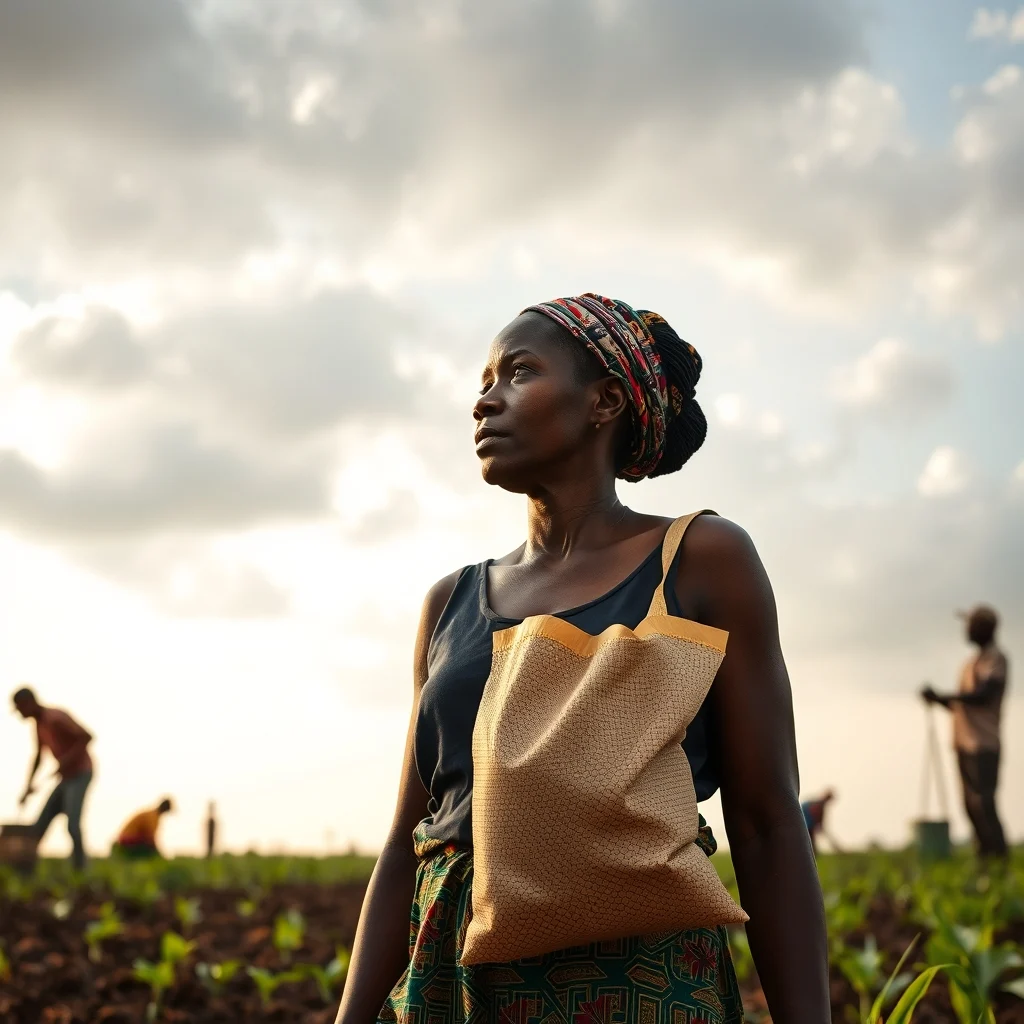
Civil society organization SEND Ghana and its partners are calling on the government to accelerate the distribution of crucial agricultural inputs like seeds and fertilizers under the Feed Ghana Programme. This urgent appeal comes as the planting season commences across Ghana, with concerns that delays could jeopardize food security and undermine the program’s objectives.
Context: The Feed Ghana Initiative
Launched in April of the previous year by President John Dramani Mahama, the Feed Ghana Programme, also known as ‘Yeridua’ (meaning “we are planting”), aims to bolster domestic food production, generate employment, and diminish the nation’s reliance on imported food items. The initiative employs practical farming strategies involving households, schools, communities, and institutions. It encompasses sub-projects focused on vegetables, grains, poultry, oil palm, tubers, and other import-substitute crops, all geared towards fostering self-reliance and strengthening the food system.
Concerns Over Input Distribution Delays
SEND Ghana’s assessment, based on farmer interactions in the Northern, Oti, Volta, and Bono East regions, reveals that a significant number of farmers have yet to receive essential inputs despite the onset of rains. Further checks with the Department of Agriculture confirm that most Metropolitan, Municipal, and District Assemblies (MMDAs) have not yet received these supplies for onward distribution.
The organization warns that these delays could derail the government’s ambitions for the Feed Ghana Programme if immediate action is not taken. Many farmers are reportedly hesitant to engage in large-scale farming this year due to losses incurred in the previous season, making timely access to inputs even more critical.
Call for Prioritization and Transparency
SEND Ghana is urging the Ministry of Food and Agriculture (MoFA) to expedite the release and distribution of agricultural inputs. This, they state, is essential for farmers to capitalize on the current rainfall for optimal planting.
Furthermore, the organization emphasizes the need to prioritize youth, particularly young women, in the distribution process, aligning with the programme’s implementation modalities to address youth unemployment. SEND Ghana also calls for increased public access to information regarding the programme, advocating for regular updates on its progress and the mechanisms for accessing support.
Potential Benefits and Risks
The Feed Ghana Programme holds significant potential to enhance food security, curb food inflation, create employment opportunities for young people and women, and stimulate agro-industrial development and exports. However, SEND Ghana stresses that the success of this initiative hinges on effective agricultural governance at the local level and the prompt execution of planned interventions.
Failure to ensure timely input distribution and effective governance risks the government missing its targets and represents a potential waste of public resources, the organization cautioned.
Meteorological Outlook and Farmer Preparedness
The Ghana Meteorological Agency (GMet) forecasts a normal to late onset of the rainy season in most parts of Northern Ghana, with potential early starts in areas like Bole and Salaga. Rainfall during the May-September period is projected to be below normal to near normal across much of northern Ghana and parts of the middle belt, while southern coastal areas might experience normal to above-normal rainfall.
Northern Ghana is expected to receive between 450mm and 700mm of rainfall during the peak season, with potential dry spells of 10 to 18 days, particularly in the Upper East, Upper West, and Transition zones. Rainfall cessation is anticipated to be normal to early in most northern areas.
GMet advises stakeholders to prepare for potential impacts like prolonged dry spells through early risk management. Farmers in specific areas such as Sunyani, Dunkwa, Sefwi Bekwai, Abetifi, Akim Oda, Akuse, Asamankese, Ho, Kpando, Axim, and Saltpond are advised to anticipate a late onset and wait for sustained rainfall before planting major crops.
Below-normal rainfall is expected in Dormaa, Sunyani, Mim, Goaso, Cape Coast, Accra, and Tema from March to May, increasing the risk of early-season moisture stress. Two significant dry spell periods are anticipated in March-April (6-15 days) and May-June (9-19 days), which could affect crop performance and water availability, especially in forest zone farming communities.
Recommendations for Farmers
In light of the meteorological forecasts, GMet recommends the adoption of early-maturing and drought-tolerant crop varieties suited to the prevailing conditions. This proactive approach can help mitigate the risks associated with potential dry spells and variable rainfall patterns.
Looking Ahead: Ensuring Program Success
The coming weeks are critical for the successful implementation of the Feed Ghana Programme. The government’s ability to swiftly address the distribution bottlenecks and ensure equitable access to inputs will be paramount. Attention will also be focused on how effectively the programme engages and supports young farmers, particularly young women, and whether increased transparency in its operations can be achieved. The alignment of agricultural input delivery with accurate weather forecasts and the adoption of climate-resilient farming practices will be key indicators to watch as the planting season progresses.










Leave a Reply