
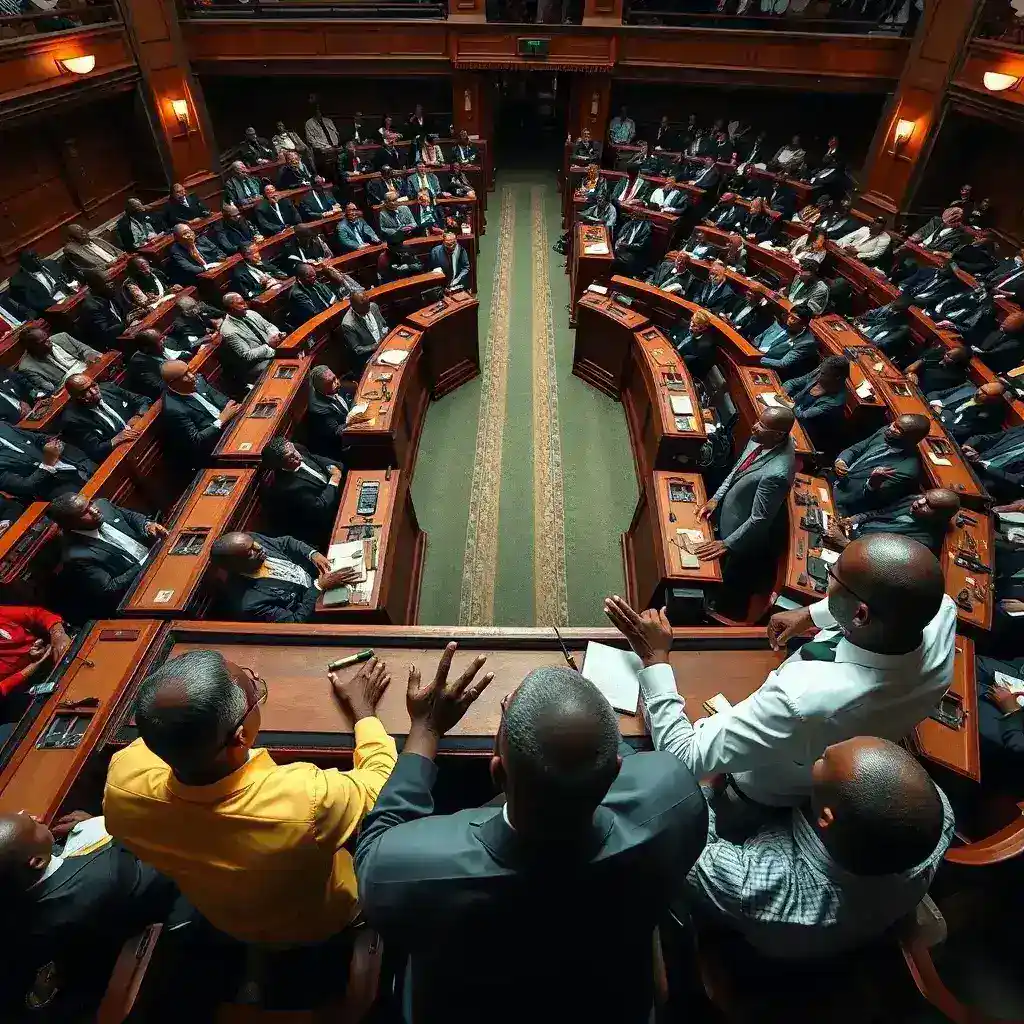
National Chairman of the National Democratic Congress (NDC), Johnson Asiedu Nketia, and former Majority Leader Osei Kyei-Mensah-Bonsu have shed light on the strategic parliamentary leadership changes made by their respective parties ahead of the 2024 general elections. The NDC’s decision to replace Haruna Iddrisu and Mubarak Mohammed Muntaka as Minority Leader and Deputy Minority Leader, respectively, and the New Patriotic Party’s (NPP) subsequent removal of Kyei-Mensah-Bonsu, are being framed as calculated moves to bolster electoral prospects and counter opponent strategies.
NDC’s “Forward Line” Adjustment
Speaking during the NDC’s Thank You Tour in the Tamale South Constituency, Asiedu Nketia described the changes within the NDC’s parliamentary leadership as a tactical decision, not a personal one. He likened his role as National Chairman to that of a coach, emphasizing the need to adapt team strategy based on the opponent’s play to secure victory.
Mr. Asiedu Nketia asserted that the reshuffle was necessary to “change the forward line of Parliament” to effectively respond to emerging political dynamics and improve the party’s chances in the upcoming elections. He revealed that even then-presidential candidate John Dramani Mahama initially disagreed with the proposal, but Asiedu Nketia insisted it was within his purview as Chairman to make such strategic electoral adjustments.
The NDC Chairman acknowledged the significant backlash the decision generated, with many interpreting it as a sign of internal discord. “There was hell,” he stated, recounting how the move led some to believe a long-standing friendship had soured. However, he maintained that his relationship with Haruna Iddrisu remained strong, having previously defended his choice of Iddrisu as Minority Leader against internal criticism.
Asiedu Nketia pointed to the NDC’s electoral performance as vindication for the strategic choices, calling it one of the biggest victories in Ghana’s Fourth Republic. He also assured that neither Haruna Iddrisu nor Muntaka had been sidelined, noting that he personally advised President Mahama to assign them significant roles in the new government, a recommendation that was accepted.
NPP’s Counter-Strategy
In a related development, Osei Kyei-Mensah-Bonsu, the former MP for Suame and Majority Leader, explained his own removal from leadership. He revealed that President Akufo-Addo informed him the decision was a strategic counter to the NDC’s moves.
According to Kyei-Mensah-Bonsu, the NPP calculated that John Mahama would select Professor Jane Naana Opoku-Agyemang from the Central Region as his running mate. This, coupled with the NDC’s appointment of Ato Forson, also from the Central Region, as the new Minority Leader, raised concerns for the NPP.
The NPP leadership perceived a lack of visibility and declining strength in the Central Region. The strategic plot, as explained by Kyei-Mensah-Bonsu, aimed to address this perceived regional deficit. He mentioned that while parliamentary leadership is typically chosen by the caucus, he ultimately conceded to the decision to avoid prolonging the matter.
Implications and Future Outlook
These revelations underscore the complex strategic calculations that underpin parliamentary leadership appointments in Ghana’s political landscape. Parties are not only focused on legislative efficacy but are increasingly using these roles as crucial elements in their broader electoral strategies, particularly in key regions and in anticipation of opponents’ moves.
The explanations from both Asiedu Nketia and Kyei-Mensah-Bonsu highlight a sophisticated level of political maneuvering. The NDC sought to invigorate its front bench for electoral impact, while the NPP aimed to preemptively counter perceived regional advantages gained by the NDC. The success of these strategies will continue to be a subject of analysis as the political landscape evolves.
Moving forward, attention will be on how these newly positioned parliamentary leaders perform in their roles and whether these strategic reshuffles translate into tangible electoral gains or losses in future contests. The parties’ ability to manage internal cohesion following such decisions will also be critical.










Leave a Reply