
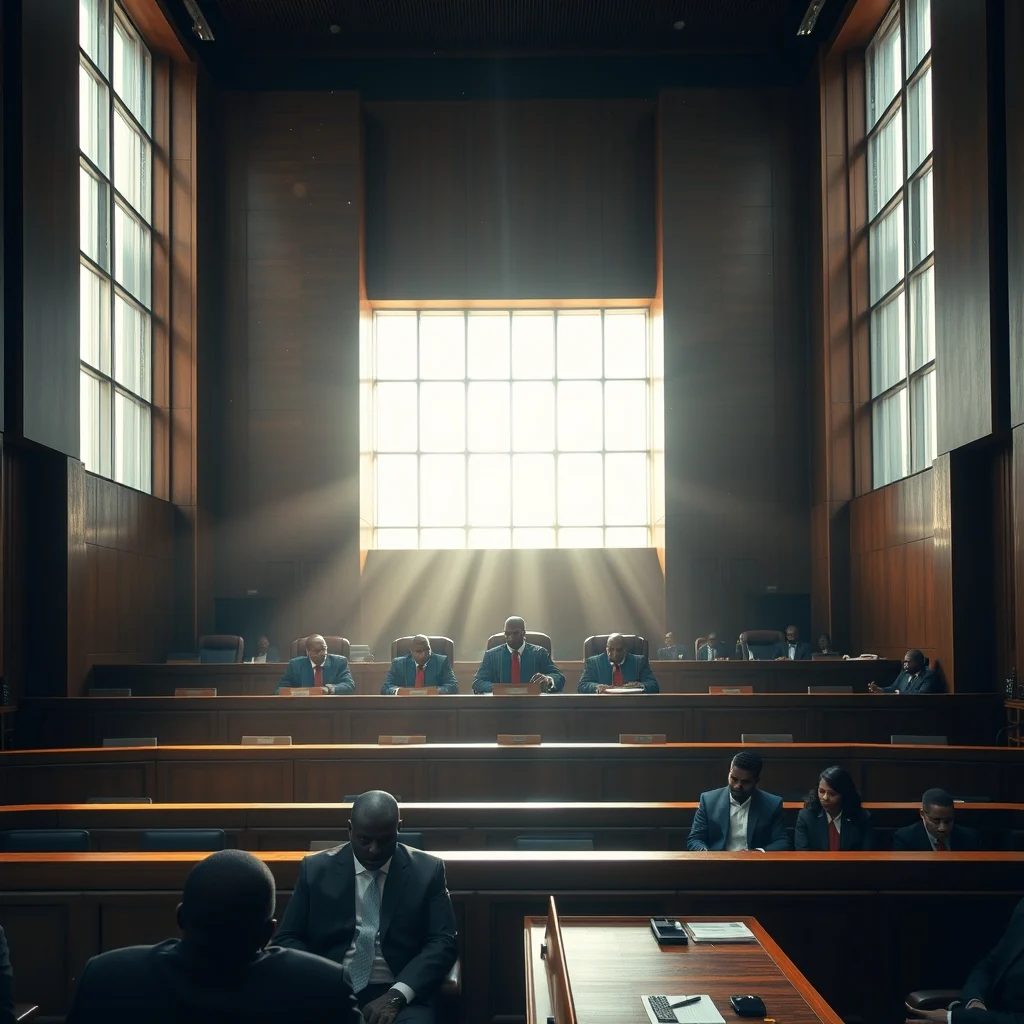
The Supreme Court of Ghana has dismissed a legal challenge brought by policy think tank IMANI Africa, upholding the President’s constitutional authority to appoint and remove heads of key security agencies. The court, in its judgment delivered in 2024, found no merit in the suit, affirming the President’s role in shaping the nation’s security apparatus.
Background to the Challenge
IMANI Africa, in collaboration with security analyst Professor Kwesi Aning, initiated the lawsuit in 2024. They sought a judicial declaration that the President’s power to remove heads of specific security agencies was not absolute. The plaintiffs argued for greater protection against arbitrary dismissals for these high-ranking officials.
The core of the legal argument centered on the interpretation of constitutional provisions governing public office holders, particularly those related to security services. IMANI Africa contended that certain security chiefs should enjoy similar protections to other public officials whose removal requires specific procedures and grounds.
Supreme Court’s Ruling
A five-member panel, led by Justice Gabriel Pwamang, delivered the unanimous judgment. The court systematically addressed the reliefs sought by IMANI Africa, ultimately dismissing all of them. Justice Pwamang emphasized that the President is constitutionally mandated to constitute and oversee the nation’s security architecture.
A crucial aspect of the ruling involved distinguishing between different security offices. The court clarified that the Inspector-General of Police (IGP) and the Director-General of Prisons do not fall under the protective ambit of Article 191 of the Constitution. This article provides specific safeguards for certain categories of public office holders, but the court found it inapplicable to these two positions.
Conversely, the court acknowledged that the appointments of the Chief Fire Officer and the Comptroller-General of the Ghana Immigration Service are governed by specific statutory provisions. However, it concluded that these provisions still vest the ultimate discretion in the President regarding their tenure.
Legal and Constitutional Framework
The ruling reinforces the executive’s prerogative in national security matters. Article 191 of the Constitution typically applies to public office holders appointed by the President on the advice of the Council of State, or those appointed by the President acting in accordance with the advice of other bodies. The court’s interpretation effectively carves out the IGP and the Director-General of Prisons from this protective framework.
This decision means that the President can remove the heads of the Ghana Police Service and the Ghana Prisons Service without necessarily having to meet the stringent conditions often associated with the removal of constitutionally protected officials. This power is now seen as a key tool for the executive to ensure alignment and efficiency within the security services.
Expert and Public Reaction
While IMANI Africa has not yet issued a detailed statement following the judgment, the ruling is likely to generate further debate among legal scholars and security analysts. The think tank has consistently advocated for stronger institutional checks and balances to prevent potential abuses of power.
The dismissal of the suit suggests that the judiciary views the President’s authority over security leadership as integral to effective governance and national security management. This perspective aligns with a broader understanding of executive powers in many presidential systems, where the head of state bears ultimate responsibility for national security.
Implications for Governance and Security
The Supreme Court’s decision has significant implications for the operational dynamics of Ghana’s security sector. It solidifies the President’s power to effect changes in leadership within the police and prison services, potentially enabling swifter responses to perceived security challenges or shifts in policy direction.
For security chiefs, the ruling underscores the need to align their operations with the executive’s agenda. It also raises questions about job security and the potential for political considerations to influence appointments and removals, which could impact the perceived independence of these agencies.
What to Watch Next
Moving forward, attention will be on how the executive exercises this affirmed power. Observers will monitor future appointments and dismissals of security chiefs to gauge whether this authority is wielded judiciously. The ruling may also prompt further discussions on constitutional reforms aimed at balancing executive power with institutional independence in sensitive sectors like national security.










Leave a Reply