
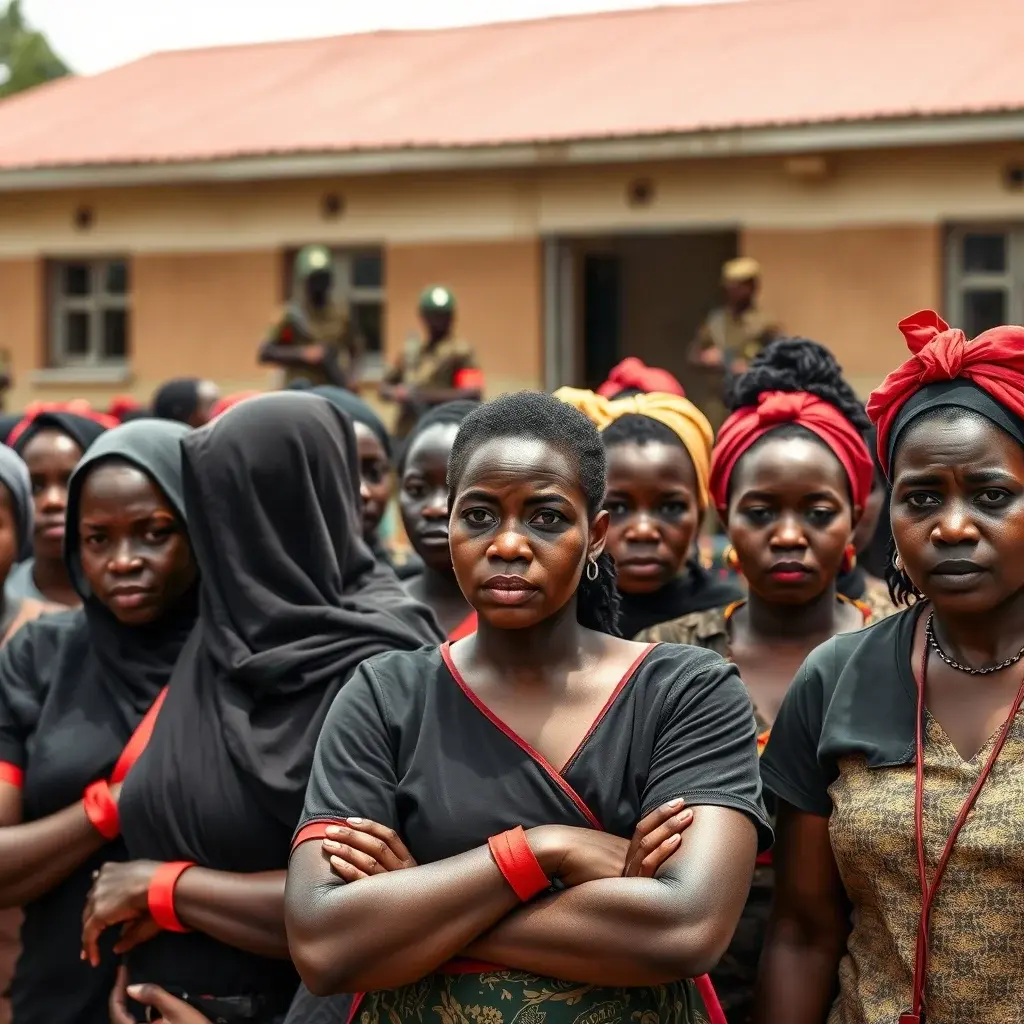
Teachers across the Tarkwa-Nsuaem Municipality in Ghana’s Western Region have initiated an industrial strike, beginning May 26, to protest the alleged assault of three of their colleagues by military personnel. The action follows a lack of satisfactory response from authorities regarding demands for investigation, justice, and compensation for the incident that occurred at Adiewoso M/A Basic School on April 30.
Context of the Incident
The strike was called by teacher unions, including the Ghana National Association of Teachers (GNAT), after a two-week ultimatum expired without adequate action from relevant government bodies. The initial incident involved military personnel conducting an anti-illegal mining operation, commonly known as ‘galamsey,’ in the Adiewoso community.
During this operation, three teachers from Adiewoso M/A Basic School and a civilian were reportedly assaulted. GNAT has characterized the alleged assault as “barbaric and inhumane,” asserting that the teachers identified themselves and presented their professional identity cards, yet were still subjected to physical abuse.
Demands and Escalation
The teacher unions have formally called upon the Ministries of Defence and Interior, the Ghana Armed Forces, the Ghana Police Service, and the Ghana Education Service to launch a thorough investigation into the matter. Their demands include the identification and sanctioning of the military personnel involved in the alleged assault.
Despite the initial ultimatum, the unions express dissatisfaction with the perceived insensitive handling of their concerns and the absence of concrete steps towards resolution. This dissatisfaction has led to the current industrial action.
The teachers began the protest by wearing red armbands and implementing a sit-down strike, a form of industrial action where employees are present at their workplace but refuse to perform their duties. This phase commenced on Tuesday, May 26.
Should their demands remain unaddressed, the unions have announced a full withdrawal of teaching and learning services, effectively commencing on June 1. This escalation signifies the seriousness with which the teachers view the alleged violation of their rights and safety.
Expert Perspectives and Broader Implications
Incidents involving security forces and civilians, particularly during operations targeting illegal activities, often raise complex issues of accountability and human rights. Reports from organizations like Amnesty International have consistently highlighted the need for robust oversight mechanisms to prevent abuses by state security agents.
The Ghana Armed Forces and the Ghana Police Service are expected to uphold professional conduct and adhere to established protocols during law enforcement operations. The Ghana Education Service, as the body responsible for teachers, is expected to advocate for the safety and well-being of its personnel.
The involvement of military personnel in anti-galamsey operations is a response to the widespread environmental degradation caused by illegal mining. However, the methods employed during these operations are under scrutiny to ensure they do not infringe upon the rights of innocent citizens or public officials, such as teachers.
Implications for Education and Safety
The strike directly impacts the education of students in the Tarkwa-Nsuaem Municipality, disrupting the academic calendar and potentially affecting learning outcomes. The closure of schools or cessation of teaching places an additional burden on students and parents.
More broadly, the incident and the subsequent strike underscore concerns about the safety of educators in volatile operational areas. Teachers, like all citizens, are entitled to protection from unwarranted physical harm, especially when carrying out their professional duties.
Looking Ahead
The focus now shifts to the response from the authorities. The commitment of the Ministries of Defence and Interior, along with the Ghana Armed Forces and Ghana Police Service, to conduct a transparent and swift investigation will be crucial. The Ghana Education Service’s role in mediating and ensuring the safety of its teachers will also be closely watched.
The resolution of this dispute could set a precedent for how similar incidents are handled in the future, impacting the relationship between security forces, communities, and public sector workers. Observers will be monitoring whether concrete actions are taken to address the teachers’ grievances and to guarantee that such alleged assaults do not reoccur, ensuring the safety and dignity of educators in the region.










Leave a Reply