
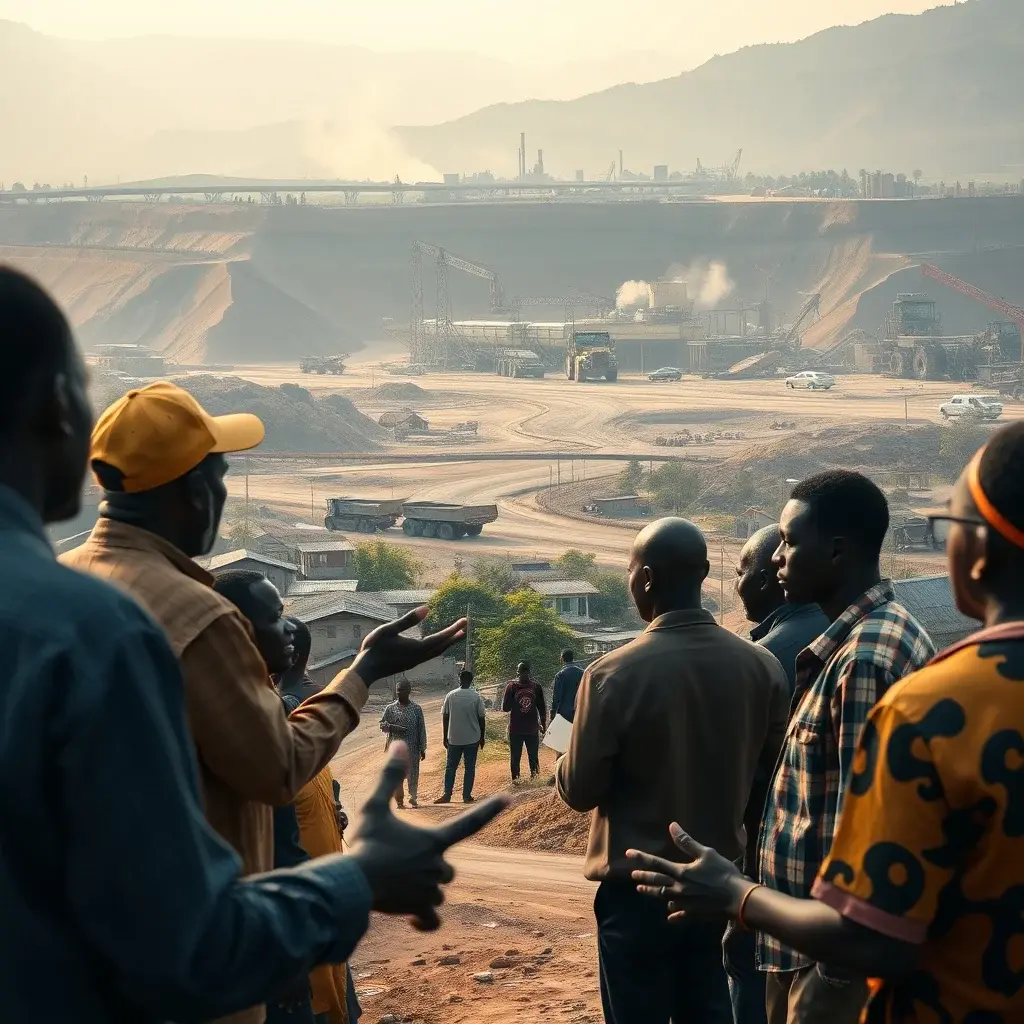
Accra, Ghana – The Institute of Economic Affairs (IEA), a prominent Ghanaian think tank, has strongly advised the government to reject Gold Fields’ request to extend its mining lease at the Tarkwa Mine for an additional 20 years. The current lease is set to expire in April 2027. The IEA argues that the proposed renewal is detrimental to Ghana’s long-term economic and strategic interests, advocating instead for a framework that ensures significant Ghanaian ownership and control of the mine.
Context of Long-Standing Concerns
Ghana, rich in mineral resources, has historically struggled to translate this wealth into widespread, transformative development. For over a century, foreign entities have exploited these resources under concessionary agreements, many of which originated during the colonial era. The IEA points to the persistent underdevelopment in mining communities and the disproportionately low fiscal returns to the state as evidence of structural inequities within the existing mining regime.
The operations of Gold Fields in Tarkwa are presented as a case study of these enduring challenges. Despite decades of mining activity, many communities surrounding the Tarkwa Mine continue to face inadequate infrastructure, including poor roads, limited healthcare facilities, and insufficient educational resources. This situation, the IEA contends, highlights how extractive concession arrangements overwhelmingly benefit foreign corporations at the expense of local populations and the national economy.
IEA’s Stance on Ownership and Control
The IEA’s statement criticizes the current model where local residents bear the severe environmental and social costs of large-scale mining, while the primary economic benefits are exported. This leaves host communities marginalized and environmentally burdened, with little direct benefit to national development.
With the Tarkwa Mine lease nearing its expiration in April 2027, the IEA views this as a critical juncture and a historic opportunity for Ghana. The think tank emphasizes that at a time of exceptionally high global gold prices, the country can reclaim ownership and strategic control of the mine. This could potentially redirect mining revenues directly into national development initiatives and the revitalization of mining communities.
The IEA’s position is rooted in a broader Pan-African vision of resource sovereignty, inspired by leaders like Kwame Nkrumah, Julius Nyerere, and Ahmed Sékou Touré. The institute also notes that current President John Mahama has repeatedly advocated for greater national control over natural resources as a key strategy for enhancing the welfare of Ghanaians.
Broader Implications for Ghana’s Mining Sector
The IEA’s strong stance challenges the status quo of foreign-dominated mining operations in Ghana. It calls into question the long-term benefits of concessionary agreements that have been in place for decades and urges a fundamental shift towards national ownership and greater benefit realization from the country’s mineral wealth.
The institute also highlighted awareness of Gold Fields’ efforts to garner support from local traditional authorities for the lease extension. The IEA views such attempts with skepticism, reinforcing its call for government vigilance and a decisive rejection of the proposed renewal in favor of Ghanaian interests.
Looking Ahead
The government’s decision regarding the Tarkwa Mine lease extension will be closely watched as a significant indicator of its commitment to resource nationalism and its strategy for maximizing the economic benefits derived from Ghana’s vast mineral endowments. This situation sets the stage for potential policy shifts in how Ghana manages its extractive industries, with a focus on ensuring that natural resources contribute more substantially to sustainable national development and the well-being of its citizens.










Leave a Reply