
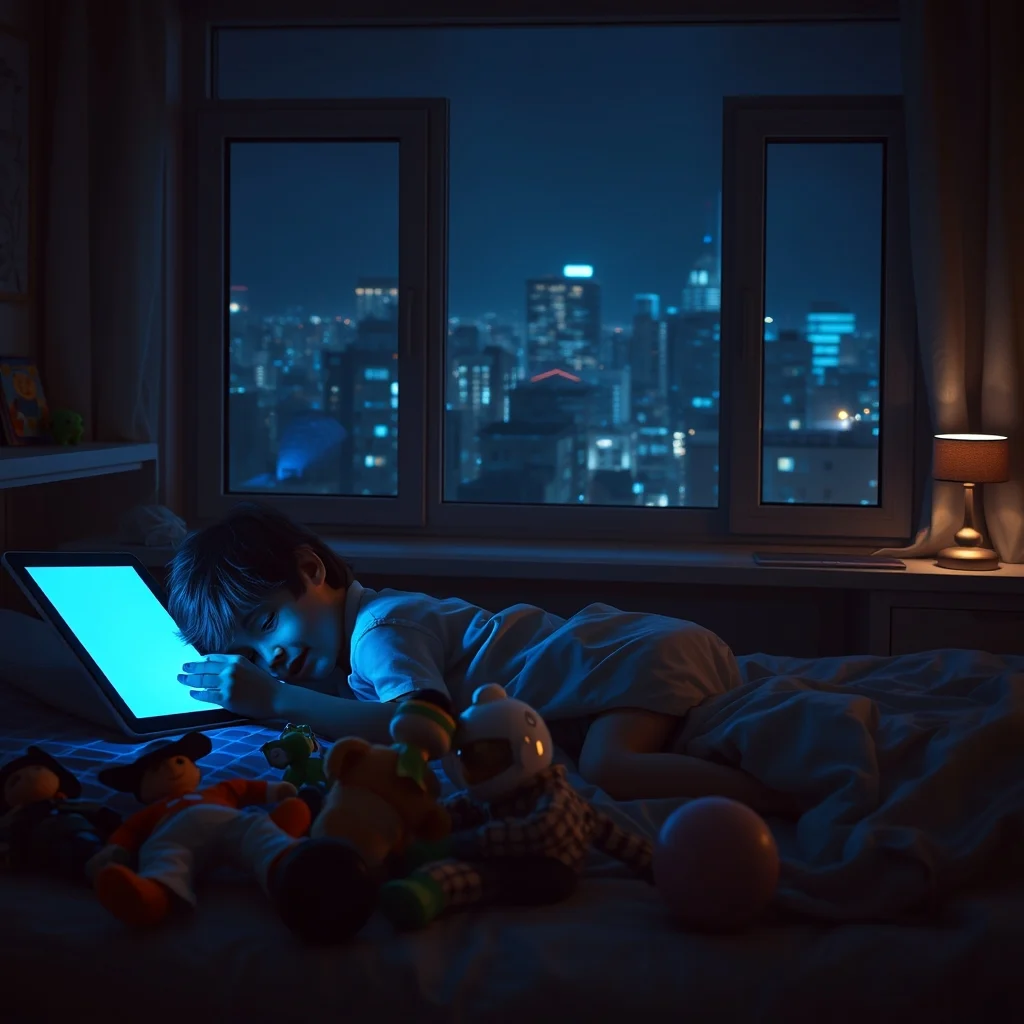
Tom Hanks, the voice of Sheriff Woody, has revealed that the upcoming film Toy Story 5 directly addresses the pervasive issue of children’s screen addiction, a phenomenon he describes as striking “terror in the heart.” The latest installment in the beloved animated franchise introduces a new antagonist, a frog-like tablet named Lilypad, which captivates the film’s young characters.
The cast reportedly connected deeply with this storyline, having all experienced the disinterest of young people who are constantly looking down at their phones. Hanks described this as a “generational thing,” where one generation becomes defined by a particular technology, pouring all their focus into it.
Hanks specifically pointed to a scene in the movie where the characters observe a cityscape illuminated by the ubiquitous blue glow of phones in bedrooms, a sight he found deeply unsettling. Toy Story 5, set to release later this month, sees Hanks, Tim Allen (Buzz Lightyear), and Joan Cusack (Jessie) reprising their iconic roles. Greta Lee, star of “Past Lives,” joins the cast as the voice of Lilypad.
Unlike previous Toy Story villains such as the manipulative Lotso, the destructive Sid, the greedy toy collector Al, or the creepy Gabby Gabby, the new adversary is technology itself. This thematic shift positions the film within a broader societal conversation about the potential negative impacts of excessive screen time, particularly concerning social media use.
Tim Allen, who voices Buzz Lightyear, shared a personal anecdote about his teenage daughter’s difficulty maintaining focus during a recent cinema outing. He attributed this to children being accustomed to the rapid-fire content of platforms like Instagram, where narratives are often condensed into “seven-second movies.” His daughter reportedly predicted the entire plot of the film early on, based on her experience with short-form digital content.
Allen recounted a minor disagreement with his daughter about this, where he insisted they watch the movie before offering criticism. He acknowledged her point, however, noting that young people are so conditioned to rapid narrative arcs that they struggle with the pacing of traditional, longer-form films, with the exception of immersive experiences like “Avatar.”
The film’s narrative highlights children becoming increasingly engrossed in technological devices, often at the expense of their traditional toys. Adding to the film’s cultural relevance, Taylor Swift has contributed a new song, “I Knew It, I Knew You,” to the soundtrack, expressing her long-held desire to write for characters she has adored since childhood.
The original Toy Story, released in 1995, defied initial low expectations, which largely dismissed it as a children’s movie notable only for its pioneering computer animation. However, its success stemmed from a compelling story and a sharp script that complemented its groundbreaking visuals. The concept of toys coming to life resonated with children, while witty dialogue appealed to adult audiences.
Allen recalled the initial “startling” and somewhat jarring visual aesthetic of the first film, which differed significantly from traditional cel animation. He noted that while the look was unconventional, the clever story and the chemistry between his and Hanks’ characters were key to its appeal. Early drafts of the film underwent significant revisions to refine the comedy and develop Woody and Buzz’s distinct personalities. Allen mentioned one early version where the characters were constantly fighting, which proved less engaging, before they were developed into the more nuanced duo audiences came to love, with Woody being more understanding and Buzz more endearingly naive.
The immense success of Toy Story spawned numerous sequels and a spin-off, “Lightyear,” in 2022, driving substantial sales of related merchandise. However, Toy Story 5 marks a departure by directly confronting the role of technology in children’s lives, exploring both its benefits and its potential pitfalls.
Critics have yet to weigh in on the latest film’s effectiveness in addressing the complex relationship between children and technology. Joan Cusack expressed confidence that the storyline would resonate with parents navigating screen time challenges.
Allen, however, also pointed out that concerns about new technologies are a recurring theme across generations. He drew a parallel to his own youth, where his parents expressed similar reservations about the constant presence of rock and roll music and later, television. This historical perspective suggests that while the specific technology may change, the parental anxieties surrounding its impact on youth remain consistent.
The implications of Toy Story 5’s thematic focus are significant, potentially sparking further dialogue among families and educators about digital well-being. As the film rolls out, audiences will be watching to see how effectively it balances its entertainment value with its commentary on a defining issue of contemporary childhood. The ongoing debate about screen time and its effects on development will undoubtedly continue, with this latest installment adding a new chapter to the conversation.










Leave a Reply