
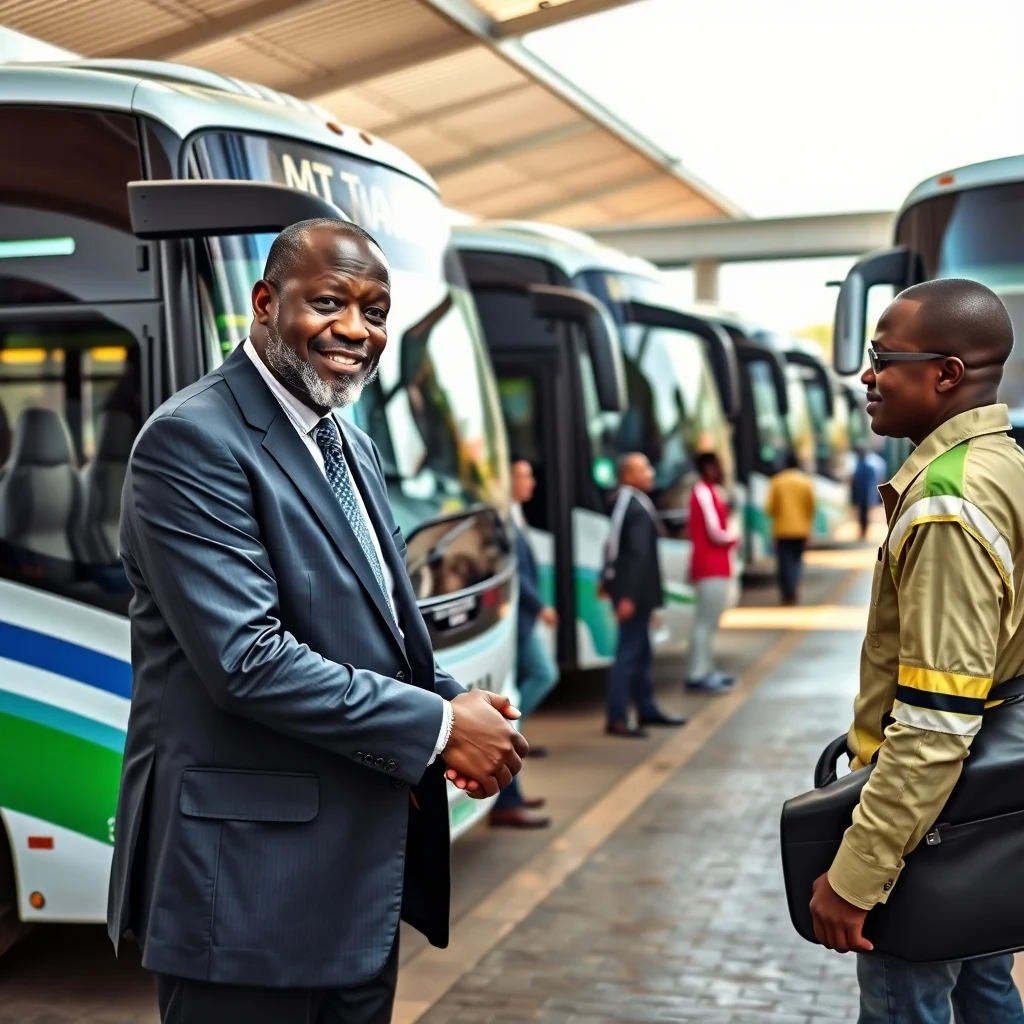
Transport Minister Joseph Bukari Nikpe urged Metro Mass Transit (MMT) to enhance its internal capacity and operational efficiency during the commissioning of 100 new buses at the company’s head office. The call emphasizes MMT’s need to reduce reliance on government support for future fleet expansion.
A New Fleet, A Call for Transformation
The recent delivery of 100 new buses to Metro Mass Transit represents more than just an addition to the fleet; it signifies the start of a broader operational transformation, according to Transport Minister Joseph Bukari Nikpe. Speaking at the official commissioning ceremony, the Minister stressed that this expansion should be a catalyst for MMT to build its own sustainable growth mechanisms.
Strengthening Internal Systems for Growth
Minister Nikpe highlighted the critical importance of bolstering MMT’s internal structures. He pointed to the need for improved staff welfare and the empowerment of drivers and technical personnel as key strategies. These measures are intended to maximize the utilization of existing buses and generate the necessary resources for future investments in expanding the fleet.
Reducing Dependence on External Aid
A central theme of the Minister’s address was the imperative for MMT to move away from continuous dependence on government or external partnerships for acquiring new buses. “We would not like a situation where you are given 100 buses, and you cannot work internally to bring in another 100 or 200, but wait for government or private partnerships at all times,” Nikpe stated.
The Vision: A Self-Sustaining Public Transport System
The long-term objective, as outlined by the Minister, is to cultivate a self-sustaining public transport system. Within the next two to three years, MMT is expected to leverage its own resources to expand operations and enhance service delivery across the nation. This vision aims to create a robust and reliable transport network independent of constant external injections of capital.
Government Support and Institutional Alignment
While emphasizing self-reliance, Minister Nikpe assured MMT of the government’s continued commitment to providing guidance and support. This includes facilitating institutional coordination between the Presidency and transport agencies to ensure the effective implementation of transport policies. The government also acknowledged the dedication of transport sector workers and the positive impact of recent engagements by the Vice President, which have boosted morale and strengthened sector-wide collaboration.
Broader Implications for Ghana’s Transport Network
The push for MMT’s internal capacity building has significant implications for Ghana’s broader transport agenda. A more self-sufficient MMT could lead to improved service reliability, expanded reach, and greater efficiency in public transportation. This aligns with the government’s overarching goal of developing a transport network that effectively serves commuters, traders, students, and the wider economy.
What to Watch Next
The focus will now shift to MMT’s internal strategies and their execution. Key indicators to monitor will include improvements in operational efficiency, the success of staff development programs, and MMT’s ability to generate internal revenue for fleet expansion. Observers will be watching to see if the company can indeed reduce its reliance on government funding and achieve the two-to-three-year goal of self-sustainability and significant operational growth.










Leave a Reply