
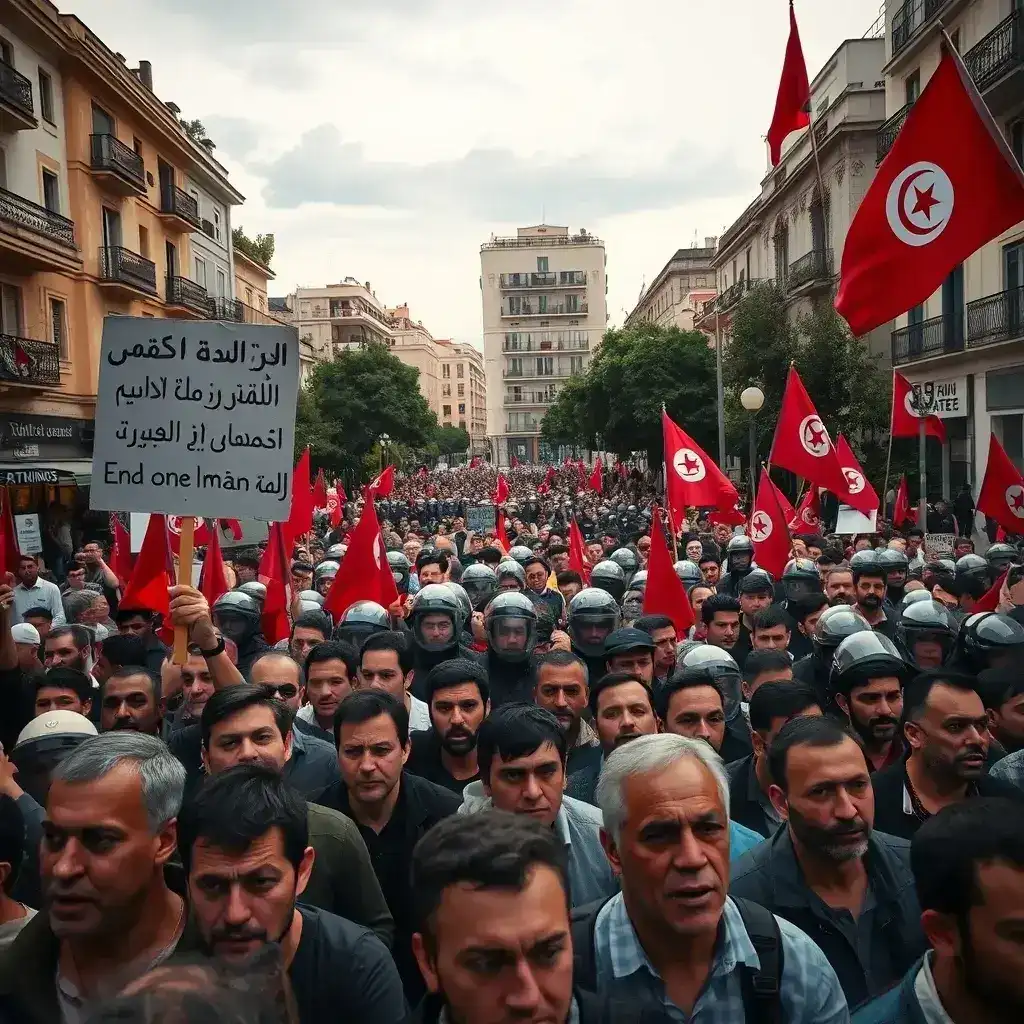
Hundreds of Tunisians gathered in the capital, Tunis, on Saturday to protest against President Kais Saied. Demonstrators accused the president of eroding freedoms and mismanaging a deepening economic and social crisis, under the potent slogan: “The people are hungry, and prisons are full.” The protest highlighted growing discontent over arrests of political figures, journalists, and civil society members, alongside severe economic hardship.
Mounting Criticism Over Freedoms and Governance
The Saturday demonstration saw participants carrying banners that called for an end to what they perceive as one-man rule. Concerns are escalating over a widening crackdown on dissent, with protesters specifically denouncing the arrest of politicians, journalists, and civil society leaders.
Beyond political freedoms, demonstrators sharply criticized President Saied’s administration for its perceived failure to address the nation’s pressing economic challenges. They alleged that the judiciary and police are being used as tools to silence critics rather than uphold justice.
Economic Hardship Grips Tunisia
Tunisia is currently grappling with significant economic strain. The country faces sluggish economic growth, soaring inflation, and critical shortages of essential goods like medicines and some food items. These issues are compounded by financing pressures and a noticeable deterioration in public services, creating widespread hardship for the population.
Saied’s Consolidation of Power and Reactions
President Saied has been consolidating power since July 2022, when he dissolved parliament and began ruling by decree. This shift has drawn considerable criticism from human rights organizations, who argue that his measures are dismantling the democratic gains achieved after the 2011 revolution.
However, President Saied maintains that his actions are necessary to rescue the country from chaos and corruption. He rejects accusations of undermining democratic principles, asserting that his governance is crucial for national stability.
Professional Bodies Voice Concerns
The erosion of judicial independence has prompted the Tunisian bar association to call for strikes in the coming days. Similarly, the journalists’ union is planning protests against the jailing of reporters and what they describe as increasing restrictions on press freedom.
Authorities, in response, state that they are simply enforcing the law and deny all accusations of political repression. They maintain that legal actions are being taken against individuals who violate regulations, irrespective of their professional or political standing.
What to Watch Next
The coming weeks will be critical in observing how President Saied’s administration responds to the escalating protests and the unified stance of professional bodies like the bar association and journalists’ union. The effectiveness of these organized actions in influencing government policy and potentially easing economic pressures remains to be seen. International scrutiny on Tunisia’s democratic trajectory and human rights record is also likely to intensify as the situation evolves.










Leave a Reply