
The U.S. Department of Justice’s Civil Rights Division filed a lawsuit against the University of California, Los Angeles (UCLA) on Tuesday, alleging the institution tolerated a hostile educational environment for Jewish and Israeli students. The department accuses UCLA of violating Title VI of the Civil Rights Act, which prohibits discrimination based on race, color, or national origin in programs receiving federal funding, by showing “deliberate indifference” to pervasive on-campus antisemitism.
Context of the Lawsuit
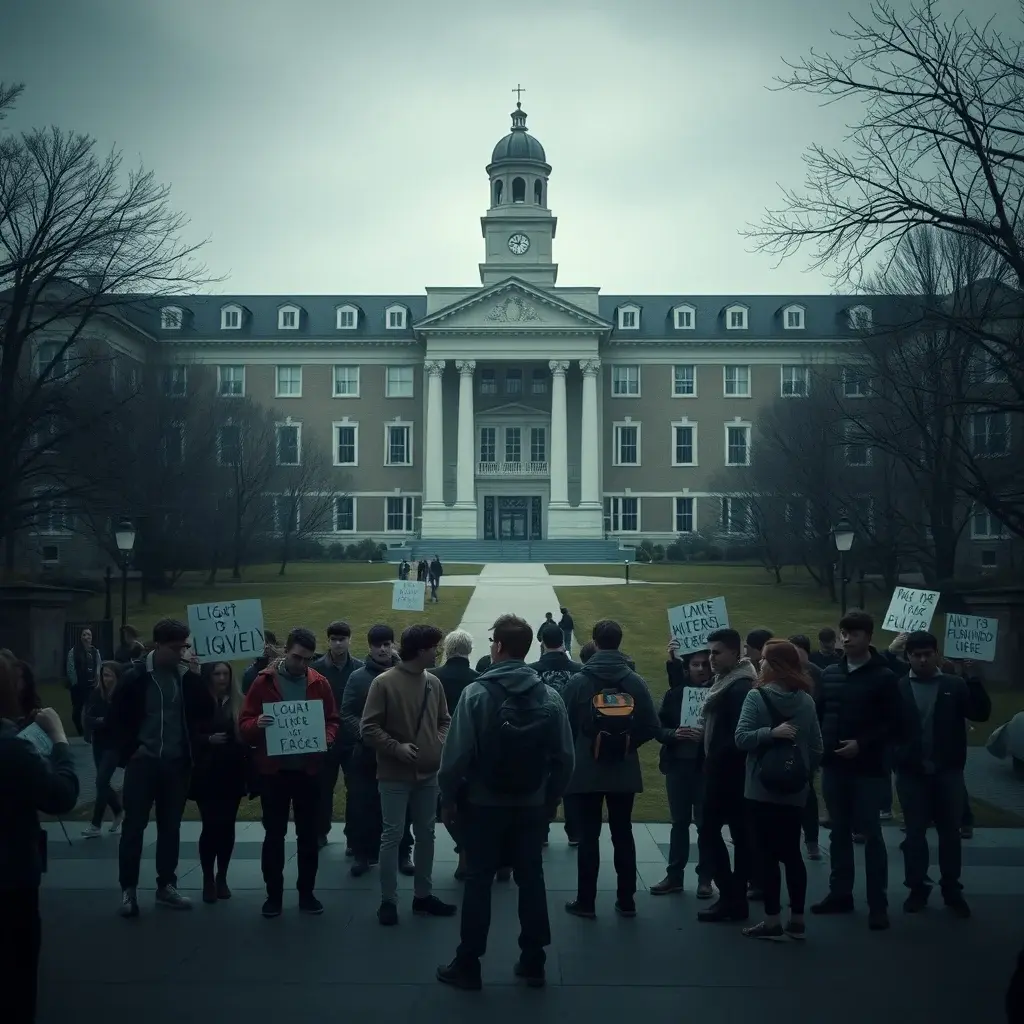
The lawsuit specifically cites an encampment established on UCLA’s campus in April 2024. The Justice Department characterized this protest as illegal and alleged that Jewish students faced attacks during the demonstration.
“Universities have an obligation to maintain safe and inclusive campuses for all students,” stated Bill Essayli, the first assistant U.S. attorney for the Central District of California. “Universities that violate our nation’s civil rights laws by repeatedly failing to shield Jewish students from antisemitism will be held accountable.”
UCLA’s Response to Allegations
UCLA Chancellor Julio Frenk has directly rejected the Justice Department’s claims. He asserted that the university has implemented concrete measures to combat antisemitism on campus.
“Let me be direct: the suggestion that UCLA has been passive in the face of antisemitism is simply wrong,” Frenk said in a statement. “Combating antisemitism is a moral imperative — one rooted, for me, in personal history that makes indifference unthinkable.”
Frenk detailed several steps taken by the university. These include recruiting an associate vice chancellor for campus and community safety, reorganizing its civil rights office, appointing a Title VI officer, and strengthening policies to protect both free expression and campus safety.
Earlier this year, UCLA launched a campus-wide initiative to address antisemitism, which resulted in a May report outlining strategies to combat antisemitism and bigotry. In February 2025, the university suspended two student groups, Students for Justice in Palestine (SJP) and Graduate Students for Justice in Palestine (GSJP), following their involvement in a protest at the home of a University of California regent. The following month, UCLA recommended revoking SJP’s status and suspending GSJP for four years.
Broader Trends and Legal Precedents
The Justice Department’s lawsuit against UCLA occurs within a broader context of increased scrutiny regarding antisemitism on U.S. university campuses. This action follows a period of heightened tensions and protests related to the Israel-Gaza war, which began after Hamas’s October 7, 2023, attacks on Israel.
The October 7 attacks resulted in over 1,200 deaths, and the subsequent Israel-Gaza war has led to over 75,000 reported deaths. In the wake of the conflict, hundreds of students across the U.S. and Europe organized demonstrations, many calling for a ceasefire. Some protests involved the occupation of campus buildings.
The lawsuit also comes shortly after a federal appeals court partially upheld an injunction related to grant funding. The Trump administration had previously terminated grants to the University of California, citing concerns over diversity, equity, and inclusion (DEI) programs, a move that the lawsuit’s timing indirectly references.
Implications for Higher Education
The Justice Department’s legal action against UCLA signals a significant escalation in federal oversight of campus environments concerning discrimination. Universities nationwide will likely face increased pressure to demonstrate robust policies and proactive measures against antisemitism and other forms of hate speech and discrimination.
The case highlights the complex balancing act universities must perform between protecting free speech and ensuring a safe and inclusive environment for all students. The outcome of this lawsuit could set important legal precedents for how educational institutions are held accountable under Title VI in situations involving student protests and alleged hostile environments.
What remains to be seen is how other universities will respond to this heightened federal scrutiny and whether this lawsuit will prompt further legal challenges or policy changes across the higher education sector. The focus will be on the specific actions universities take to address these complex issues moving forward.










Leave a Reply