
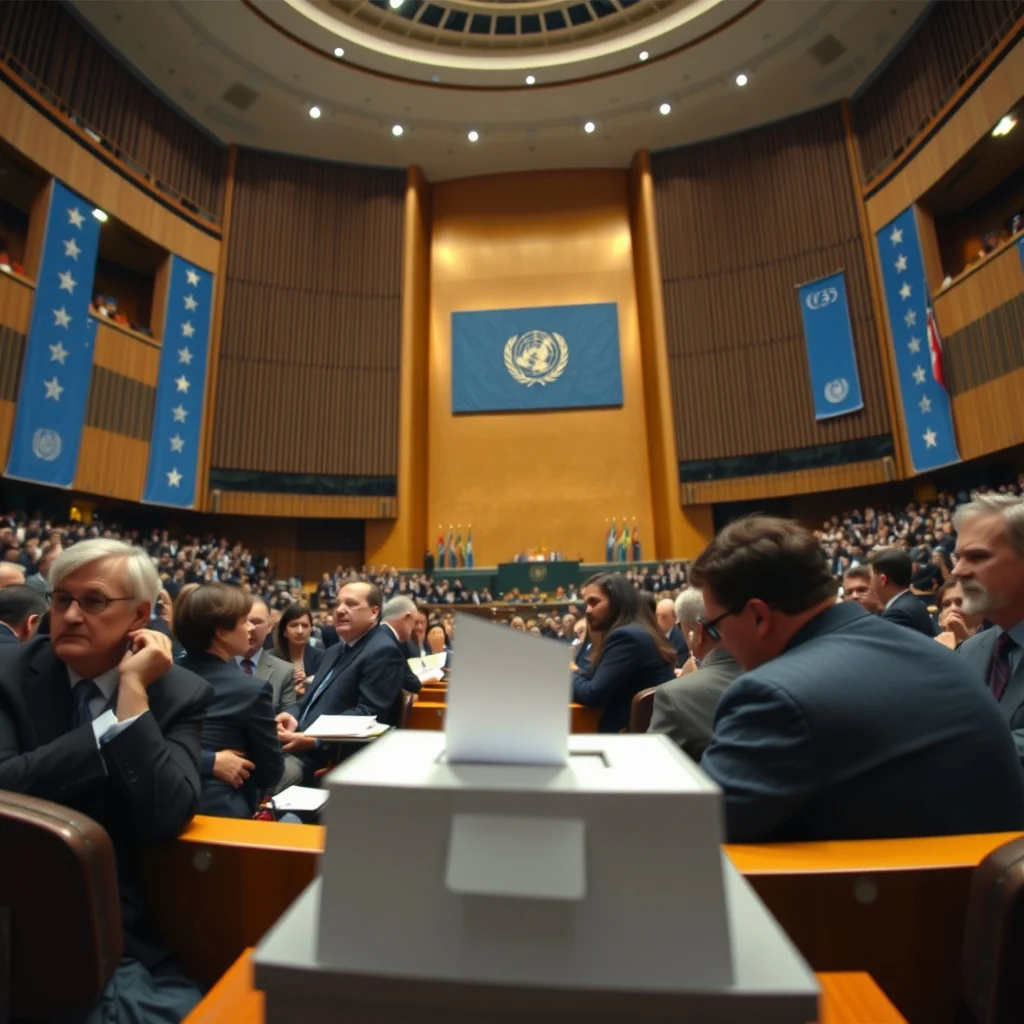
The United Nations General Assembly has elected Austria, Kyrgyzstan, Portugal, Trinidad and Tobago, and Zimbabwe to serve two-year terms on the 15-member UN Security Council, beginning January 1, 2027. The elections on Wednesday saw Germany, a strong contender, fail to secure one of the two seats allocated to the Western European and Others Group.
New Faces on the Global Stage
Austria and Portugal secured the seats for the Western European and Others Group. Germany, despite significant lobbying efforts, garnered 104 votes, falling behind Portugal’s 134 and Austria’s 131. This outcome highlights the competitive nature of securing a non-permanent seat on the council.
In a closely contested race for the Asia-Pacific Group seat, Kyrgyzstan emerged victorious over the Philippines after four rounds of voting. Kyrgyzstan achieved the necessary two-thirds majority, securing its first-ever position on the Security Council with 142 votes to 49.
The Crucial Role of the Security Council
The UN Security Council holds the primary responsibility for maintaining international peace and security. It is the only UN body empowered to make legally binding decisions, including the imposition of sanctions and the authorization of military action.
The council comprises five permanent members with veto power: Britain, China, France, Russia, and the United States. The remaining ten members are non-permanent, elected for two-year terms, with five new members joining the council each year.
Shifting Representation
The newly elected members will fill seats vacated by current non-permanent members. Zimbabwe will replace Somalia, and Trinidad and Tobago will take over from Panama. Portugal and Austria will succeed Denmark and Greece, respectively, within the Western European and Others Group.
Kyrgyzstan’s election marks a significant diplomatic achievement for the Central Asian nation, replacing Pakistan in the Asia-Pacific seat. The seats for the Africa Group, Latin American and Caribbean Group, and the Asia-Pacific Group are elected individually each year.
Current Council Composition
The members serving until the end of 2027 are Bahrain, Colombia, the Democratic Republic of Congo, Latvia, and Liberia. These nations will continue their work on the council alongside the newly elected members for the upcoming year.
Broader UN Leadership Changes
In related news, the General Assembly also elected Bangladeshi Foreign Minister Khalilur Rahman as president of the 193-member body for its 81st session, commencing in September. This leadership change precedes the Security Council’s operational transition in January 2027.
Implications and Future Watch
Germany’s unsuccessful bid underscores the intense competition and diplomatic maneuvering involved in gaining a non-permanent seat on the Security Council. Nations invest considerable resources in campaigning, recognizing the prestige and influence such a position affords.
The inclusion of Kyrgyzstan marks a new voice from Central Asia within the council’s deliberations on critical global security issues. The varying regional representation ensures a broader, albeit rotating, perspective on international challenges.
As these new members prepare to take their seats, observers will be watching how the shifting dynamics might influence the council’s approach to ongoing conflicts and the implementation of international law. The ability of the council to reach consensus on pressing matters will continue to be tested, with the new composition potentially bringing fresh perspectives or reinforcing existing alliances.










Leave a Reply