
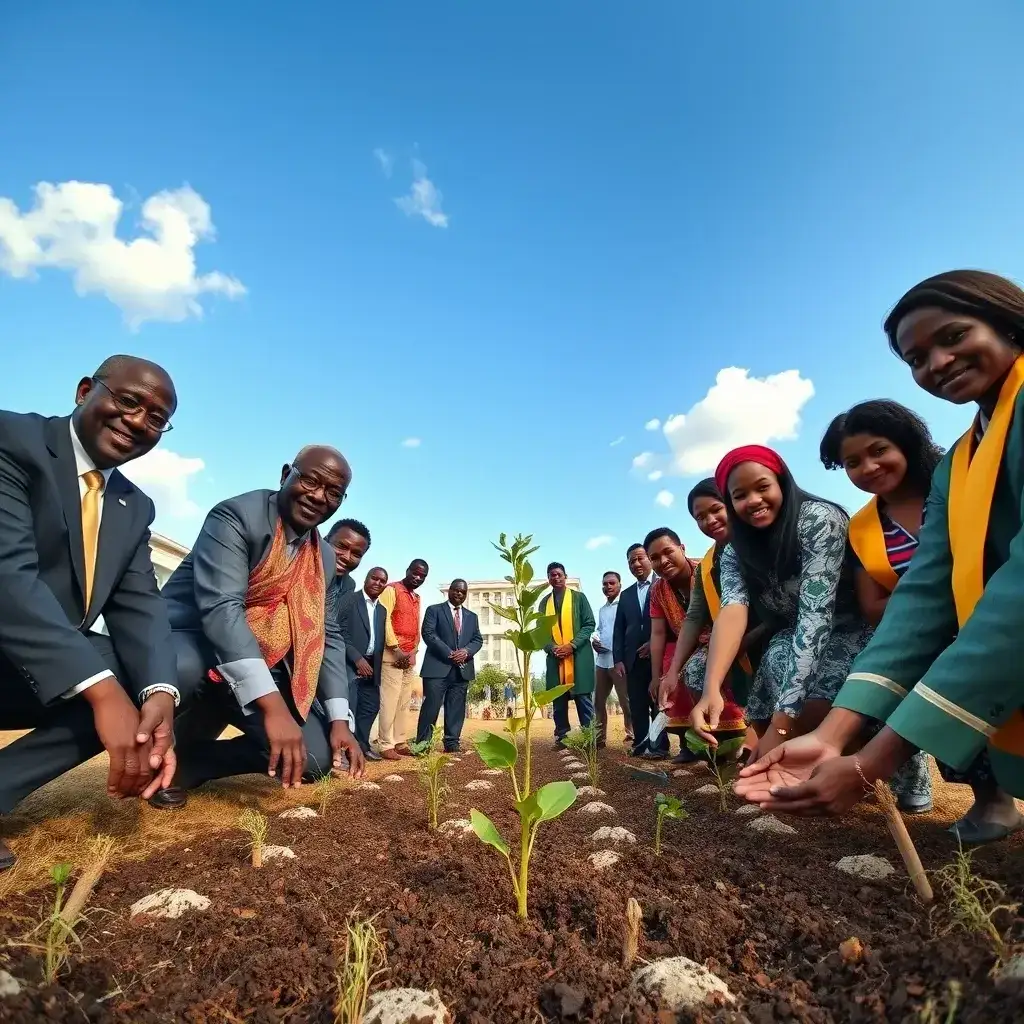
The Upper West Region has launched the 2026 Tree for Life restoration initiative, a collaborative effort by the Forestry Commission, the Upper West Regional Coordinating Council (RCC), the Wa Traditional Council, and the University of Business and Integrated Development Studies (UBIDS), aimed at combating climate change and desertification. The launch event, held on the UBIDS campus to coincide with World Environment Day, brought together key stakeholders including government officials, traditional leaders, environmental experts, students, and community members to promote widespread tree planting and environmental conservation.
Addressing Growing Environmental Challenges
This initiative is a direct response to the escalating environmental crises facing the Upper West Region. These challenges include increasingly erratic rainfall patterns, rising ambient temperatures, a noticeable decline in soil fertility, and extensive land degradation. The Tree for Life initiative seeks to mitigate these issues through practical, community-driven reforestation efforts.
Ambitious Planting Targets Set
During the launch, a significant planting target was announced. Pognaa Fati Issaka Koray, representing the Upper West Regional Minister, revealed plans to plant 50,000 amenity seedlings across the region. In addition to this, a further 30,000 seedlings will be planted under the separate Tree on Farms initiative, highlighting a dual approach to landscape restoration.
Pognaa Koray emphasized the strategic timing of the launch, coinciding with World Environment Day. She stated that the day’s theme, focusing on climate change, perfectly aligned with the region’s commitment to taking tangible action against environmental threats. The urgency of the situation was underscored, with tree planting now viewed as a critical necessity rather than a mere ceremonial activity.
“For us in the Upper West Region, tree planting is not simply an environmental activity; it is an investment in our survival, our economy, and future generations,” she declared. She further warned of the severe consequences of inaction: “If we fail to protect our environment today, we risk losing our arable lands, water sources, and livelihoods tomorrow.” Residents were urged to cease practices detrimental to the environment, such as indiscriminate tree felling and bush burning.
Traditional Leaders Highlight Importance of Forests
The importance of forests for human well-being was also stressed by traditional authorities. Naa Osman Salia, representing the Wa Naa Fuseini Seidu Pelpuo IV, spoke about the vital role trees play in providing essential medicinal resources. He noted that many traditional remedies relied upon by local communities are derived from forest ecosystems.
Naa Salia also used the platform to advocate for increased governmental support for the Forestry Commission. He called for adequate resources to be allocated to enable the commission to effectively fulfill its mandate in conservation and reforestation.
Forestry Commission Warns Against Unsustainable Practices
The Regional Manager of the Forest Services Division in Wa, Kwame Oteng Awuah, pointed to uncontrolled logging and unsustainable farming methods as significant contributors to the worsening climate change and environmental degradation. He stressed the critical need to strike a balance between economic development and environmental preservation.
“When we destroy our landscape, we bankrupt our future. When we restore our landscapes, we build economic resilience,” Mr. Awuah stated. He encouraged community involvement in restoration efforts as a key strategy for protecting livelihoods and enhancing resilience against the impacts of climate change.
University Pledges Commitment to Sustainability
The University of Business and Integrated Development Studies (UBIDS), hosting the event, reaffirmed its dedication to environmental sustainability. Vice-Chancellor Professor Emmanuel Kanchebe Derbile announced the university’s commitment to establishing a natural forest belt along its boundaries.
Professor Derbile shared encouraging data from the previous year’s planting efforts, reporting a 70 percent survival rate for the 11,300 seedlings planted on campus. He attributed this success, in large part, to the dedicated work of 25 women from surrounding communities who were employed to nurture and maintain the young trees.
Reinforcing the gravity of environmental conservation, Professor Derbile issued a stark warning about the consequences of continued deforestation, quoting, “When the last tree dies, the last man will die. Or when the last tree dies, the last woman will also die.”
Symbolic Planting Marks Initiative’s Beginning
The event culminated in a symbolic tree-planting ceremony. Representatives of the Wa Naa and the Regional Minister, alongside the UBIDS Vice-Chancellor and the Regional Forestry Manager, planted the inaugural trees. Following this, police officers, military personnel, firefighters, students, and other attendees joined in planting the remaining seedlings across the UBIDS campus, marking the official commencement of the Tree for Life initiative.
Looking Ahead
The success of the Tree for Life initiative will hinge on sustained community engagement, adequate resource allocation from governmental bodies, and the continued commitment of institutions like UBIDS. Future monitoring of seedling survival rates and the long-term impact on local microclimates and soil health will be crucial indicators of the program’s effectiveness in combating desertification and building resilience in the Upper West Region.










Leave a Reply