
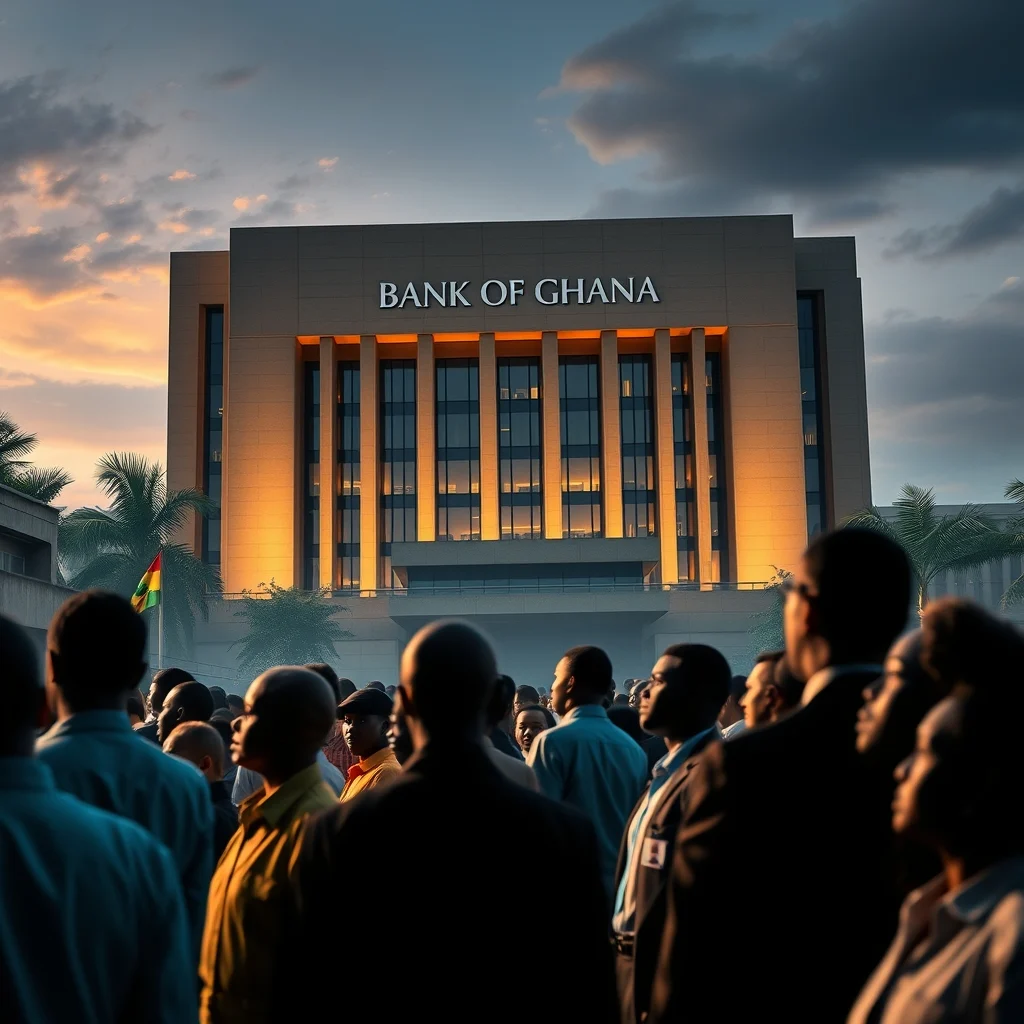
Ofoase-Ayirebi Member of Parliament, Kojo Oppong Nkrumah, has called for an immediate and strategic recapitalisation plan from the Bank of Ghana (BoG) to rebuild trust in the nation’s economy following significant financial losses incurred by the central bank. The urgency stems from the potential for further economic instability if the BoG’s financial position is not swiftly addressed.
Context of the Bank of Ghana’s Financial Situation
The Bank of Ghana has recently reported substantial financial losses, raising concerns among economic stakeholders. These losses can impact the central bank’s ability to perform its core functions, such as managing inflation, maintaining currency stability, and acting as a lender of last resort.
Historically, central banks aim to maintain strong financial health to effectively implement monetary policy and ensure the stability of the financial system. When a central bank incurs losses, it can erode public and international confidence, making it harder to attract investment and manage economic shocks.
Oppong Nkrumah’s Call for Action
Speaking on Joy News’ The Pulse on Wednesday, May 13, Oppong Nkrumah emphasized the necessity of a transparent and time-bound strategy. He stated that the recapitalisation plan must be well-structured and aimed at strengthening the Bank’s financial standing in the shortest possible timeframe.
“A transparent and time-bound plan was necessary to stabilise the institution,” Oppong Nkrumah asserted. He warned that a continued decline in the Bank’s financial health could trigger wider repercussions across the entire economy.
The former Information Minister stressed that delaying decisive action could exacerbate the current losses. He insisted that the recapitalisation process should commence without any further postponement.
Economic Implications of Central Bank Stability
Restoring the Bank of Ghana’s financial resilience is crucial for maintaining currency stability. A stable currency is fundamental for predictable economic planning by businesses and households alike.
Furthermore, the financial health of the central bank is intrinsically linked to broader economic confidence. Investors, both domestic and foreign, monitor the stability and credibility of a nation’s central bank as a key indicator of economic health.
Without prompt and effective intervention, the country’s economic outlook risks facing additional pressure. The challenges confronting the Bank of Ghana could undermine investor sentiment and hinder efforts to attract foreign direct investment.
Data and Expert Perspectives
While specific figures for the BoG’s losses were not detailed in the initial report, central bank recapitalisation often involves significant capital injections, sometimes from government reserves or through international financial assistance. The International Monetary Fund (IMF) and World Bank often provide guidance and support for such initiatives, emphasizing the importance of central bank independence and financial robustness.
Economists often cite the case of other developing economies where central bank financial distress has led to currency devaluation, heightened inflation, and a general loss of economic control. For instance, a study by the Centre for Economic Policy Research (CEPR) highlights that weak central bank finances can lead to fiscal dominance, where monetary policy becomes subservient to government financing needs, ultimately damaging price stability.
What to Watch Next
The focus will now shift to whether the Bank of Ghana and the government will announce a concrete recapitalisation strategy. Observers will be watching for details on the funding sources, the timeline for implementation, and the specific measures to be put in place to prevent future financial strain on the central bank. The success of these efforts will be critical for restoring confidence in Ghana’s economy and ensuring its long-term stability.










Leave a Reply