
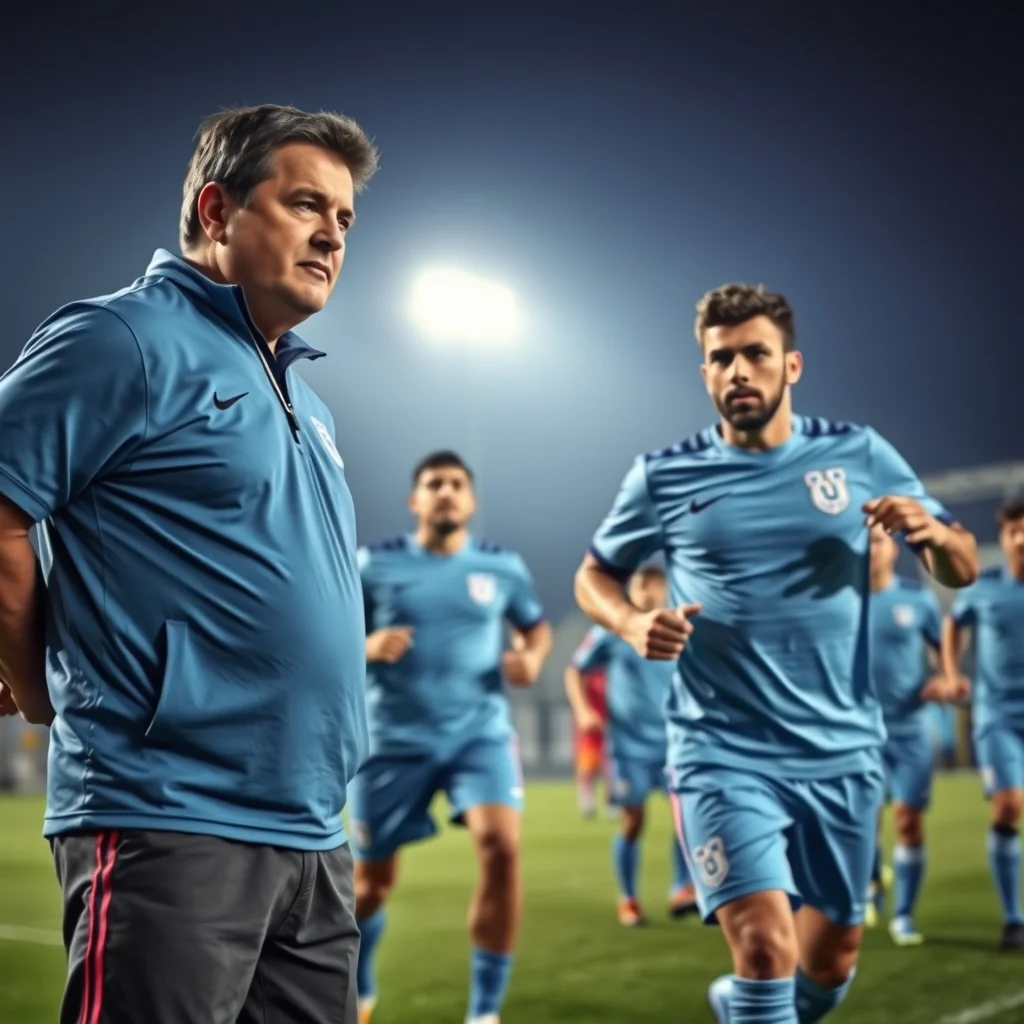
Uruguay enters the 2026 FIFA World Cup with a clear tactical identity under manager Marcelo Bielsa, aiming for a top-10 world ranking and a quarter-final berth. The team, which finished fourth in CONMEBOL qualifiers and third in the 2024 Copa América, has experienced a turbulent period under Bielsa, marked by impressive victories against Argentina and Brazil, followed by a concerning winless streak before recent draws against England and Algeria.
Bielsa’s Tactical Blueprint
Marcelo Bielsa has implemented a distinct 4-3-3 system focused on direct football, enabling high pressing and relentless pursuit of the ball. This aggressive approach extends to their offensive play, ensuring constant pressure when in possession.
The journey under Bielsa has been a mixed bag over the past three years. Their World Cup qualifying campaign saw them secure fourth place in the competitive CONMEBOL standings. The 2024 Copa América concluded with a third-place finish.
A particularly strong period in late 2023 saw Uruguay overcome both Argentina and Brazil. However, this was followed by a significant dip in form, with only one win in twelve matches between July 2024 and June 2025. A heavy 5-1 defeat to the United States in November 2024 cast doubt on Bielsa’s methods.
Faith was largely restored in March 2025 with a 1-1 draw against England and a goalless stalemate with Algeria, showcasing a return to defensive solidity.
Striking Concerns and Key Figures
Uruguay faces a challenge in replicating the prolific scoring power of past eras. The departure of Luis Suárez, following a disagreement with Bielsa at the end of 2024, removed their all-time leading scorer, though he later made himself available for the World Cup. Edinson Cavani retired after the Qatar World Cup.
Manager Bielsa is expected to rely on Darwin Núñez for goals, despite the striker’s recent struggles for form at Al-Hilal. This reliance places added pressure on the young forward to deliver on the global stage.
Ambitions and Reassurance
Ignacio Alonso, president of the Uruguayan Football Association, has set ambitious targets for the tournament. “Uruguay have to aspire to be in the world’s top 10 and therefore we have to reach the quarter-finals,” he stated.
Alonso also addressed concerns about the team’s recent form, emphasizing Bielsa’s focus. “Bielsa is very excited for the World Cup,” he said. “He’s got his mind focused on the preparations. His objective is to have a great World Cup. It’s his aspiration, the result of all his work, research and preparation.”
The Coach’s Resilience
Following the significant defeat to the United States, Marcelo Bielsa faced scrutiny. In a press conference upon their return to Montevideo, Bielsa affirmed his commitment, stating he had “strength” to continue and acknowledging that his “behaviour” had been questioned.
Bielsa candidly reflected on his own shortcomings during the 90-minute conference. “I always say one word: I’m toxic,” he admitted. “Those who get to know me often come off worse for having known me. Toxic. There are toxic people, who only see the mistakes … That behaviour is based on fear. You don’t enjoy winning. You fear losing, much more than you enjoy winning.”
This will be Bielsa’s third World Cup as a coach, having previously managed Argentina in 2002 and Chile in 2010.
Federico Valverde: The Guiding Star
Federico Valverde is central to Uruguay’s ambitions. Now 27, the Real Madrid captain is considered among the world’s elite midfielders and is expected to lead the team towards the latter stages of the tournament.
This marks Valverde’s second World Cup appearance, and his game has seen considerable development since 2022. All of Uruguay’s play flows through him, and his peak performance will be crucial for competing against top international midfields.
Despite a recent on-field incident with club teammate Aurélien Tchouaméni, Valverde reported feeling “very good” in late May, citing the support of Real Madrid fans and the club.
Player Spotlight: Maximiliano Araújo
Maximiliano Araújo, initially a right-back, has evolved into a dynamic winger before returning to his defensive roots. His transition to right-back at Sporting has been a significant success under Bielsa.
Bielsa took a chance on Araújo in 2023, and the player has repaid that faith. He embodies the qualities Bielsa seeks in wingers: the ability to beat defenders one-on-one and create overloads.
The Unsung Hero: Federico Viñas
Federico Viñas could emerge as a key attacking option, potentially filling the void left by Darwin Núñez’s inconsistent form. Viñas’s career is marked by resilience, having stepped away from football at 15 before returning two years later.
He progressed through Uruguay’s second tier before a move to América, followed by a spell at Club León. He has spent the last two years in Spain with Real Oviedo, helping them achieve promotion to La Liga and scoring nine goals in the top flight this season.
Probable Starting XI
The likely formation is a 4-3-3: Muslera in goal; Guillermo Varela, Ronald Araújo, Sebastián Cáceres, and Mathías Olivera in defense; Federico Valverde, Manuel Ugarte, and Rodrigo Bentancur in midfield; and Facundo Canobbio, Darwin Núñez, and Maximiliano Araújo in attack.
Fan Support Across North America
Uruguay’s group stage matches will be held across the United States and Mexico. A significant contingent of sky-blue-clad supporters is anticipated in both nations, reuniting with the large Uruguayan diaspora.
Approximately 10,000 fans are expected to attend matches in the US, a remarkable turnout for a country with a population of just 3 million.
Looking Ahead
As the tournament approaches, the focus will be on how Uruguay’s direct style adapts to the pressure of the World Cup. Key questions remain about Darwin Núñez’s goal-scoring form and Federico Valverde’s ability to consistently influence games against the world’s best. The team’s resilience, tested through Bielsa’s demanding tenure, will be crucial in determining whether they can meet their ambitious quarter-final target and solidify their place among the world’s elite.










Leave a Reply