
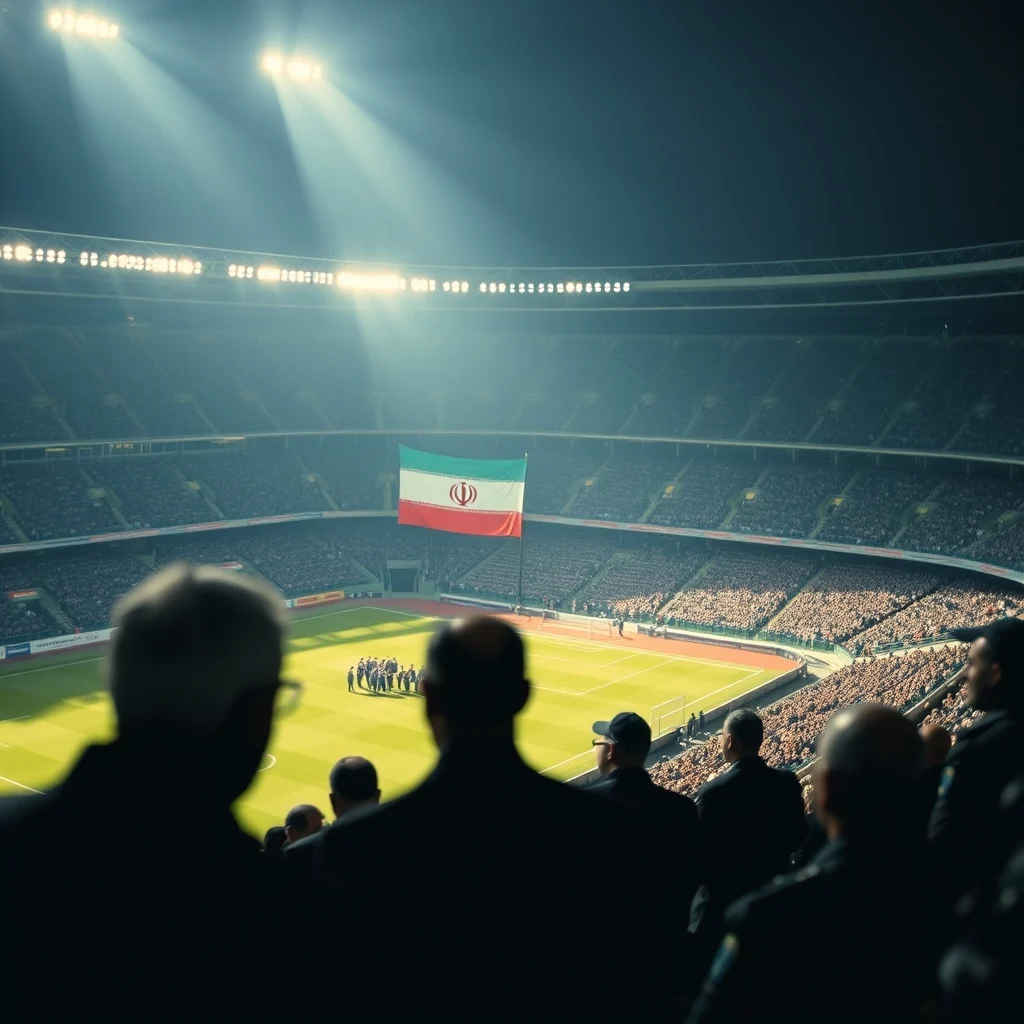
Iran accused the United States of politically motivated interference in sports on Friday, alleging that integral members of its national football team’s backroom staff were denied entry visas, just hours after Washington confirmed that Iranian players had been granted permission to travel for the upcoming 2026 World Cup. The controversy casts a shadow over the global sporting event, which is co-hosted by the US, Canada, and Mexico, and is set to begin on June 11.
Visa Dispute Escalates Ahead of Tournament Kick-off
US officials stated on Friday that visas had been issued to all Iranian players and “necessary support staff.” However, Iran’s embassy in Turkey countered this, claiming that a “large portion of the managerial and executive staff” and “technical advisers” were refused entry. Iranian state-linked media reported that 15 administration officials, including the head of the football federation and his deputy, were among those denied visas.
The Iranian team departed from their training base in Turkey on Saturday, heading to Mexico, where they will be based for the tournament. This visa dispute follows statements from US Secretary of State Marco Rubio earlier in the week, indicating that Iran’s delegation would not be permitted to include individuals linked to the Islamic Revolutionary Guards (IRGC), a powerful branch of the Iranian armed forces. Some players on the Iranian squad have completed mandatory military service with the IRGC.
US Cites Security Concerns
In response to Iran’s accusations, US officials asserted that Iran would not be allowed to “abuse this system to sneak terrorists into the United States under false pretenses.” The Department of Homeland Security (DHS) emphasized its commitment to the safety and security of the American people and World Cup attendees. The DHS is intricately involved in securing all 11 host city sites across the nation, including Los Angeles, where Iran is scheduled to play its opening match on June 15.
Under the conditions of their visas, the Iranian squad will be required to enter and leave the US on the same day as their matches, according to Iran’s ambassador to Mexico. The Iranian embassy described the US announcement as a “whitewash” and accused the US of escalating “deliberate and discriminatory treatment” against their national football team.
Historical Context and Precedent
The 2026 World Cup marks the first time a host nation will face a country with which it is engaged in geopolitical tension. Iran secured its place in the tournament by finishing top of its qualification group in March 2025, well before the current geopolitical climate intensified. The team had previously moved its training base to Mexico from Tucson, Arizona, in late May.
Iran’s other group games are scheduled to take place in California against Belgium and in Seattle against Egypt. The specifics of any restrictions on the Iranian delegation while in the US during the tournament remain unclear, though security concerns have been prominently cited by US authorities.
Call for FIFA Intervention
Iranian embassy officials have formally called on FIFA, football’s world governing body, to intervene in the visa dispute. The situation highlights the complex intersection of international politics and major sporting events, where national security concerns can directly impact athletic participation and international relations.
Future Implications and What to Watch Next
The ongoing visa dispute raises questions about the potential for future political interference in international sports and the security protocols for large-scale global events. As the World Cup approaches, all eyes will be on FIFA’s response and whether any diplomatic resolutions can be reached. The implications for Iran’s participation and the broader diplomatic narrative surrounding the tournament remain to be seen. Further developments regarding visa approvals for any remaining staff and the specific enforcement of entry/exit protocols for the Iranian team will be critical to monitor.










Leave a Reply