
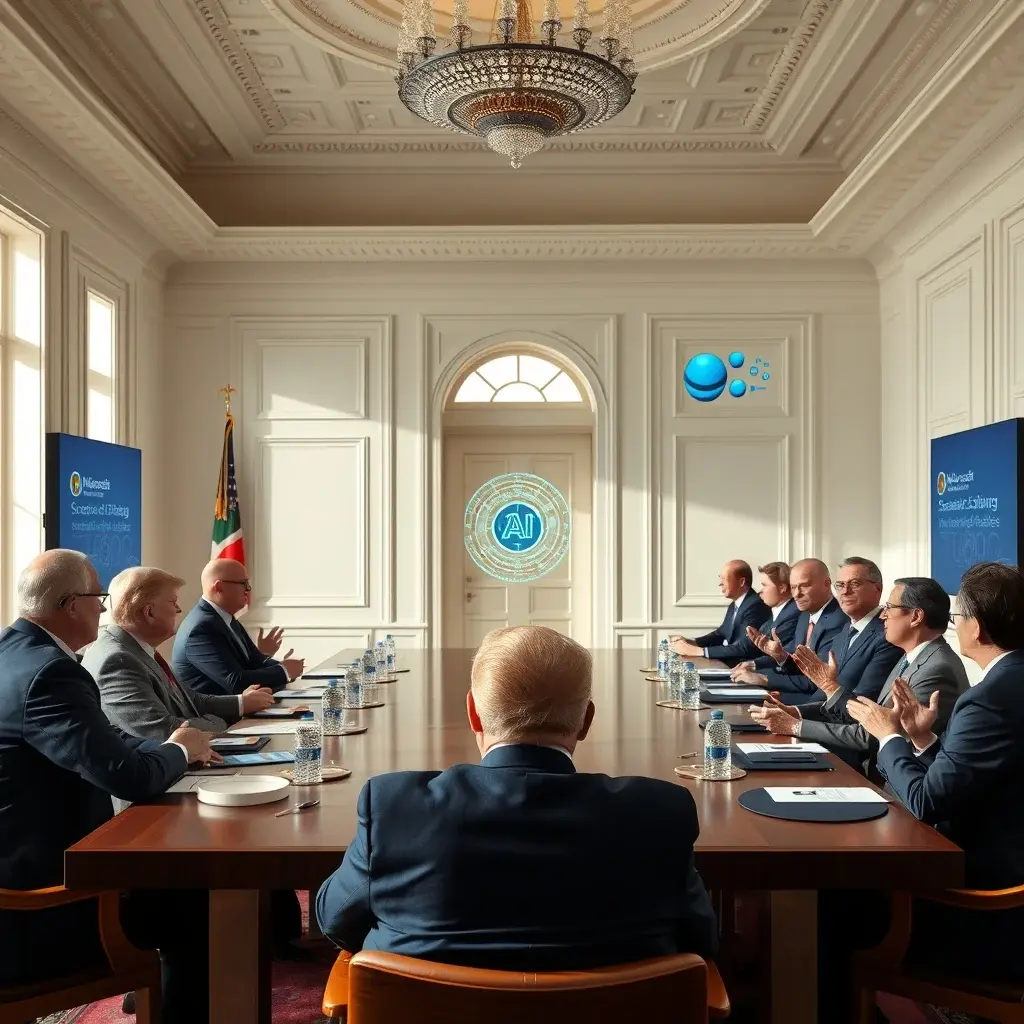
President Donald Trump announced plans to convene leaders from major U.S. artificial intelligence firms at the White House, potentially next week, to discuss direct government investment in their companies. The initiative aims to forge a “partnership with the American public” and ensure citizens benefit from AI’s success.
Context: Shifting Government Stance on AI
This announcement signals a potential shift in U.S. government strategy towards the rapidly evolving artificial intelligence sector. Historically, government involvement has often focused on regulation, research grants, or defense contracts. However, the prospect of direct equity investment represents a more proactive and potentially lucrative approach.
The move comes amid growing public scrutiny and, at times, negative sentiment surrounding AI technologies. President Trump explicitly linked the investment strategy to improving public perception, stating that direct benefits to Americans would foster greater acceptance and liking of AI.
Details of the Proposed Investment
While specific companies were not named, leading U.S. AI players like Google, Microsoft, OpenAI, SpaceX, and Anthropic are likely candidates for discussion. These companies are at the forefront of AI development, with some, like OpenAI and Anthropic, reportedly nearing public offerings.
President Trump drew a parallel to a previous government investment, citing the U.S. taking a 10% stake in chipmaker Intel, which he claimed has already yielded financial returns. This precedent suggests a model where the government acts as a shareholder, seeking both economic gains and strategic influence.
Similar Proposals Emerge
The White House discussions occur as similar ideas gain traction in Washington. OpenAI CEO Sam Altman recently met with Senator Bernie Sanders, who has proposed establishing a sovereign wealth fund where the U.S. government would hold a significant stake, potentially up to 50%, in AI companies.
President Trump acknowledged these overlapping economic discussions, suggesting that his administration has been considering similar investment strategies for about a year. While not explicitly endorsing Sanders’ proposal, Trump indicated a convergence of ideas regarding economic frameworks for AI development.
Industry Engagement and Easing Tensions
The AI industry is actively engaging with government officials. Anthropic CEO Dario Amodei met with senior White House officials recently, a meeting notable given Anthropic’s ongoing legal dispute with the Department of Defense over contract terms. This engagement suggests a willingness from both sides to find common ground.
Anthropic has publicly supported President Trump’s Executive Order on AI, and a co-founder indicated the company is in “daily conversations” with the U.S. government, exploring ways to contribute to national security. This level of dialogue highlights the increasing integration of AI companies into national strategic discussions.
Implications for the AI Landscape
If realized, direct government investment could significantly reshape the AI landscape. It could provide substantial capital for research and development, accelerate innovation, and potentially give the U.S. government greater leverage in guiding the ethical and strategic deployment of AI technologies.
For AI companies, this could mean access to new funding streams and a closer relationship with policymakers. However, it also raises questions about potential government influence on corporate decision-making, intellectual property, and the balance between public interest and private enterprise.
What to Watch Next
The upcoming White House meeting will be a critical indicator of the administration’s commitment to this investment strategy. Observers will be watching for which companies attend, the specific investment models discussed, and the potential legislative or executive actions that could follow. The success of such a program may hinge on navigating complex financial regulations, ensuring public benefit, and maintaining the competitive edge of American AI innovation in a global market.










Leave a Reply