
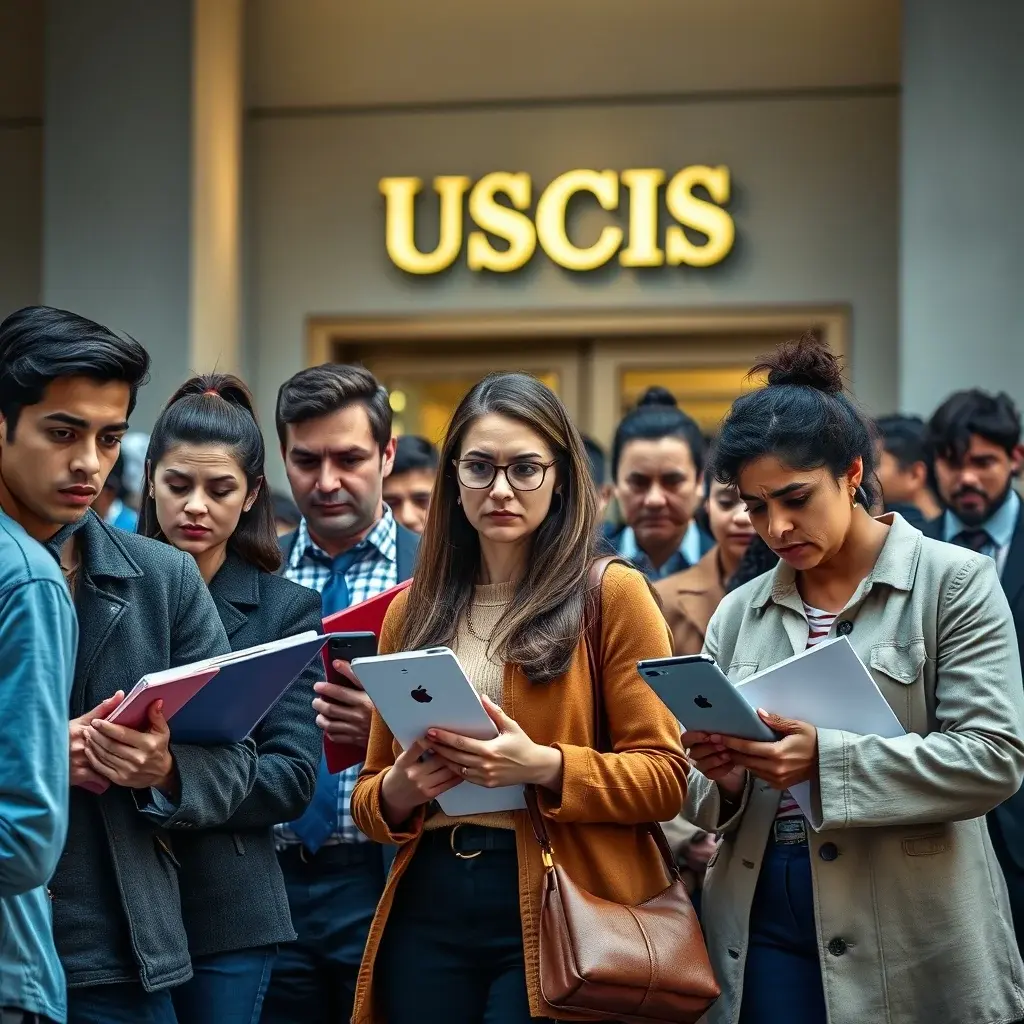
The Trump administration has implemented a new policy directing foreign nationals in the U.S. on temporary visas to return to their home countries if they wish to apply for permanent residency, a move officials state aims to uphold the integrity of the legal immigration system. This directive, issued via new guidance from U.S. Citizenship and Immigration Services (USCIS) on Friday, seeks to prevent what the administration terms “loopholes” by ensuring Green Card applications adhere to established immigration procedures.
Reinforcing Standard Immigration Procedures
Officials from the Department of Homeland Security articulated that the policy is designed to ensure that the process for obtaining a Green Card follows the intended legal pathways. The agency stated on the social media platform X that “an alien who is in the US temporarily and wants a Green Card must return to their home country to apply.” This approach, they argue, prevents the system from incentivizing deviations from standard law.
The USCIS guidance clarifies that adjusting one’s status to obtain permanent residency from within the United States is considered a discretionary benefit, not an inherent right. Generally, the immigration system anticipates that individuals on temporary visas will depart the U.S. upon completion of their authorized stay.
Case-by-Case Evaluation and Compliance Factors
The memo instructs immigration officers to meticulously evaluate adjustment of status applications on a case-by-case basis. Key factors to be considered include any history of visa violations, overstaying authorized periods of stay, engaging in unauthorized employment, instances of fraud, and overall compliance with the terms of admission to the United States. These elements will inform the discretionary decision-making process.
USCIS did acknowledge the existence of limited exceptions. Certain visa categories are designated as having “dual intent,” legally permitting visa holders to reside in the U.S. while simultaneously pursuing permanent residency. However, the agency stressed that these categories do not guarantee Green Card approval nor alter the fundamental expectation that temporary visitors will ultimately depart the country.
Broader Immigration Policy Context
This policy shift is the latest in a series of measures enacted under the Trump administration to tighten immigration rules and limit avenues for long-term residency in the U.S. Previously, the administration had shortened visa durations for certain categories of students, cultural exchange visitors, and media workers.
In January, the State Department reported the revocation of over 100,000 visas since President Trump took office, signaling a broader trend of increased scrutiny and restriction within the U.S. immigration framework. The agency also suggested that the updated guidance would help redirect resources towards processing other immigration cases more efficiently.
Concerns Raised by Advocacy Groups
Immigrant advocacy organizations have voiced strong criticism of the new policy, expressing concerns that it could place vulnerable individuals at risk. Groups like HIAS, a nonprofit dedicated to assisting refugees and migrants, warned that the requirement to leave the U.S. could negatively impact survivors of trafficking, as well as children who have experienced abuse or neglect, by forcing them to interrupt or delay critical stages of their permanent residency process.
Future Implications and What to Watch
The implications of this policy are significant for temporary visa holders currently in the U.S. who aspire to permanent residency. It introduces a potential hurdle, requiring a departure and re-entry process which may be costly, time-consuming, and logistically challenging. For employers relying on foreign talent on temporary visas, this could also affect retention strategies.
The legal challenges and practical consequences for individuals, particularly those from regions with unstable conditions, will be closely monitored. The extent to which “dual intent” visas will continue to serve as a pathway, and how consistently USCIS officers apply the new discretionary criteria, will be key factors to observe in the coming months.










Leave a Reply