
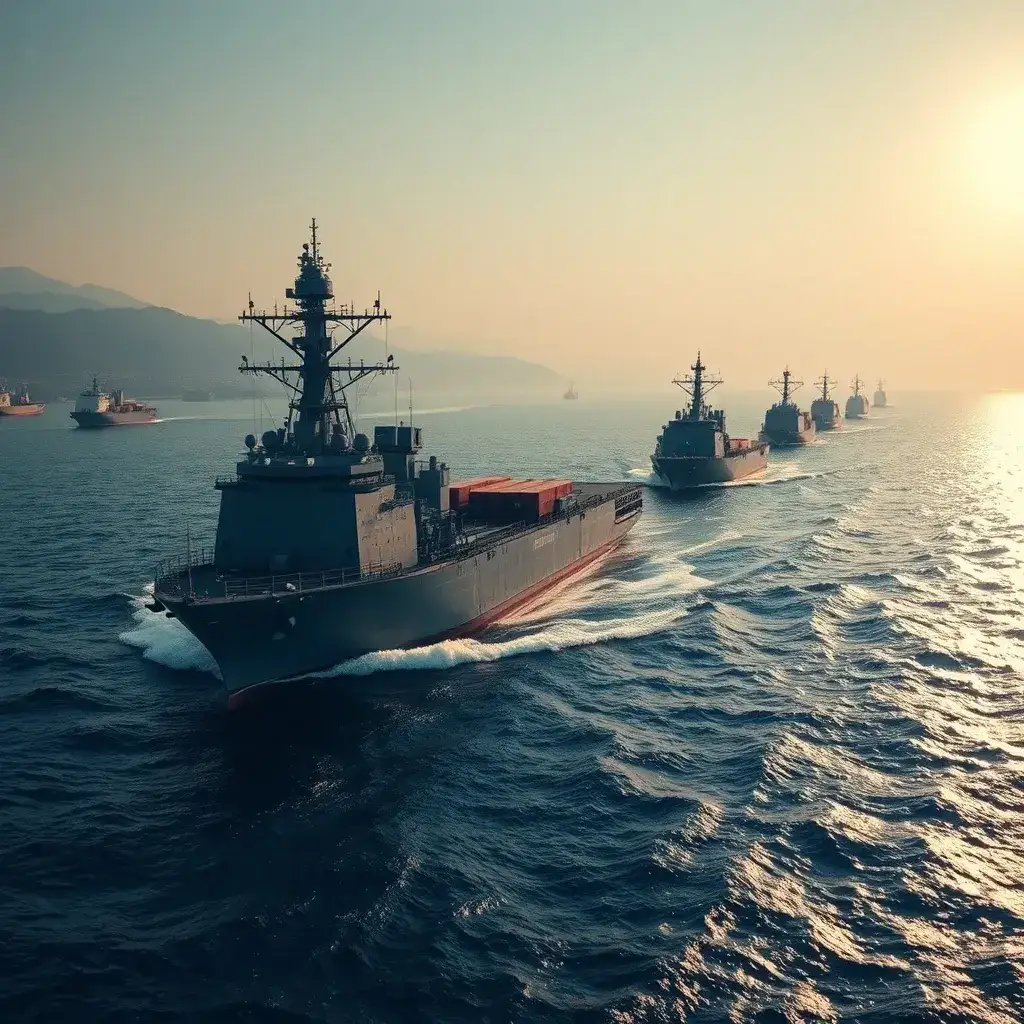
President Donald Trump announced Monday that the United States will undertake “Project Freedom” to guide stranded vessels safely through the Strait of Hormuz, a critical global shipping lane that has seen severely restricted traffic since February. The initiative, framed as a humanitarian gesture, aims to free trapped sailors and alleviate concerns over dwindling supplies and rising energy prices.
Context of the Strait of Hormuz and Blockade
The Strait of Hormuz, a narrow waterway connecting the Persian Gulf to the open ocean, is a vital chokepoint for global energy supplies. Approximately 20% of the world’s oil and liquefied natural gas (LNG) passes through this strait daily. Since the conflict began in February, Iran has significantly limited maritime traffic, while the U.S. has enforced a naval blockade on Iranian ports, exacerbating the situation for international shipping.
“Project Freedom” Launched
President Trump stated on social media that “For the good of Iran, the Middle East, and the United States, we have told these Countries that we will guide their Ships safely out of these restricted Waterways.” The operation, dubbed “Project Freedom,” will involve an estimated 15,000 personnel, guided-missile destroyers, and over 100 aircraft, according to U.S. Central Command. Trump warned that any interference with this operation “will have to be dealt with forcefully.”
Sailors Trapped Amidst Escalating Tensions
An estimated 20,000 sailors have been stranded in the Gulf region since the conflict escalated. Growing concerns have been raised about the diminishing supplies onboard these vessels and the impact on the physical and mental well-being of the trapped crews. The disruption to shipping has contributed to a surge in global energy prices.
Diplomatic Maneuvers and Peace Proposals
Trump’s announcement coincided with reports that Iran had received a U.S. response to its latest peace proposal, delivered via Pakistan. Iranian state-linked media indicated that the response was under review, though the U.S. has not formally confirmed its reply. President Trump reportedly conveyed to Israel’s Kan News that the proposal was unacceptable.
The Iranian peace plan, as reported by state media, reportedly calls for the U.S. to withdraw forces from near Iran’s borders, end its naval blockade, and cease all hostilities, including Israel’s offensive in Lebanon. The proposal also sought an agreement within 30 days and emphasized focusing on ending the war rather than extending a ceasefire. Iranian foreign ministry spokesman Esmaeil Baghaei was quoted stating that nuclear negotiations were not part of the current discussions, a key U.S. demand.
Iran’s Nuclear Program and U.S. Stance
Iran has consistently denied pursuing nuclear weapons, asserting its program is solely for peaceful purposes. However, the country remains the only non-nuclear state to have enriched uranium to near weapons-grade levels. This has been a significant point of contention in U.S.-Iran relations.
President Trump’s Mixed Signals
Earlier, President Trump confirmed receipt of the Iranian peace proposal, stating on Truth Social that he would review it but expressed skepticism about its acceptability, suggesting Iran had not yet “paid a big enough price.” Later, he indicated to reporters that while a deal’s concept was presented, the exact wording was pending. When asked about the possibility of renewed military strikes inside Iran, Trump stated it was “a possibility” if Iran “misbehaves,” but added, “right now we’ll see.” He also affirmed that the U.S. was “not leaving” the region.
Implications and Future Outlook
The launch of “Project Freedom” signals a more assertive U.S. role in ensuring maritime passage through the Strait of Hormuz, potentially de-escalating the humanitarian crisis for stranded sailors. However, the mixed signals from diplomatic channels, with Iran reviewing a U.S. response to its peace proposal while President Trump expresses reservations and warns of forceful action against interference, indicate a precarious geopolitical situation. The coming days will reveal the extent of cooperation with Tehran on this operation and whether the diplomatic exchanges can bridge the significant gaps between the two nations, particularly concerning Iran’s nuclear ambitions and regional security. Observers will be watching closely to see if “Project Freedom” proceeds smoothly and if the ongoing dialogue can lead to a broader de-escalation of tensions in the vital waterway.










Leave a Reply