
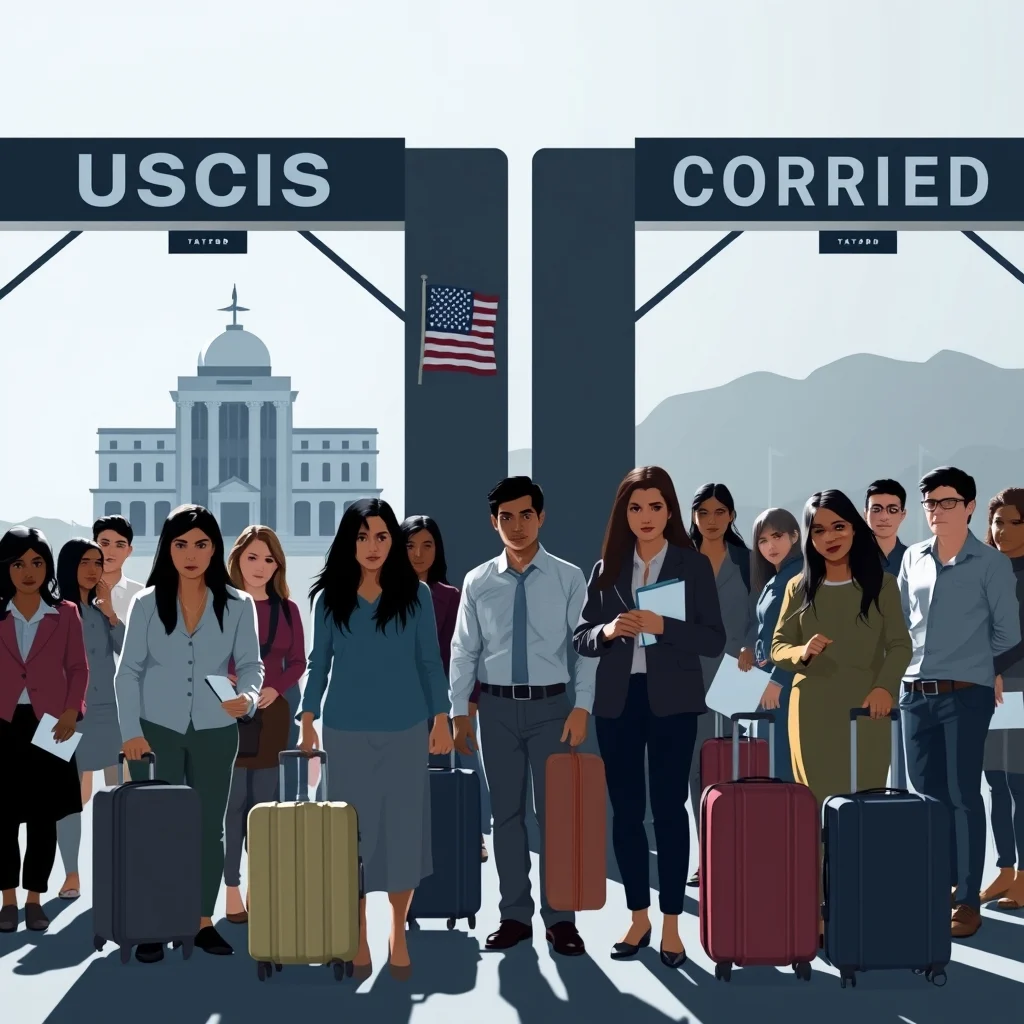
U.S. Citizenship and Immigration Services (USCIS) announced Friday that foreigners seeking to adjust their immigration status within the United States for green cards must now apply from outside the country through the State Department. This policy shift, detailed in a USCIS policy memo, directs officers to assess eligibility on a case-by-case basis for extraordinary relief, but fundamentally requires those in the U.S. temporarily seeking a green card to return to their home countries to file their applications. The Department of Homeland Security stated this change aims to align the immigration system with its intended legal framework and prevent the exploitation of loopholes.
Policy Shift and Rationale
The new USCIS policy memo outlines a significant change in the process for individuals seeking lawful permanent resident status, commonly known as a green card. Previously, many individuals present in the U.S. on temporary visas could apply for adjustment of status without leaving the country. This updated guidance mandates that such individuals must now depart the U.S. and initiate their green card applications from their home countries or last lawful permanent residence abroad.
The Department of Homeland Security, which oversees USCIS, defended the policy, asserting that it is designed to ensure the immigration system operates as Congress intended. Officials argue that the previous practice of allowing in-country adjustments for all eligible individuals created incentives for what they term “loopholes” in the immigration process. By requiring overseas applications, the agency believes it can better manage its caseload and allocate resources more efficiently.
USCIS also indicated that this policy change is expected to free up agency resources. This reallocation of resources is intended to allow the agency to focus on processing other types of immigration cases more effectively, potentially reducing backlogs in other areas.
Criticism from Aid Organizations
Immigrant advocacy and aid groups have voiced strong opposition to the new USCIS policy. HIAS, an organization that provides services to refugees and other immigrants, criticized the move as forcing vulnerable individuals, including survivors of human trafficking and abused or neglected children, to return to the dangerous countries they fled. These individuals may face significant risks and hardships if compelled to apply for permanent residency from abroad.
Critics argue that this policy places undue burdens on individuals who have already demonstrated a need for protection or who are integrated into U.S. communities. Forcing these individuals to return to their home countries could expose them to persecution, violence, or other dangers, undermining the humanitarian goals of the U.S. immigration system.
Broader Immigration Policy Context
This policy adjustment by USCIS is the latest in a series of immigration-related actions taken by the Trump administration. Over the past few years, the administration has implemented several measures aimed at tightening U.S. immigration laws and enforcement.
Examples include previous actions to shorten visa durations for various categories of travelers, such as students, cultural exchange visitors, and members of the media. Additionally, the State Department reported revoking over 100,000 visas in the year following President Trump’s inauguration, signaling a more restrictive approach to visa issuance and immigration.
Implications for Immigrants and the System
The implications of this policy change are far-reaching for aspiring immigrants. Individuals who were planning to adjust their status within the U.S. will now face the prospect of lengthy overseas application processes, which can involve additional complexities, costs, and uncertainties. The requirement to return to one’s home country can be particularly challenging for those with limited financial resources or those facing security concerns at home.
For vulnerable populations, such as asylum seekers or victims of crime, this policy could create significant barriers to safety and stability. The potential need to re-enter dangerous environments to complete immigration procedures raises serious humanitarian concerns.
What to Watch Next
The impact of this USCIS policy shift will likely be closely monitored by immigrant communities, advocacy groups, and legal professionals. Future developments may include legal challenges to the policy, further clarification from USCIS on specific case-by-case determinations, and potential adjustments to the process for exceptionally vulnerable applicants. The long-term effects on the efficiency of the immigration system and the welfare of immigrants seeking to establish permanent residency in the U.S. remain to be seen.










Leave a Reply