
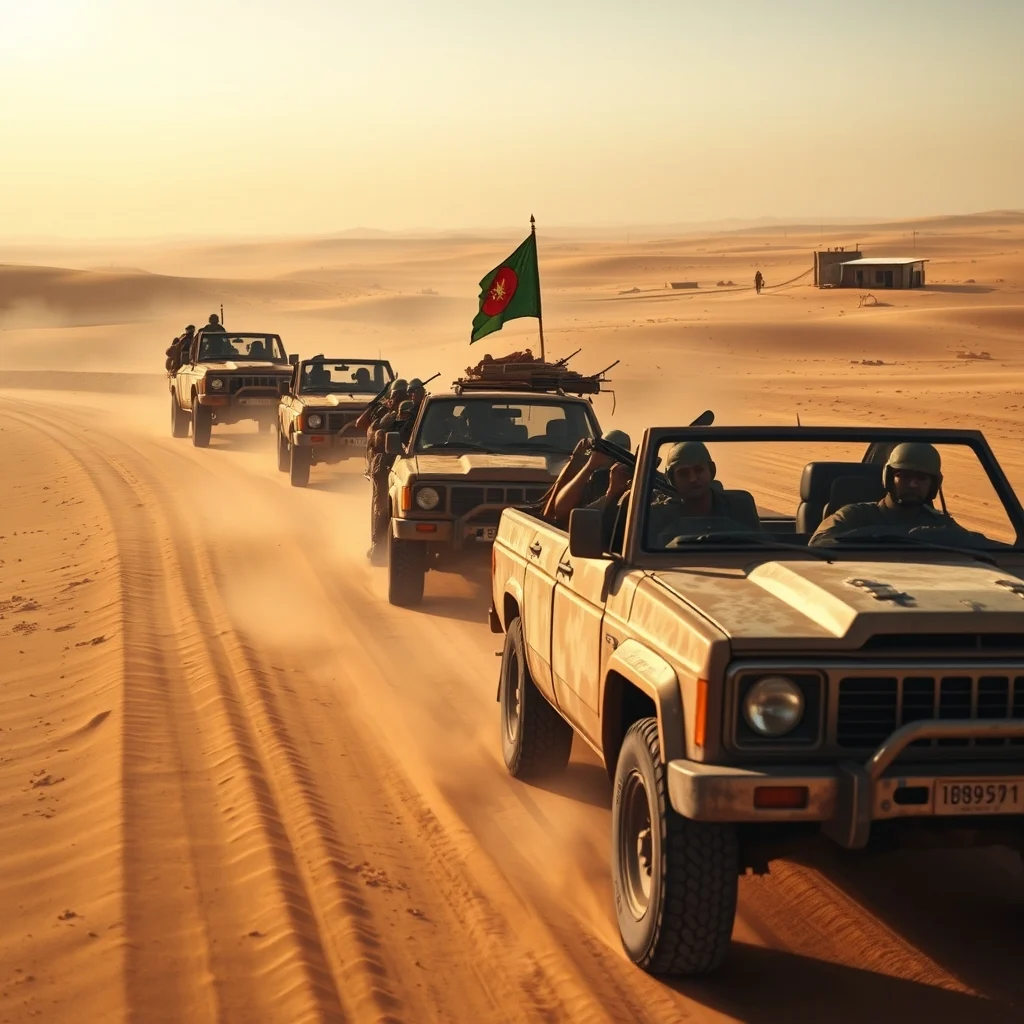
A video circulating on social media and amplified by regional news platforms has ignited fresh tensions between Algeria and Mali, allegedly showing fighters from the Azawad Liberation Front (FLA) operating in southern Algeria near the Malian border. The footage, purportedly filmed in Bordj Badji Mokhtar, depicts armed individuals carrying Azawad flags and traveling in vehicles, though its authenticity and the circumstances of its recording remain unverified by independent sources.
Despite the lack of official confirmation, the video has fueled speculation regarding the presence and movement of Malian armed groups within Algerian territory. Several social media accounts and regional media outlets specializing in African and Sahel affairs have identified the individuals in the video as members of the Azawad Liberation Front. Neither the Algerian nor Malian authorities, nor the FLA itself, have publicly commented on the claims.
The alleged location of the footage, Bordj Badji Mokhtar, is a strategically sensitive area in Algeria’s far south, directly adjacent to the volatile security landscape of northern Mali. This proximity amplifies concerns, as nearby Tin Zaouatine, situated on the Algeria-Mali border, has been identified by analysts as a zone where FLA fighters are known to operate or seek refuge.
The Azawad Liberation Front is a movement that emerged from the reorganization of separatist factions in northern Mali, advocating for the self-determination of Azawad, a region encompassing northern Mali. The group’s prominence has grown amidst resurgent conflict between the Malian government and various armed organizations, following the erosion of the political framework established by the 2015 Algiers Peace Agreement.
This development occurs against a backdrop of already strained relations between Algeria and Mali. For several months, Bamako has accused Algiers of maintaining an ambiguous stance on Tuareg-related issues and the armed groups active in northern Mali. Algeria, conversely, has consistently asserted its role as a regional mediator and underscored the critical importance of maintaining stability along its extensive southern border.
Analysts have previously cautioned that the relationship between the two nations risks further deterioration. Factors contributing to this potential decline include escalating mistrust, increased militarization in the region, and competing geopolitical interests across the broader Sahelian context.
Should the video be definitively verified as recent footage from Bordj Badji Mokhtar, it could lend significant weight to the Malian authorities’ assertions that Azawad fighters enjoy freedom of movement within Algerian territory. This would likely intensify diplomatic pressure on Algeria.
Conversely, without independent verification, observers note that the footage risks becoming another element in a broader information war. In such scenarios, competing narratives are often leveraged to advance specific political objectives, making objective assessment challenging.
Regardless of its precise origin or veracity, the circulation of this video is poised to deepen existing suspicions and further complicate efforts to mend relations between Algiers and Bamako. The Bordj Badji Mokhtar area remains a critical security corridor within the Sahel, a region where the movements of armed groups are under intense scrutiny due to persistent instability.
The controversy surrounding this unverified video highlights the precarious security environment in the Sahel. In this context, images and information can rapidly transform into potent tools within complex diplomatic and political disputes, underscoring the need for careful verification and nuanced understanding of the evolving regional dynamics.










Leave a Reply