
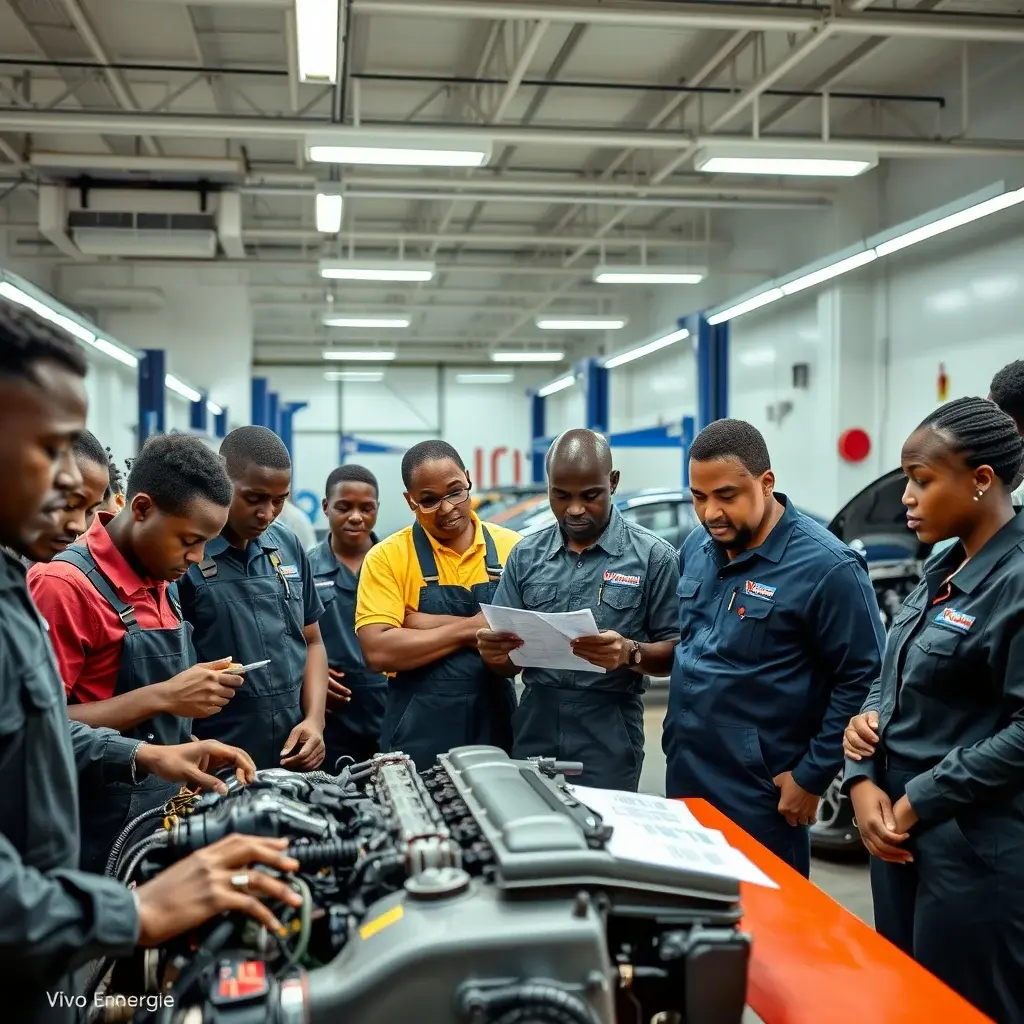
Vivo Energy Ghana PLC (VEGH) has formally partnered with the Applied Technology Institute (ATI) through a Memorandum of Understanding (MoU) to launch a technical apprenticeship programme. This initiative, part of Vivo Energy’s broader Mechanic Advocacy Programme, aims to equip young, informal sector mechanics with enhanced technical skills, safety awareness, and professionalism in the automotive industry. The collaboration officially commenced with the signing ceremony, bringing together key stakeholders to formalize the commitment to skills development.
Bridging the Skills Gap in Automotive Services
The partnership addresses a critical need within Ghana’s automotive sector for a more skilled and professional workforce. As the industry rapidly evolves with new technologies and increasing complexity, there is a growing demand for mechanics who possess not only practical knowledge but also a strong understanding of safety protocols and modern diagnostic techniques.
Christian Li, Managing Director of Vivo Energy Ghana, emphasized the strategic importance of this initiative. “The automotive and lubricants industry continues to evolve rapidly, creating a growing demand for highly skilled professionals equipped with strong technical capabilities and a firm commitment to safety,” Li stated during the MoU signing.
Structured Training for Industry Readiness
The technical apprenticeship programme will adopt a structured model, combining theoretical classroom instruction with hands-on practical training. This blended approach is designed to provide apprentices with a comprehensive learning experience that mirrors real-world industry demands.
Ing. Emmanuel Kotey Ashie, Principal of the Applied Technology Institute, highlighted the synergy between academic learning and industry application. “Through this collaboration, our students and employees will benefit from practical training, industrial exposure, innovation and skills development aligned with current industry demands,” Ashie commented.
This collaboration is expected to foster innovation by exposing apprentices to current industry practices and emerging technologies, ensuring they are prepared for the future of automotive repair and maintenance.
Supporting Entrepreneurship and Economic Growth
Beyond technical proficiency, the programme is also designed to foster entrepreneurship among participants. By equipping them with essential technical and business management skills, Vivo Energy Ghana and ATI aim to empower mechanics to establish their own successful automotive workshops, lubricant service centres, or distribution businesses.
This focus on entrepreneurship aligns with national efforts to promote job creation and economic development within the country. A skilled and self-sufficient automotive sector can contribute significantly to local economies and reduce unemployment.
Vivo Energy’s Commitment to Development
The initiative is a key component of Vivo Energy Group’s broader social responsibility and business objectives. Kerim Kermen, Vice President for Central Lubricants and Commercial at Vivo Energy Group, noted that the programme aligns with national skills development efforts and the company’s lubricants business goals.
The presence of former ATI students working successfully at Vivo Energy Ghana’s retail outlets and lubricant service centres served as a testament to the effectiveness of such industry-academia partnerships. Their shared experiences underscored the value of practical training and real-world exposure in advancing their careers.
Looking Ahead: A Skilled Future for Ghanaian Mechanics
The partnership signifies a proactive approach by Vivo Energy Ghana and ATI to invest in the future of Ghana’s automotive workforce. As the programme rolls out, stakeholders will be watching its impact on the quality of automotive services available to consumers and its contribution to the professionalization of the mechanic trade. The success of this apprenticeship model could pave the way for similar initiatives in other technical fields, further strengthening Ghana’s industrial capacity.










Leave a Reply