
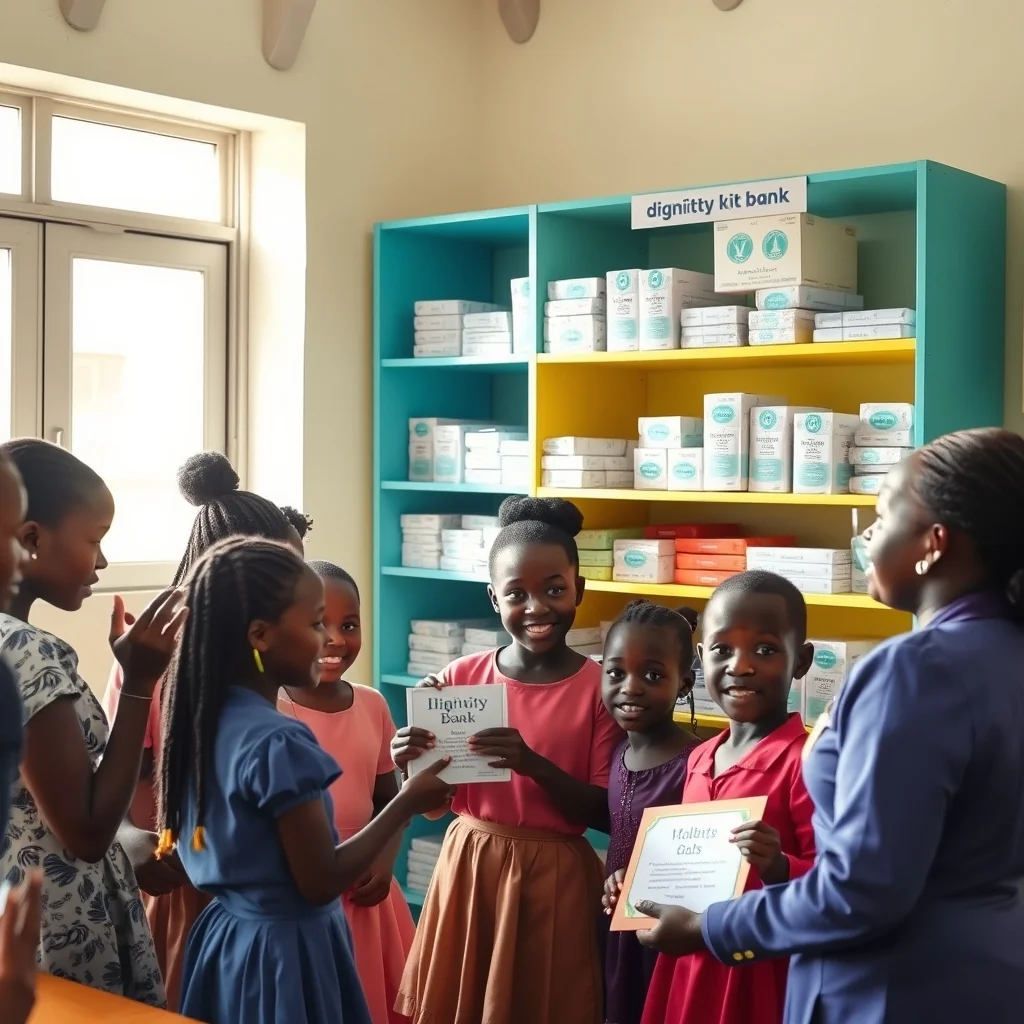
The Voices of Women and Children with Disabilities in Ghana (VOWAC Ghana) has announced plans to establish dignity kit banks in segregated schools across the nation, aiming to significantly reduce period poverty and improve educational access for menstruating girls, particularly those with disabilities. The initiative, highlighted during the recent 2026 World Menstrual Hygiene Day commemorations at the Volta School for the Deaf and Blind and the Gbi Special School in Hohoe, seeks to ensure consistent access to menstrual hygiene products, thereby curbing absenteeism and restoring dignity.
Period poverty, defined as the lack of access to menstrual products, education, hygiene facilities, and waste management, disproportionately affects vulnerable populations, including students in segregated schools. These students often face additional challenges due to their disabilities and limited family resources, making it difficult to afford essential sanitary supplies. This lack of access can lead to missed school days, shame, health risks, and social exclusion, hindering their educational progress.
Patience Atipoka Atuah, Programme Manager for VOWAC Ghana, emphasized the profound impact of the dignity kit banks during her address. “A dignity kit bank is more than a storage point for sanitary supplies,” she stated. “It is a statement that a girl’s body is not a barrier to learning. It is a promise that when her period comes unexpectedly, support will already be there.” She further elaborated that for girls with disabilities, such a system is “life-changing,” promoting confidence, improving attendance, and making education truly accessible.
VOWAC Ghana advocates for a comprehensive approach to menstrual hygiene management in schools. This includes not only the provision of supplies but also inclusive menstrual hygiene education tailored to the specific needs of students with disabilities. This means utilizing simple language, Braille where necessary, and sign language support to ensure all girls can understand and practice good menstrual hygiene.
The organization is urging stakeholders, including the government, to invest in sustainable menstrual health systems within educational institutions. This involves dedicated budgeting for dignity kit banks, ensuring regular resupply of essential items, enhancing accessible Water, Sanitation, and Hygiene (WASH) facilities, and embedding menstrual health education into school support structures. Local ownership is also crucial for the long-term endurance of these efforts beyond campaign periods.
During the World Menstrual Hygiene Day event, VOWAC Ghana distributed dignity kits to 120 girls at the Volta School for the Deaf and Blind and the Gbi Special School. Each kit contained vital items such as sanitary pads, panties, undershorts, bathing soap, washing soap, deodorant, pomade, toothpaste, and toothbrushes, all aimed at helping the girls maintain proper hygiene during their menstrual cycles.
George Agbefu Odikro, a representative from the Volta School for the Deaf and Blind, expressed gratitude for the donation, noting that many parents struggle to provide these necessities. He highlighted that the lack of these items often prevents students from attending school. The school eagerly anticipates the establishment of the promised dignity kit bank and has also appealed for the construction of improved sanitary facilities to further support menstrual hygiene.
Atuah called upon policymakers to recognize menstrual hygiene as an integral part of inclusive education and disability rights. She urged school leaders to create safe and prepared environments for all girls and appealed to partners and donors to support the dignity kit bank initiative. The call extended to communities to break the silence and stigma surrounding menstruation, and to all individuals to move from sympathy to systems, awareness to action, and promises to accountability.
The establishment of dignity kit banks represents a shift from temporary aid to sustainable systems that address the systemic barriers faced by girls with disabilities. By ensuring consistent access to menstrual products and promoting inclusive hygiene education, VOWAC Ghana aims to dismantle a significant obstacle to education and well-being. The success of this initiative will hinge on continued investment, cross-sector collaboration, and a collective commitment to menstrual equity.










Leave a Reply