
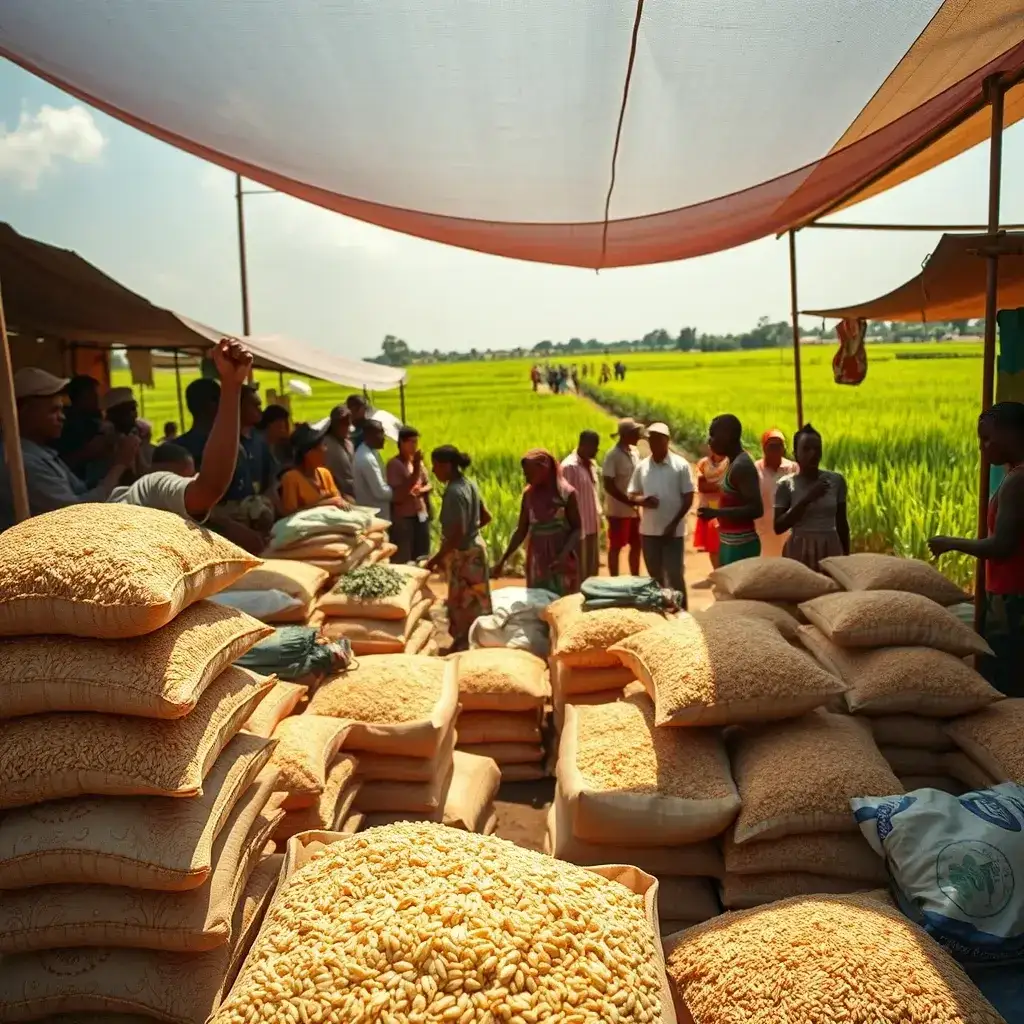
ACCRA, GHANA – ECOWAS Commission President Dr. Omar Alieu Touray warned this week that West Africa’s persistent reliance on imported rice jeopardizes regional food sovereignty, urging accelerated efforts towards self-sufficiency. Speaking at the West Africa Rice Investment Roundtable in Accra, Dr. Touray highlighted that despite years of investment and policy reforms, the region’s growing demand for rice continues to vastly exceed local production.
Context: A Growing Rice Deficit
Rice has transitioned from a minor crop to a cornerstone of food security and economic stability across West Africa. Its importance is underscored by the significant increase in regional rice production, which rose by 44 percent between 2008 and 2024. However, this growth has been insufficient to meet the escalating consumption patterns of the region’s rapidly growing population.
Dr. Touray emphasized that rice is now a vital socio-economic crop, crucial for food security and the livelihoods of millions in rural communities. The current deficit means that the region imports millions of tonnes of rice annually to bridge the gap between supply and demand.
Addressing the Vulnerability, Seizing the Opportunity
The substantial rice deficit represents a major vulnerability for West African nations, exposing them to global price fluctuations and external supply chain disruptions. However, Dr. Touray framed this challenge as a significant opportunity.
He stated that this situation presents a strategic chance to boost domestic production, fortify regional value chains, attract crucial investment, and drive the transformation of agrifood systems throughout West Africa. This transformation, he noted, can lead to job creation and the strengthening of local industries.
ECOWAS’s Regional Rice Roadmap
In response to this critical situation, ECOWAS has developed a comprehensive Regional Rice Roadmap for 2025-2035. The roadmap outlines a strategic plan to achieve greater self-sufficiency through coordinated investments, enhanced value chains, and improved competitiveness of local rice production.
Dr. Touray stressed the urgency of moving from planning to concrete action. “This gathering marks the next critical phase of this journey moving beyond strategy and planning towards investment mobilization, stronger partnerships and concrete actions,” he remarked.
The roadmap aims to position West Africa as a competitive, resilient, and self-sufficient rice-producing region. This requires significant mobilization of financial resources and strategic partnerships.
Call for Investment and Collaboration
The West Africa Rice Investment Roundtable in Accra served as a platform to mobilize financing and foster partnerships essential for transforming the rice sector. The event convened government officials, private investors, development partners, and other key stakeholders.
Dr. Touray specifically called upon financial institutions, development partners, and private investors to support viable projects identified within national rice investment plans. These plans have been developed across ECOWAS member states to guide the sector’s development.
The success of these initiatives, Dr. Touray concluded, will be measured by tangible progress delivered to farmers, businesses, and communities, rather than solely by the quality of discussions held. The focus is on actionable outcomes that will directly impact regional food security and economic resilience.
Looking Ahead
The coming years will be critical for the implementation of the ECOWAS Regional Rice Roadmap. Watch for increased efforts to attract private sector investment into rice farming, processing, and distribution across West Africa. Key indicators to monitor will include the growth in local rice production, the reduction in import volumes, and the development of more robust regional trade networks for rice. The ability of ECOWAS member states to secure and effectively deploy capital for agricultural transformation will determine the region’s success in achieving food sovereignty.










Leave a Reply