
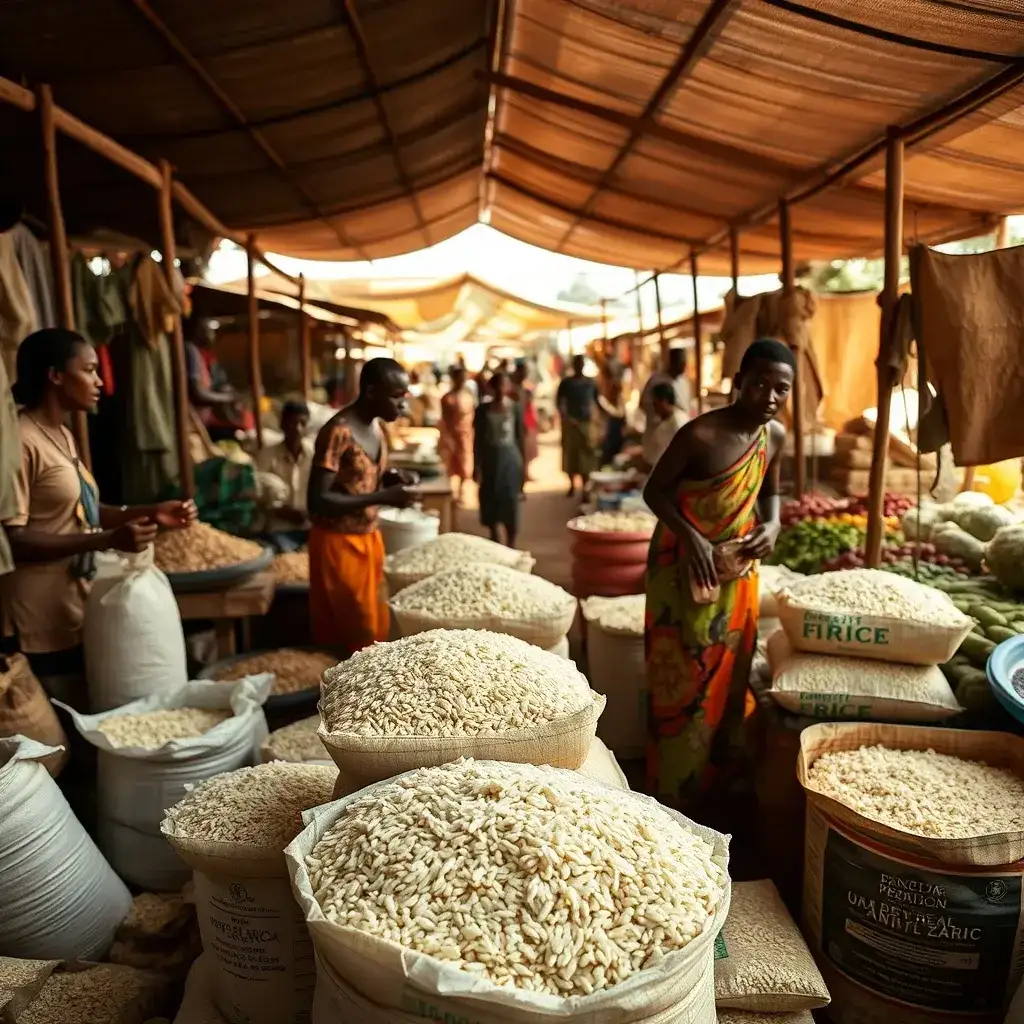
The World Bank Group has issued a stark warning regarding West Africa’s substantial reliance on imported rice, highlighting a $5 billion annual import bill that creates significant economic strain and exposes the region to escalating food security risks. This critical issue was brought to the forefront during the West Africa Rice Investment Roundtable held in Accra.
Economic Drain and Food Security Risks
Guangzhen Chen, the World Bank Group’s Vice President for Planet, stated at the roundtable that West Africa imports approximately 40 percent of the rice it consumes. This heavy dependence results in an annual expenditure of $5 billion, which Chen described as “not just an economic headache; it leaves the region exposed.” The high cost paid for imported rice underscores the vulnerability of the region’s economies.
Chen emphasized that West Africa possesses abundant arable land, water resources, and a large farming population, suggesting the region should be capable of producing the majority of its staple food. Remaining dependent on international markets has proven to be a precarious strategy, particularly in light of recent global price surges and fertilizer shortages.
ECOWAS Initiatives and World Bank Support
Despite the challenges, Chen expressed optimism regarding initiatives spearheaded by the Economic Community of West African States (ECOWAS) aimed at bolstering rice production. He noted that the “ECOWAS Rice Roadmap provides a strong foundation,” with the Rice Observatory enhancing data collection and coordination, and individual countries having developed clear investment plans.
“What is needed now is execution and financing at scale,” Chen asserted, identifying the key to moving forward. The World Bank is actively supporting these efforts through its AgriConnect initiative, launched in October 2025. This program aims to improve the livelihoods and farming systems of 300 million smallholder farmers across Africa by 2030.
Furthermore, the World Bank is channeling $1.2 billion through the West Africa Food Systems Resilience Programme (FSRP). This initiative, spanning eight countries, is projected to benefit approximately 3.2 million people. An additional $300 million to $400 million is anticipated to be invested in rice value chains within Nigeria, Togo, Burkina Faso, and Guinea.
Addressing Investment Hurdles
A significant obstacle to increasing local rice production is the difficulty farmers face in accessing loans, as banks often perceive agriculture as excessively risky. Chen identified “de-risking” as the crucial solution, citing tools such as loan guarantees and blended finance as effective mechanisms.
“We’ve seen these work,” Chen stated, “The challenge now is rolling them out faster and more widely.” Beyond financial instruments, he called for substantial investments in essential infrastructure such as warehouses, mills, and transport links. “None of this works if you grow more rice but have nowhere to store it or no way to get it to market,” he added.
The Urgency of Action
With donor budgets facing pressure and private investors remaining cautious, Chen urged West African governments not to miss the current opportunity. He underscored the widespread discussion around food security but stressed that the “window to actually do something about it—that’s now.”
The implications for the region are profound. Reducing rice import dependency could free up billions of dollars for investment in other critical sectors, bolster local economies, and create jobs. Simultaneously, increasing domestic production will enhance food security, making West African nations less susceptible to global market volatility and supply chain disruptions.
The path forward requires a concerted effort involving policy reforms, infrastructure development, improved access to finance, and robust private sector engagement. The success of initiatives like AgriConnect and the FSRP will be crucial indicators of the region’s progress in transforming its food systems and mitigating strategic vulnerabilities.










Leave a Reply