
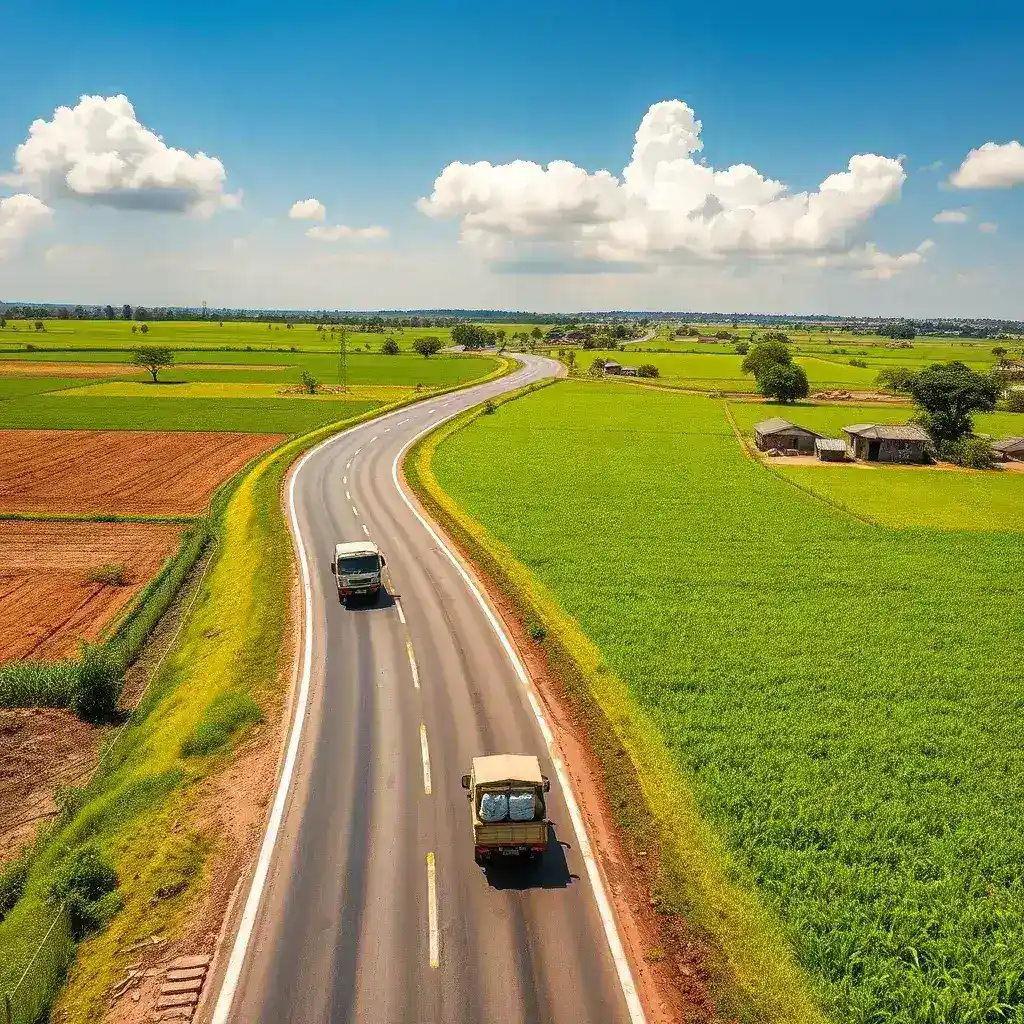
The World Bank has approved $500 million in financing for the Ghana Market Access and Connectivity Project (GMACP), a significant initiative launched recently to enhance rural road infrastructure, bolster agricultural value chains, expand economic prospects, and generate immediate employment within rural communities across Ghana.
Addressing Decades of Road Network Challenges
For years, Ghana’s rural populations have grappled with the detrimental effects of poor road conditions and insufficient maintenance. These issues have severely limited access to markets, inflated transportation expenses, and led to substantial post-harvest food losses, hindering economic development and food security.
The GMACP directly confronts these persistent challenges. The project focuses on rehabilitating and maintaining crucial feeder roads in selected regions, thereby ensuring all-season access between agricultural production zones and vital market centers.
This improved connectivity will empower farmers to reach buyers more efficiently. It aims to facilitate their transition into higher-value agricultural activities and foster local job creation and income generation along the entire agricultural value chain.
Project Scope and Expected Impact
“This project will improve access to markets and opportunities for rural communities while strengthening Ghana’s agricultural competitiveness and resilience,” stated Robert Taliercio, World Bank Division Director for Ghana, Liberia, and Sierra Leone.
The initiative is projected to directly benefit over 550,000 individuals. This includes an estimated 350,000 farmers, approximately 250,000 women, and 310,000 young people. Furthermore, the civil works and road maintenance activities are expected to create more than 5,000 direct jobs and over 25,000 indirect employment opportunities.
The Ministry of Roads and Highways will oversee the implementation of the GMACP. The project is set to cover the rehabilitation and maintenance of more than 1,000 kilometers of rural roads.
These roads are strategically located across nine regions: Upper West, Northern, Savannah, Oti, Volta, Eastern, Ashanti, Bono, and Western. These areas are recognized as major producers of staple crops crucial for Ghana’s food security, including maize, rice, yam, and cassava.
Enhancing Agricultural Value Chains and Food Security
Despite their agricultural significance, these regions have historically been hampered by poor market connectivity. The GMACP’s goal of establishing improved all-season road access aims to significantly reduce transportation costs and travel times.
By increasing the reliability of supply, the project intends to open up larger markets to smallholder farmers. This ultimately seeks to diminish post-harvest losses, strengthen agricultural value chains, and contribute to lower food prices and enhanced food security nationwide.
Sustainability and Climate Resilience
A key feature of the GMACP is its incorporation of climate-resilient design principles. This ensures that the newly rehabilitated roads and their associated drainage systems are built to withstand the impacts of climate change and extreme weather events over the long term.
Sustainability is a central pillar of the project’s strategy. It will support the operationalization of the Road Maintenance Trust Fund (RMTF) and introduce Performance-Based Contracts for road maintenance.
Additionally, the project will provide technical assistance to bolster institutional capacity. This is crucial for ensuring that the rehabilitated road networks remain functional and well-maintained well beyond the project’s completion phase.
Future Outlook
The success of the Ghana Market Access and Connectivity Project will be closely watched as a model for rural infrastructure development in West Africa. Key indicators to monitor will include the actual reduction in transport costs, the increase in farmers’ market access, the growth in agricultural output, and the sustained creation of jobs in the targeted regions. The effective implementation of climate-resilient designs and the operationalization of the Road Maintenance Trust Fund will also be critical factors in the project’s long-term impact on Ghana’s rural economy and food security.










Leave a Reply