
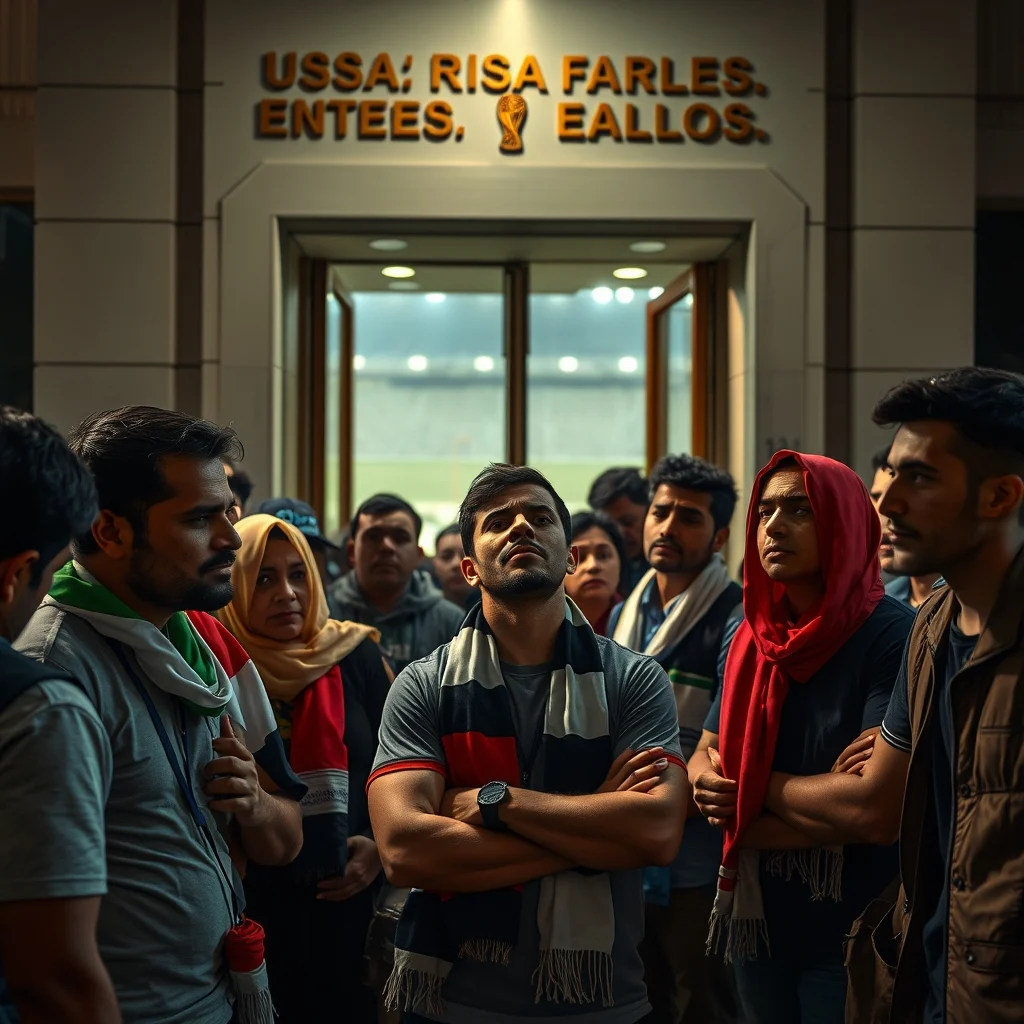
Fans from over a quarter of the nations competing in the FIFA World Cup are encountering significant hurdles with U.S. travel bans, stringent visa restrictions, and high rejection rates, preventing many from witnessing their teams compete on American soil. This situation has sparked widespread anger and disappointment among supporters eager to experience the global football event firsthand.
Context of Global Ambitions and National Restrictions
As football teams from nations like Iraq, Ivory Coast, Senegal, and Jordan qualified for the World Cup, fans like Abdulla Adnan of Iraq made elaborate plans and significant financial commitments to attend matches. Adnan purchased tickets for Iraq’s games against Norway and France, scheduled to be played in Boston and Philadelphia.
However, the dream of cheering on his national team in person, a rare opportunity for Iraq which last qualified in 1986, has been overshadowed by complex visa application processes and outright travel bans. The U.S. policy landscape, influenced by national security concerns and a focus on immigration control, is directly impacting the accessibility of this international sporting event.
The Visa Maze: A Barrier to Entry
For Iraqi fans like Adnan, the challenge wasn’t directly related to the widely publicized travel bans affecting other nations. Instead, the U.S. suspended routine consular services in Iraq following security concerns related to the U.S.-Israel conflict with Iran. This meant there was no U.S. embassy or consulate within Iraq where Adnan could complete the mandatory in-person interview for a visa.
Adnan’s attempts to obtain a visa in neighboring Jordan were also unsuccessful. He was informed by U.S. embassy staff that he could not be issued a visa as he was not a Jordanian citizen. The financial and time costs incurred by this attempt, including approximately $1,800 for match tickets and travel to Jordan, led him to abandon his quest.
Similar frustrations are echoed by fans from other participating countries. Julien Kouadio Adonis of the Ivory Coast fan association described the travel restrictions as a form of segregation, questioning why African nations face such stringent measures compared to European countries. His association has opted not to even attempt to send a delegation to the U.S. due to these regulations.
Data Reveals Disparities in Access
Analysis of U.S. State Department data by the BBC World Service reveals a stark disparity. Citizens from 42 countries benefit from a visa waiver program, allowing entry with a simple online ESTA application costing around $40. Notably, no African countries are included in this program.
In contrast, for the recommended B1/B2 visitor visa, applicants from other nations face a $185 fee and must attend an in-person interview. The U.S. requires applicants to demonstrate their intent to depart and their ability to cover trip costs.
Furthermore, BBC analysis showed that 11 of the 48 World Cup qualifying countries had a visa rejection rate exceeding 40% for all types of visa applications between October 2024 and September 2025. These countries include Ecuador, Egypt, Haiti, Algeria, Uzbekistan, Cape Verde, Jordan, Iran, Democratic Republic of the Congo, Ghana, and Senegal.
This high rejection rate creates uncertainty for fans, who risk significant financial loss on tickets if their visa applications are denied. While FIFA’s ‘Fifa Pass’ system aims to expedite visa interviews for ticket holders, immigration lawyers note that it speeds up the process but does not guarantee approval.
Expert and Fan Perspectives
Celine Atallah, an immigration lawyer near Boston, highlighted the role of the U.S. government as the ultimate decision-maker, stating, “The visa system is the invisible gatekeeper of the World Cup. Fifa can sell a ticket, but the US government decides who gets a visa, and CBP [Customs and Border Protection] decides who actually enters.”
Even with a visa, entry into the U.S. is not guaranteed, as border officials retain the authority to deny admission. Abu Kass, head of the Jordanian fan association, expressed deep disappointment, noting that few, if any, Jordanian supporters have successfully obtained U.S. visas for the tournament. His own application was rejected despite providing extensive documentation, leaving him to lament, “This World Cup is not ours… it’s not for Arabs this World Cup, it’s for them.”
Official Response and Security Concerns
A State Department spokesperson asserted that the administration is prepared to welcome global visitors and that most overseas fans do not require Fifa Pass due to visa-free travel agreements or existing visas. They emphasized that each application is rigorously vetted to ensure the applicant does not pose a security risk.
The Department of Homeland Security cites concerns about visa overstays, with over 538,000 such incidents recorded between October 2023 and September 2024, as a key reason for stringent vetting. This aligns with broader U.S. immigration policies aimed at managing undocumented migration.
Implications and Future Outlook
The stringent U.S. visa policies stand in contrast to the more accessible systems implemented by Canada and Mexico, co-hosts of the tournament. While Canada also has some entry restrictions and specific visa requirements, it has not issued blanket travel bans against World Cup-qualifying nations.
The situation raises questions about the inclusivity of major international sporting events and the potential for national policies to overshadow the spirit of global unity that football is meant to foster. As the World Cup approaches, the accessibility for fans from many nations remains uncertain, potentially altering the atmosphere and global representation within the stadiums.
The coming months will reveal the full impact of these policies on fan attendance and the overall fan experience. Observers will be watching to see if any adjustments are made to facilitate greater access for passionate supporters from all qualifying nations, or if these barriers become a defining characteristic of this World Cup.










Leave a Reply