
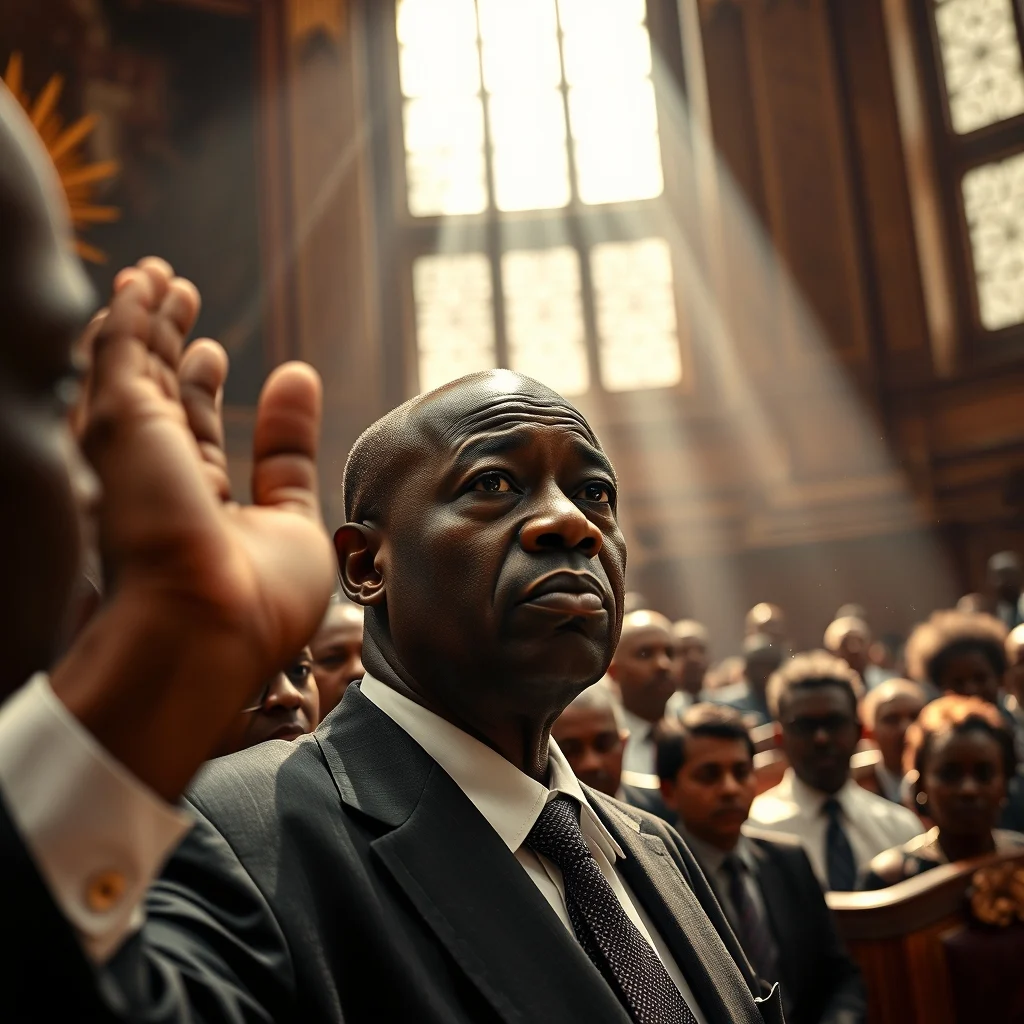
Ousmane Sonko, Senegal’s recently dismissed prime minister, was elected as the new speaker of the National Assembly on Tuesday, just days after President Bassirou Diomaye Faye removed him from his cabinet post. This development follows a deepening disagreement between the two former allies over the government’s reform agenda and strategies for managing the nation’s escalating debt crisis.
A Contested Election and Shifting Alliances
The election saw Sonko garnering overwhelming support from 132 out of 165 lawmakers. This broad backing came from a parliament that rebelled against President Faye’s decision to dissolve the cabinet and dismiss Sonko. The opposition has labeled the maneuver a scandal, raising questions about its legality.
Political analysts suggest that the speaker position could provide Sonko with a significant platform to challenge President Faye’s authority, despite Sonko’s own statements aiming to downplay such a prospect. “We are not here to fight against the president of the republic, but the assembly will fully play its role,” Sonko declared upon accepting the new role.
Power Struggle Between Former Allies
Sonko and President Faye, once close allies and key figures within the ruling PASTEF party, have been locked in a rapid power struggle since their joint ascent to power in 2024. The conflict reportedly stems from disagreements over policy, authority, and the overall direction of Senegal’s reform agenda.
As parliamentary speaker, Sonko is positioned to wield considerable influence, potentially blocking President Faye’s legislative initiatives, according to Signal Risk analyst Greg Musiker. This comes as Faye appointed Ahmadou Al Aminou Lo, an economist and former central bank official, to replace Sonko as prime minister late Monday.
Economic Uncertainty and IMF Relations
The political turmoil has raised concerns among international investors, with Morgan Stanley warning on Tuesday that the risk of Senegal defaulting on its debt could increase. This warning coincided with a sharp fall in the country’s bonds.
Sonko, a known critic of the International Monetary Fund (IMF), had previously opposed any debt restructuring for Senegal. The stance of his successor, Lo, on this critical issue remains unclear. Sonko’s return to a prominent political position heightens uncertainty regarding the government’s approach in upcoming negotiations with the IMF and other creditors.
“I must be truthful and say that we have some differences,” Sonko acknowledged, referring to Lo. “Notably on monetary policy, debt management and other similar issues.” Prior to the cabinet’s dissolution, Senegal was anticipating the resumption of talks with the IMF regarding a new lending program next month.
Democracy Under Scrutiny
Sonko framed the recent political events as a test for Senegal’s democracy. “Senegal must show Africa that a political crisis can be faced without hatred, without violence and without institutional collapse,” he stated. “We must prove that an African people can debate firmly without destroying its own state.”
The coming months will be crucial in determining how this internal political dynamic impacts Senegal’s economic policies, its relationship with international financial institutions, and the stability of its governance. Observers will be closely watching the actions of both the President and the newly empowered Speaker of Parliament.




Leave a Reply