
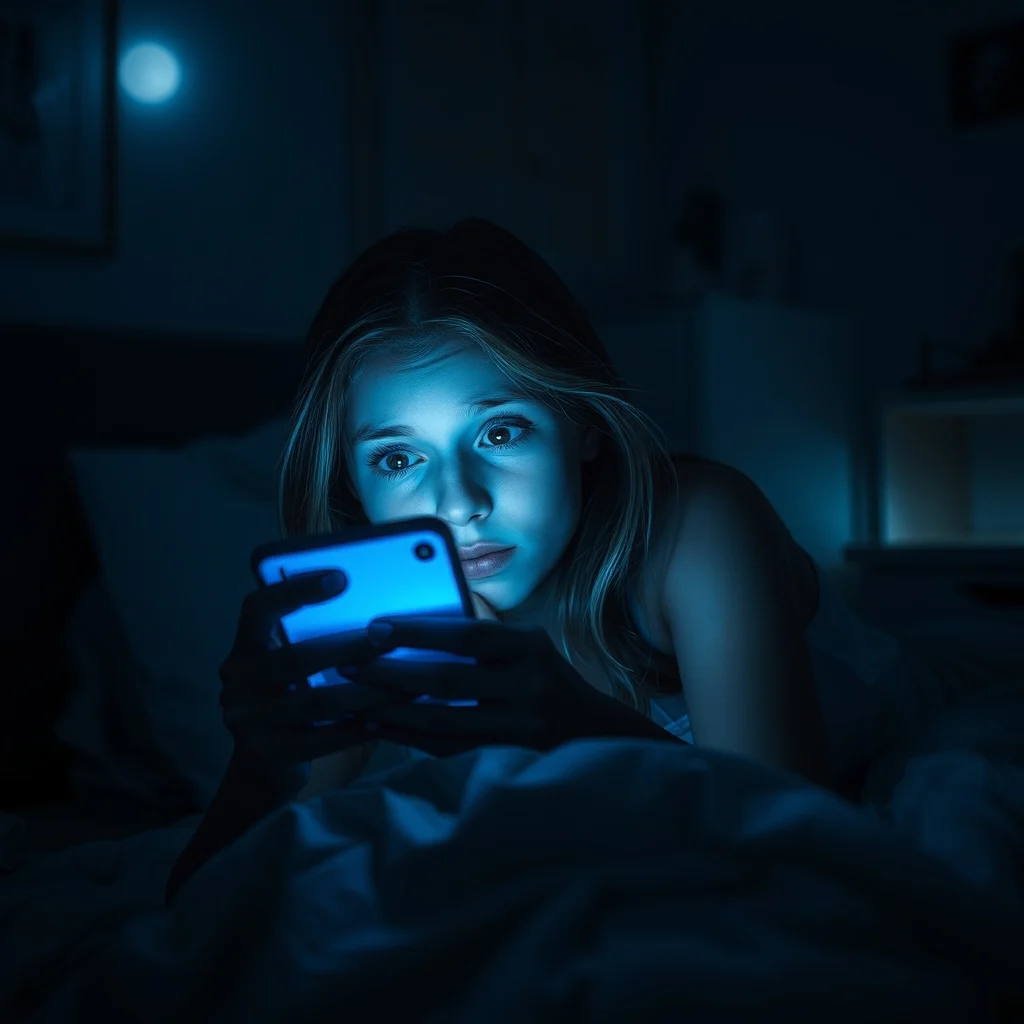
New research indicates that a significant portion of U.S. teenagers are sacrificing essential sleep by engaging in late-night phone use, particularly “doomscrolling,” on school nights. This trend affects over half of teens who spend an hour or more on their phones between 10 p.m. and 6 a.m., with more than half also using devices in the middle of the night, according to a study analyzing data from the Adolescent Brain Cognitive Development Study.
The American Academy of Pediatrics and the American Academy of Sleep Medicine recommend that teenagers obtain eight to 10 hours of sleep nightly. This recommended amount is critical for their developing brains and bodies. The study, led by Dr. Jason M. Nagata, associate professor of pediatrics at the University of California, San Francisco, examined how specific nighttime phone usage patterns cut into sleep opportunities.
The Impact of Sleep Deprivation on Adolescent Development
While the current research doesn’t directly link nighttime phone use to specific negative outcomes, previous studies have established a strong connection between sleep disruption and detrimental effects. Dr. Mary A. Carskadon, professor of psychiatry and human behavior at Brown University, who was not involved in the study, explained that displacing sleep opportunities makes it challenging for teens to get adequate rest. This, in turn, impacts their behavior during waking hours.
Inadequate sleep impairs cognitive functions, making it harder to consolidate and retain information. This is particularly concerning for adolescents, a period of intense learning that encompasses academics, social skills, and emotional development. “One of the life tasks for teenagers is to learn,” Carskadon noted, highlighting the broad scope of learning during these years.
Emotional regulation is also significantly affected. A 2013 study involving adolescents aged 14-17 found that a period of sleep restriction (6.5 hours per night) led to increased self-reported anxiety, anger, confusion, and fatigue compared to a period of healthy sleep (10 hours per night). Participants and their parents also reported greater irritability and poorer emotional regulation during the sleep-restricted week.
“The less sleep a teenager has, the more irritable they become,” Carskadon stated. For vulnerable youth, chronic sleep deprivation can elevate risks for mental health issues. Nagata pointed out that past research suggests sleep-deprived adolescents are at higher risk for depression and anxiety symptoms, and potentially suicidal ideation, self-harm, and risk-taking behaviors.
Understanding Nighttime Phone Usage Patterns
The study identified that teens primarily use their phones for social media, entertainment, games, communication, and music during nighttime hours. Apps like YouTube, Instagram, and TikTok accounted for the largest share of this usage, with teens spending an average of 33 minutes nightly on them.
YouTube provided links to its website regarding parental controls when asked for comment. TikTok and Instagram did not respond by the deadline.
Carskadon emphasized that the active engagement required by many of these apps can exacerbate sleep problems. “When you’re supposed to be sleeping, your arousal levels need to go down, but those are the kinds of interactions that amp up your arousal and make it harder to sleep,” she explained.
Beyond delaying bedtime, the constant buzzing, ringing, and light from notifications can fragment sleep throughout the night. Experts also noted a behavioral loop where teens feel compelled to check their phones immediately upon waking, even if it’s in the middle of the night.
A separate analysis by Nagata in 2023 using the same study data found that 17% of adolescents reported being woken by phone notifications at least once per night. Furthermore, 20% reported using their phone if they woke up during the night. “All of a sudden you see these messages and that can reactivate them and make it harder to fall asleep,” Nagata said.
Strategies for Fostering Healthier Sleep Habits
Addressing nighttime phone usage requires a family-centered approach, according to Nagata and Carskadon. Parents play a crucial role in modeling healthy behaviors. “I think it’s important for parents to model healthy screening behaviors,” Nagata advised. “We also found that one of the top predictors of teenagers’ screen use is actually their parents’ screen use.”
The American Academy of Pediatrics recommends creating a family media plan to guide healthy screen habits for the entire household. This includes establishing screen-free zones and times, setting clear guidelines on device usage duration, and planning alternative activities that do not involve screens.
A key recommendation is to keep phones and other devices out of bedrooms. Carskadon suggests implementing a “family media lockbox” to encourage physical separation from devices during sleep hours. “It’s not just a teen issue; it’s a family issue,” she concluded.
Looking Ahead
As research continues to shed light on the intricate relationship between adolescent technology use and sleep, the focus is shifting towards actionable strategies for families and educational institutions. The long-term implications of persistent sleep deprivation on teen mental health, academic performance, and overall well-being warrant continued attention and intervention. Parents and educators will likely see increased emphasis on digital literacy programs that educate teens about the impact of screen time on sleep and encourage mindful technology consumption. The development of innovative tools and apps designed to promote healthy sleep hygiene among adolescents may also emerge as a significant trend.










Leave a Reply